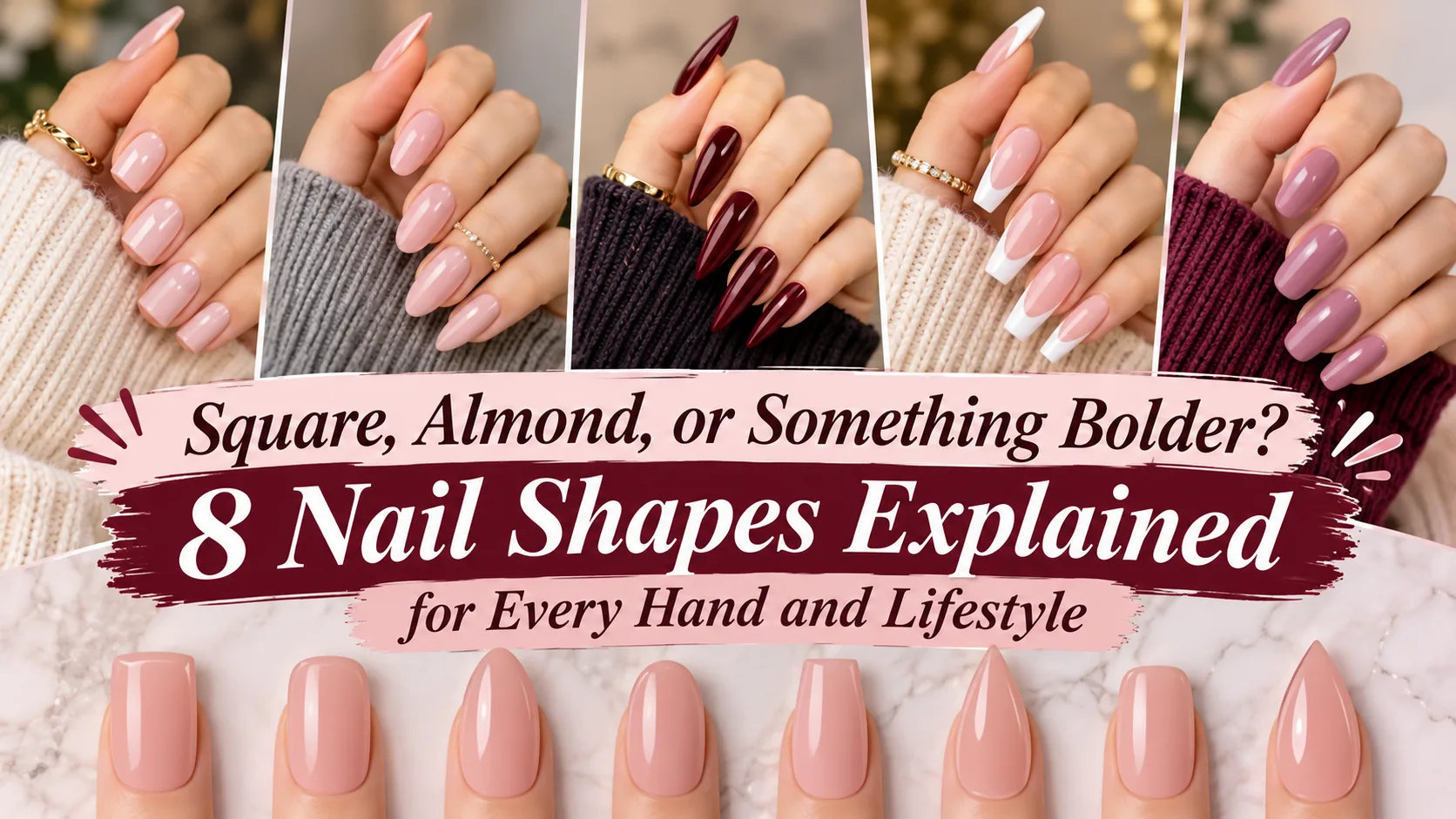
Square, Almond, or Something Bolder? 8 Nail Shapes Explained for Every Hand and Lifestyle
You sit down at the nail salon, and the tech asks, “What shape would you like?”
You pause. You know you want something different from your usual square nails, but you’re not quite sure what “squoval” means, and the person next to you has long pointed nails you love but can’t imagine typing with.
Shape matters more than most people think. The same nail color can create completely different looks depending on the shape. The right shape can also make your fingers look longer and help your nails break less often.
This guide walks through the eight most common nail shapes, what each one looks like, who it suits, and how to file it at home. By the end, you’ll know exactly what to ask for next time.
Choosing the Right Nail Shape
Start with three simple questions.
How long are your natural nails? Short nails suit square, round, and squoval best. Almond, coffin, and stiletto usually need more length or extensions.
How hard are you on your hands? If you type a lot, garden, or work with your hands, softer, rounded shapes tend to chip less.
What look do you want? Clean and simple, soft and elegant, or bold and dramatic?
Keep your answers in mind. They’ll point you to the right shape faster than any trend.
Short and practical (three shapes):
Square
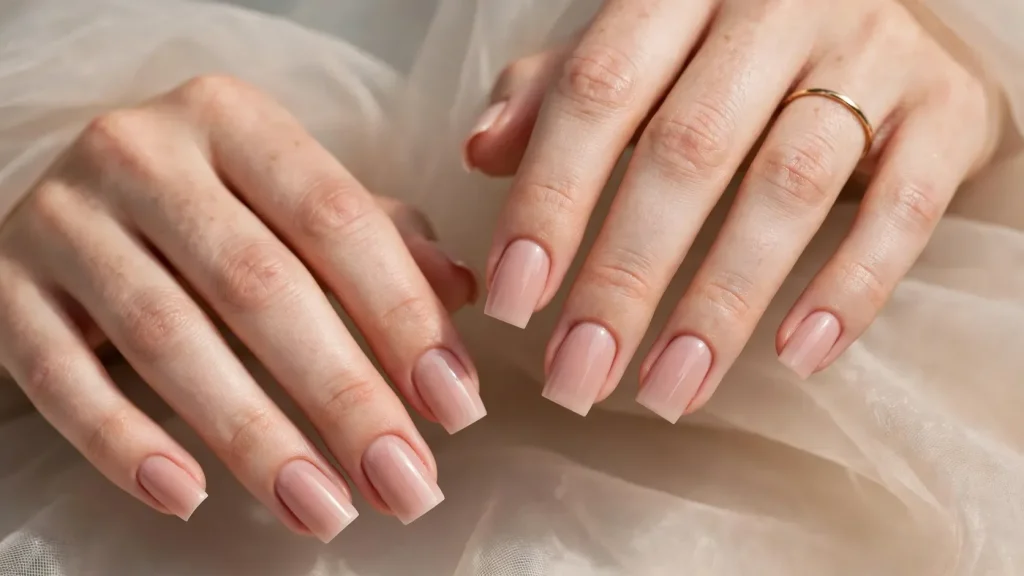
Square nails have a straight, flat tip and sharp corners on each side. It’s one of the most classic looks in any salon.
Best for: short to medium nails, and people with long, slim fingers who want a clean, modern line. Square shapes can emphasize width, so if you have wide nail beds and want a softer look, squoval or oval may suit you better.
Pros: easy to maintain, creates a clean appearance, and works particularly well on short nails.
Cons: the straight edge can feel sturdy, but the sharp corners can snag on knitwear and break if you knock them.
How to file it: file straight across the tip in one direction. Keep the file at a right angle to the nail, so the edge stays flat. Then lightly smooth the sides so they’re straight.
If the corners keep catching, a very gentle softening turns them into a squoval.
Square nails work well at very short lengths too. A short, neat square looks sharp on anyone who keeps their nails trimmed for work or sport.
Round
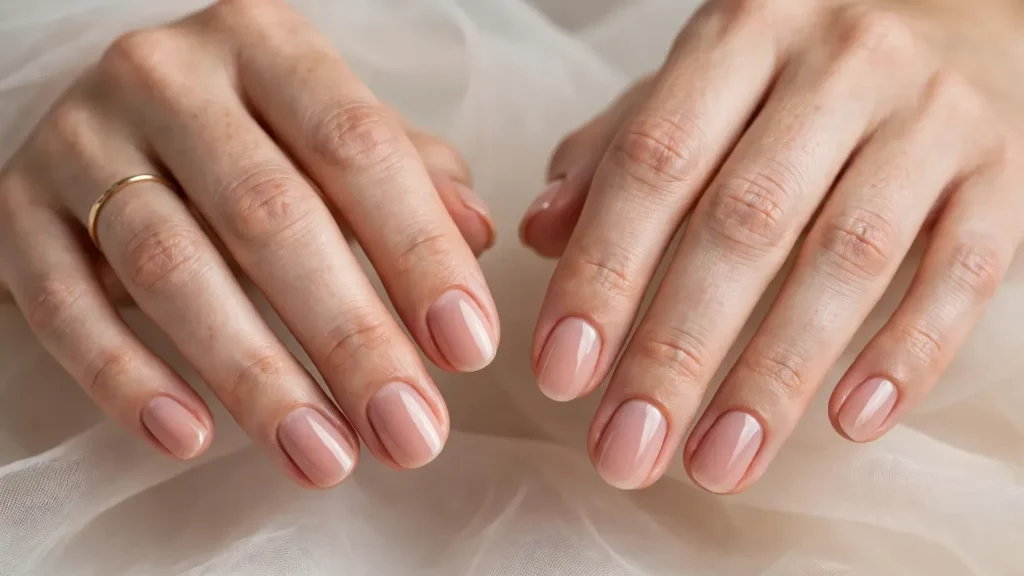
Round nails follow the natural curve of the fingertip, with a soft, curved edge. It’s often the shape nails grow into naturally.
It’s one of the easiest shapes to maintain, and it suits almost everyone.
Who loves it:
- People with short nails or nails that break easily
- Anyone who types, plays an instrument, or works with their hands
- Anyone who wants a neat, natural look
Round nails rarely snag and are less likely to split. They’re a smart choice if you’re growing your nails out after damage. They also suit people who wear gloves often, since there are no corners to catch on the fabric.
To file, follow the curve of your fingertip, working from each side toward the center.
Squoval
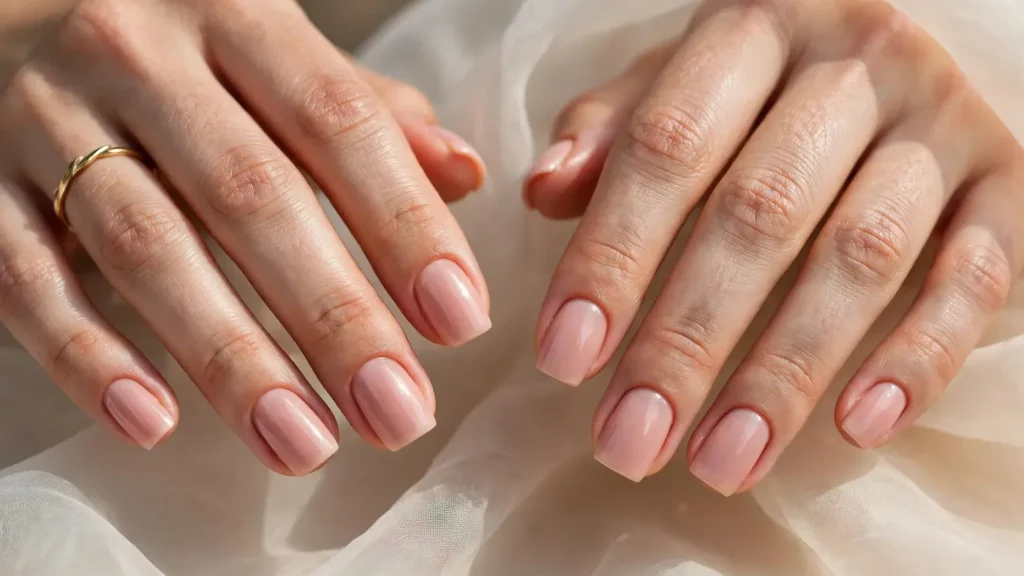
Squoval is a mix of square and oval. The tip is mostly straight, like a square, but the corners are softly rounded.
It’s one of the most popular nail shapes because it combines the clean look of square with the durability of a rounder edge.
Why it works so well: the softened corners are less likely to snag or break, while the straight tip still looks polished.
It suits short and medium lengths, and it looks good on almost every hand.
How to file it: start by filing a square shape. Then hold the file at a slight angle and gently round each corner with a few light strokes.
If you’re unsure which shape to choose, squoval is a very safe place to start.
Soft and elegant (two shapes):
Oval
Oval nails have rounded sides that taper gently to a soft, curved tip. They’re a little longer than round nails and look elegant and versatile.
Best for: medium nails, and anyone who wants their fingers to look longer and slimmer.
The oval shape creates a lengthening effect, especially on shorter or wider fingers.
It’s also relatively durable because its rounded edges are less likely to snag.
To file oval nails, shape the sides inward slightly, then round the tip into a smooth curve. Check both hands often to keep them even.
Soft pinks, nudes, and sheer milky colors look especially lovely on oval nails.
Oval is also a forgiving shape for growing out. As nails get longer, you can simply keep refining the curve instead of starting over.
Almond
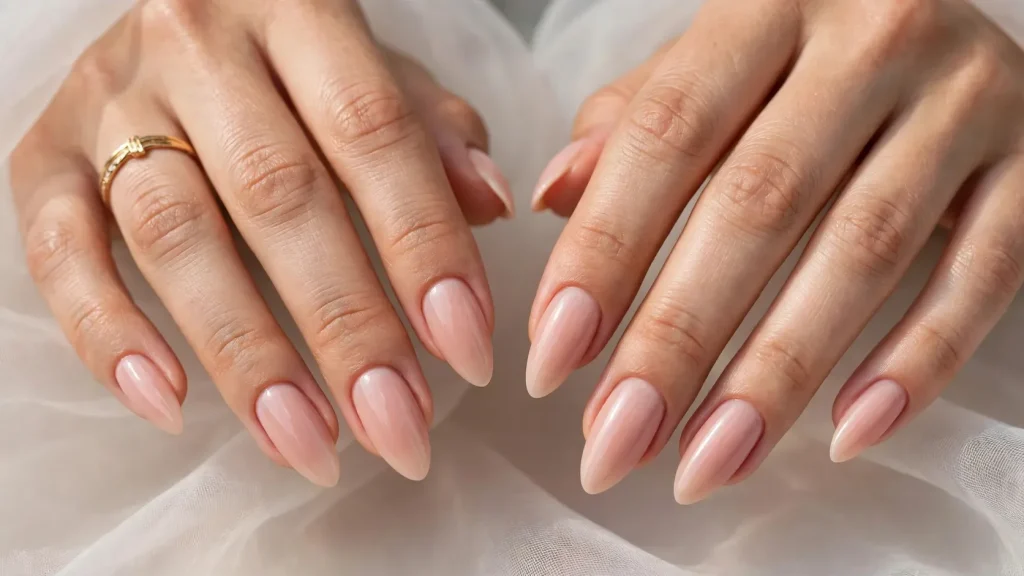
Almond nails are slim at the sides and taper to a softly rounded peak, like the shape of an almond.
They’re elegant, modern, and very flattering, which is why they’re so popular for both natural nails and extensions.
What to know:
- They usually need some length to show the shape properly
- They make fingers look longer and slimmer
- The narrow tip can be a little weaker than squoval or round
How to file: file each side inward at an angle toward the center of the tip. Keep the tip rounded rather than sharp. Work slowly and check that both sides match.
If your natural nails are thin or prone to breaking, almond extensions or a builder gel overlay are an optional way to add structural support. They don’t improve the health of the natural nail underneath, and poor application or removal can cause damage.
A short almond is a good option if you want the shape without the length. Even a few millimeters past the fingertip is enough to show the soft peak.
Bold and dramatic (three shapes):
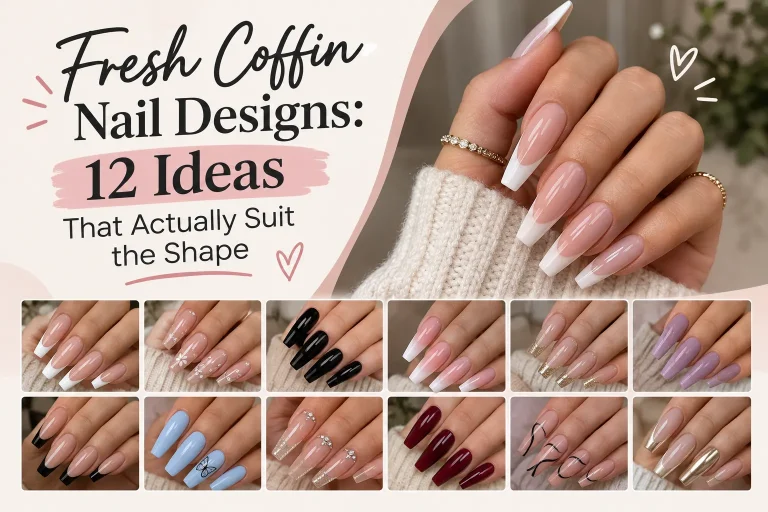
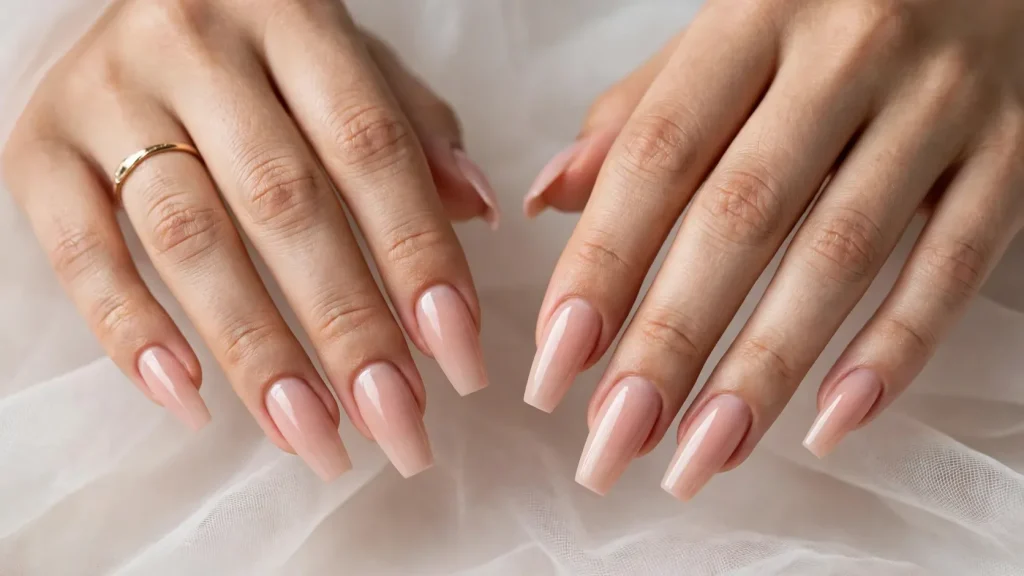
Coffin (Ballerina)
Coffin nails, also called ballerina nails, taper at the sides like a stiletto but end in a flat, squared-off tip. The name comes from the resemblance to a coffin shape, while “ballerina” refers to the shape of a ballet pointe shoe.
They’re bold, trendy, and great for showing off nail art, since there’s plenty of surface space.
Best for: long nails or extensions, and people who want a statement look.
Things to consider:
- They usually need length, so many people choose acrylic or gel extensions
- The flat tip can be prone to breaking if natural nails are thin
- They take a little more maintenance than shorter shapes
How to file: taper both sides inward, as if you’re making an almond, then file the tip straight across to create the flat edge.
A medium-length coffin is easier to live with than a very long one, and it still shows the shape clearly.
Stiletto
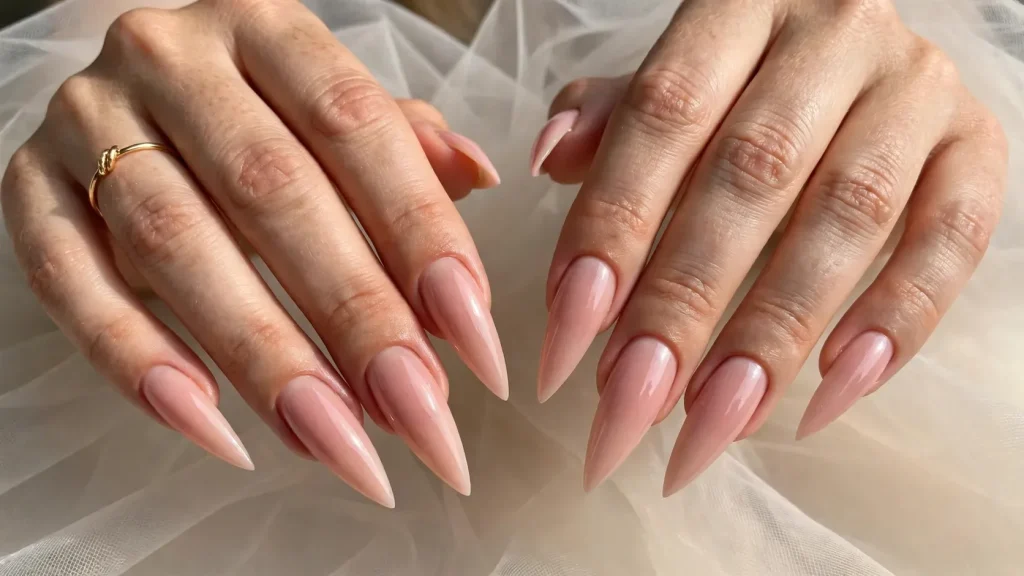
Stiletto nails are long, narrow, and come to a sharp point. They’re about as dramatic as manicures get.
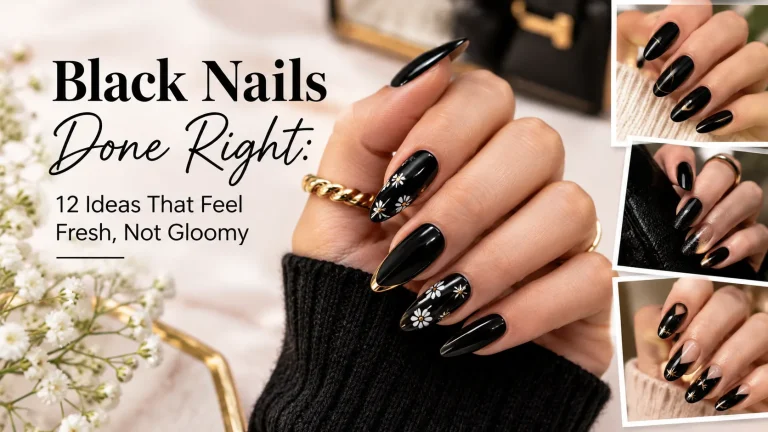
They look striking with bold colors, chrome finishes, and dark shades.
Practical points:
- They almost always need extensions, since natural nails rarely hold this shape well
- The sharp tip can make everyday tasks like typing and buttoning harder, and you’ll need extra care when handling contact lenses
- They can scratch skin easily, so take care around eyes, babies, and pets
Many people choose a slightly softer, rounded stiletto point for everyday wear. A medium-length stiletto with a softened tip gives the same dramatic outline with fewer everyday challenges.
A professional nail tech is usually best for this shape, since it needs careful filing and strong product to avoid breaks.
Lipstick
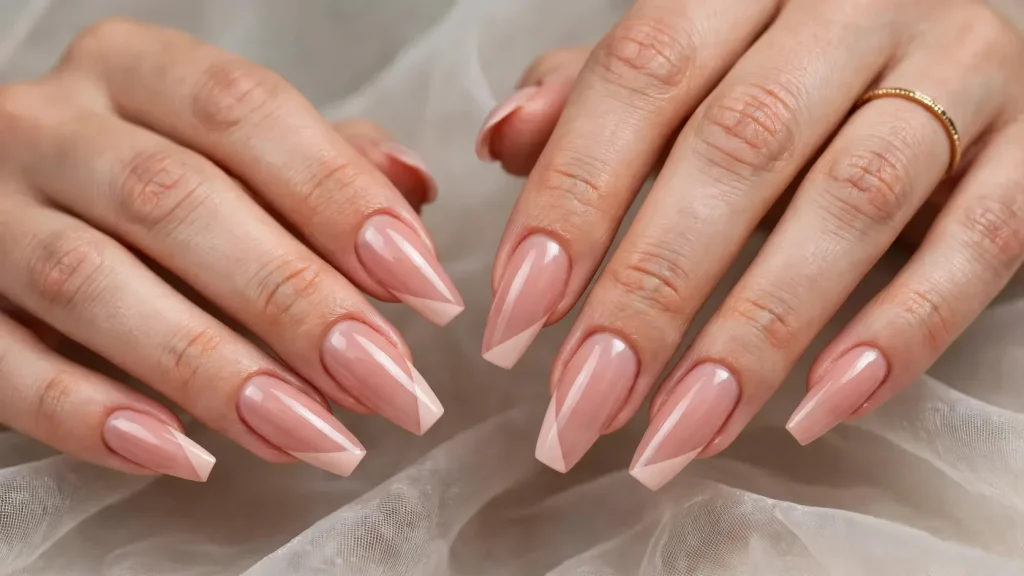
Lipstick nails are filed at a slant, so the tip looks like a freshly used lipstick, with one side longer than the other.
It’s an unusual, eye-catching shape that’s great for people who want something different.
Best for: medium to long nails and anyone who likes edgy, fashion-forward styles.
The angle can go in either direction, but many people prefer it to slant the same way on every finger for a balanced look.
How to file: shape the nail as an oval or rounded square first. Then file the tip at a gentle diagonal, keeping the corner softly rounded so it doesn’t snag.
This shape can look playful with bright colors or very chic with a deep red or nude.
Lipstick nails show wear quickly at the long corner, so file it a little more often to keep the angle sharp and even across every finger.
Colors and Finishes That Suit Each Shape
Shape and color work together. A few easy pairings:
Square and squoval: bold, opaque colors like cherry red, navy, or deep green look crisp against a straight edge.
Round: sheer, natural tones and soft pastels keep the look fresh and understated.
Oval and almond: milky nudes, soft pinks, and gentle shimmer highlight the graceful curve.
Coffin: the wide, flat tip gives plenty of space, so it suits nail art, color blocking, and ombré-style blends.
Stiletto and lipstick: dark shades, metallics, and high-gloss finishes make the dramatic shape stand out.
Finish matters too. Glossy top coats make shapes look smooth and polished, while matte finishes can make sharper shapes feel more modern and subtle.
Filing Tips That Protect Your Nails
Good filing technique matters just as much as the shape you choose.
File in one direction. Sawing back and forth can cause splits and peeling.
Use the right file. A fine-grit file or glass file is gentler on natural nails. Coarse files are better suited to acrylics and extensions.
File dry nails. Wet nails are softer and more likely to tear or bend.
Don’t over-file the sides. The sides of your nails give them strength. Avoid filing deeply into the sidewalls or repeatedly filing the same area.
Check from all angles. Look at your nails from the top, front, and side to make sure each one matches.
Natural Nails or Extensions?
Some shapes work beautifully on natural nails. Others usually need a little help.
Natural-friendly shapes: square, round, squoval, oval, and short almond. These can be filed from your own nails as long as they have a little length.
Shapes that often need extensions: long almond, coffin, and stiletto. These need length and strength that many natural nails don’t have. Lipstick shapes can be filed on natural nails if they’re long and strong enough, though some people choose extensions for a sharper angle.
If you choose extensions, ask your nail tech about the options. Gel extensions, acrylics, and soft gel tips all feel a little different and need different removal.
Always have extensions removed properly. Pulling or picking them off can damage the natural nail underneath.
Keeping Your Shape Between Appointments
A shape looks best when it stays even. A few small habits help.
- Carry a small glass file for quick fixes if a corner chips
- Apply cuticle oil daily to keep nails flexible and less prone to splitting
- Wear gloves for washing up and cleaning
- Avoid using your nails as tools to open cans or peel labels
If a nail breaks badly, it’s often better to file all your nails a little shorter so they match, rather than leaving one short nail among long ones.
Matching Shapes to Your Hands
There’s no single rule for choosing a nail shape, but these suggestions can help you find a style that works for you.
Short fingers: oval and almond can create the look of longer fingers.
Long, slim fingers: square, coffin, and lipstick shapes show off the length beautifully.
Wide nail beds: oval or almond can make nails look slimmer.
Small nail beds: squoval and round keep things neat and balanced.
A Real-World Example
Imagine someone who types all day at work but wants something more stylish than plain round nails.
She chooses a short squoval in a soft nude that looks polished and doesn’t snag. For a wedding, she switches to medium almond extensions, then returns to squoval afterward.
Nail Shape Mistakes to Avoid
Choosing a shape your nails can’t support. Very long, pointed shapes on thin natural nails often break.
Filing too aggressively. Over-filing weakens nails and can make them sensitive.
Ignoring your lifestyle. A dramatic shape might look amazing but be frustrating for daily tasks.
Forgetting to match both hands. Uneven shapes stand out more than you’d think.
Questions About Nail Shapes
What is the most popular nail shape?
Almond and squoval are both very popular, since they suit many hands and look polished.
What nail shape makes fingers look longer?
Oval and almond shapes usually create the look of longer, slimmer fingers.
Which nail shape is strongest?
Round and squoval tend to be the most durable, because they don’t have sharp corners or narrow tips.
Can I get coffin or stiletto nails without extensions?
It’s possible if your natural nails are long and strong, but most people use gel or acrylic extensions for these shapes.
How often should I reshape my nails?
Many people file their nails every one to two weeks to keep the shape neat as they grow.
Find the Shape That Feels Like You
The best nail shapes aren’t always the trendiest. They’re the ones that suit your hands, your lifestyle, and the look you love.
Comfort and nail health matter more than following any trend. Try a new shape at your next appointment, or practice filing at home with a gentle glass file, and give your natural nails a break between extension sets when you can.