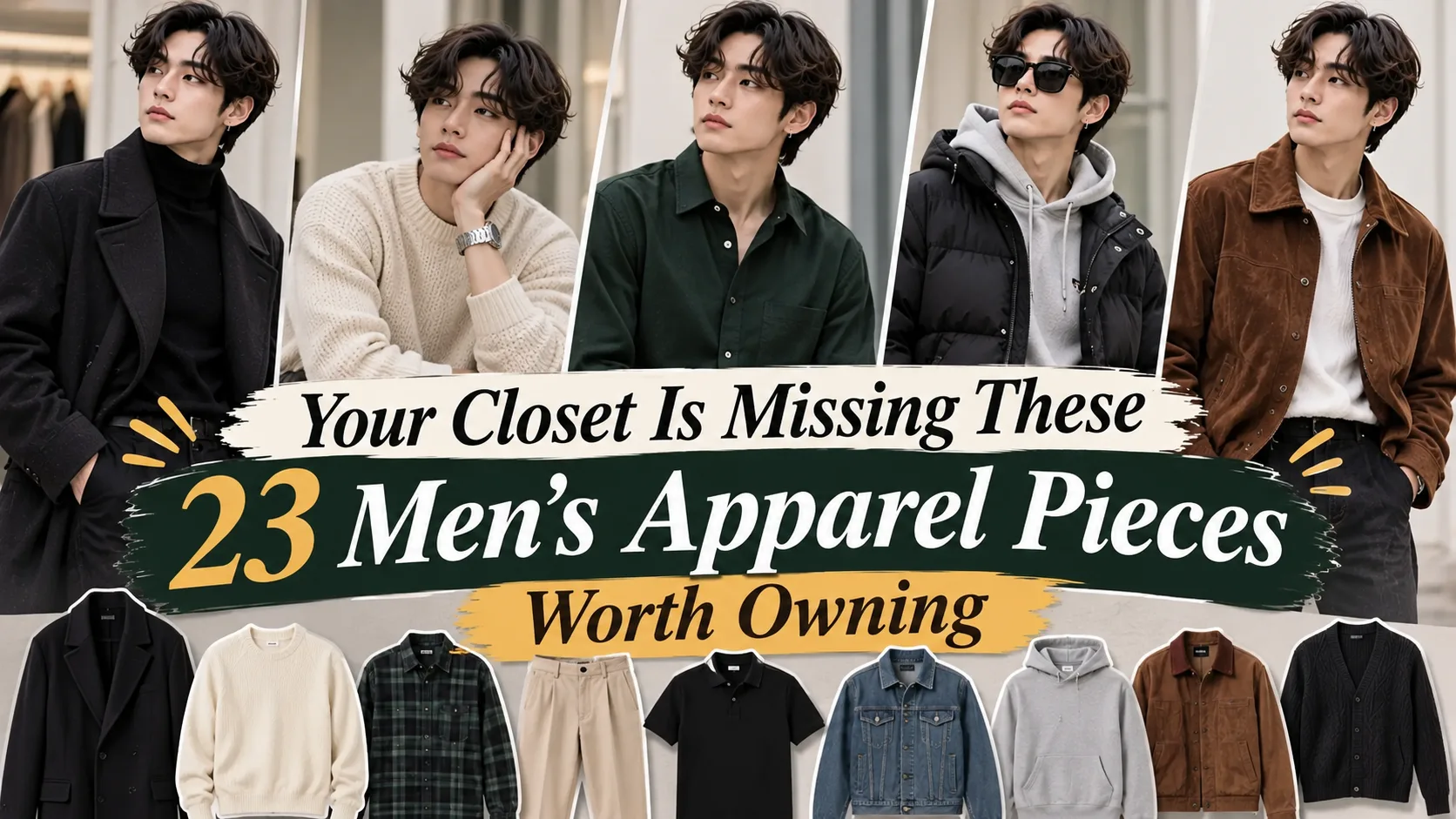
Your Closet Is Missing These 23 Men’s Apparel Pieces Worth Owning
Open most guys’ closets and you’ll find the same lineup. Jeans. A stack of tees. One hoodie that does everything. Maybe a suit that hasn’t fit right in years.
Good men’s apparel isn’t about owning more. It’s about owning a few pieces with real character. A coat with history behind it. A sweater that lasts ten winters. A shirt that makes a summer weekend feel like a holiday.
This list skips the obvious basics and goes straight to 23 pieces most men overlook. Pick the ones that fit your life.
Three Quick Rules Before You Buy Anything
Read these first. They’ll save you money on every piece of men’s apparel below.
- Shoulders decide the fit. A tailor can shorten sleeves and take in a waist. Fixing shoulders is hard and expensive. If the shoulder seam doesn’t sit at the edge of your shoulder, walk away.
- Fabric beats logos. Wool, cotton, linen, and leather age well. A big brand name on cheap fabric doesn’t.
- Buy for your real week. If you work from home, a smoking jacket might get more wear than a morning suit.
Fit Checks Most Guys Skip
Once you know what to buy, check the fit. These mistakes ruin even the best men’s apparel:
Sleeves that swallow your hands. Jacket sleeves should show about half an inch of shirt cuff.
Trousers that pool. A little break at the shoe is fine. Folds of fabric piled on top of your shoes are not.
Coats bought for summer bodies. Try overcoats on with a sweater underneath. Otherwise they’ll feel tight in real winter.
Skipping the tailor. Small changes cost less than you think.
Heritage Coats and Jackets Worth Knowing
These seven pieces all come from real working, military, or country life.
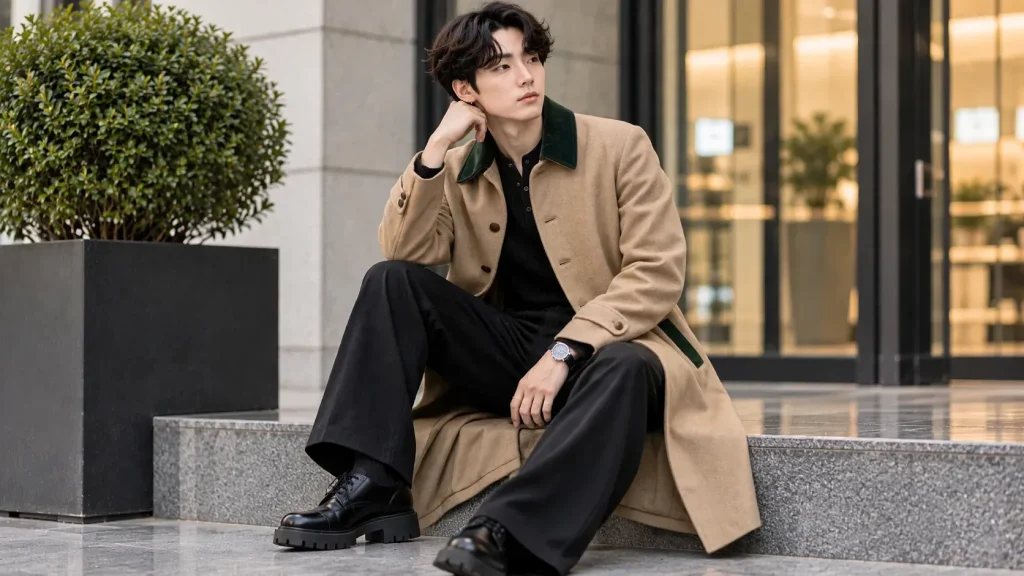
Covert Coat
The covert coat started as an English country riding coat. Today it’s one of the smartest men’s outerwear styles around.
You can spot it easily. Short length, fly front that hides the buttons, a velvet collar, and rows of stitching near the hem and cuffs. It usually comes in a tan or fawn twill.
Wear it over a suit for work, or over a knit and dark trousers on weekends.
Ulster Coat
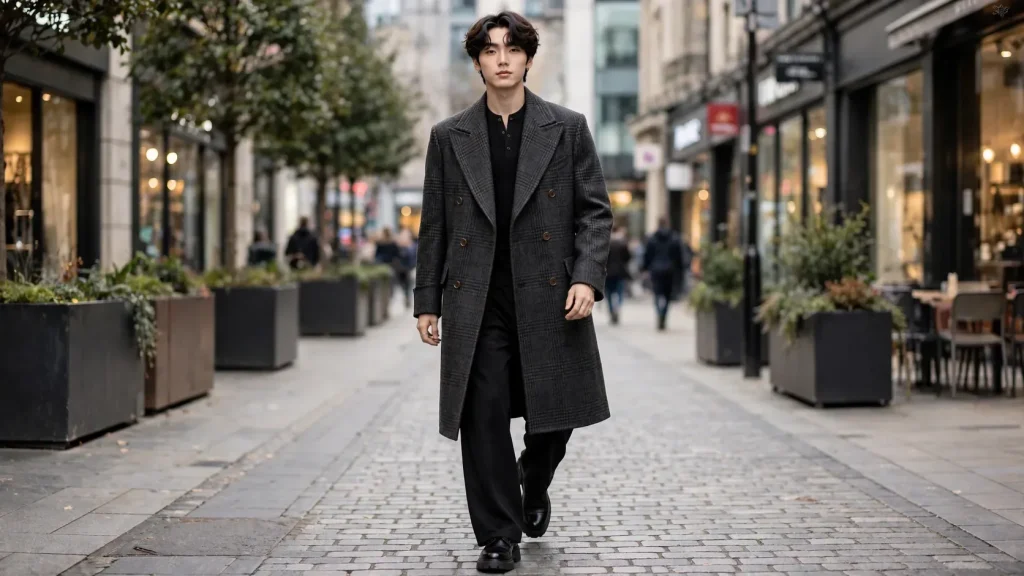
Big, heavy, and built for real cold.
An ulster is a long double-breasted coat with wide lapels and, often, a half belt at the back.
- Best for: men who face proper winters
- Wear it with: chunky knits, flannel trousers, leather boots
- Watch out for: buying it too big. It’s already generous, so stick to your true size.
Loden Coat
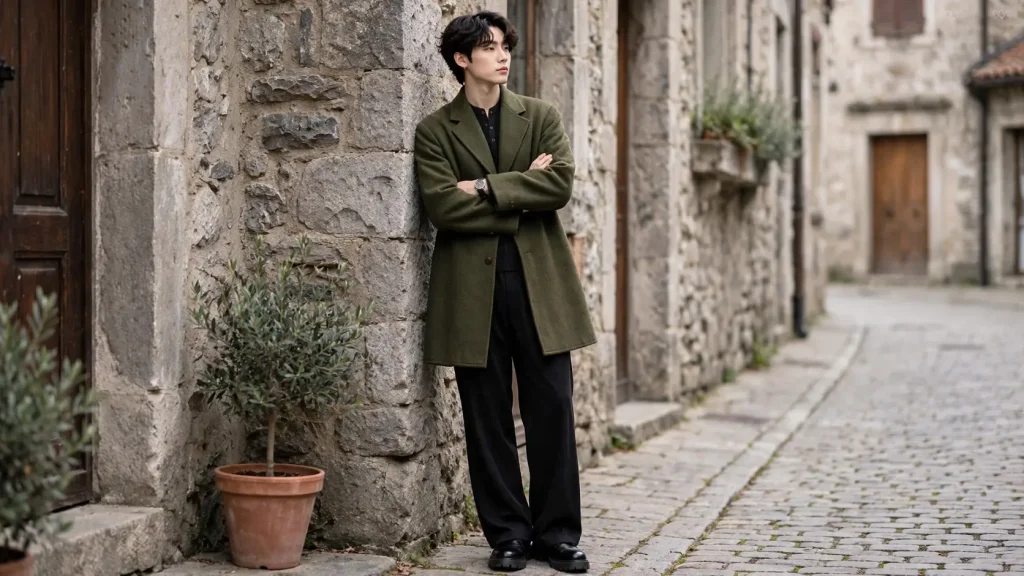
This green wool coat comes from the Alps. Loden wool is dense and tightly felted, which helps it shrug off light rain, drizzle, and snow. It isn’t fully waterproof, though, so in a real downpour you’ll still want a proper rain shell.
The classic version has a pleat down the back, which lets you move freely.
It’s a great alternative if every other coat you see is black, gray, or camel. Among outdoor men’s apparel, few pieces handle a damp commute this well.
Donkey Jacket
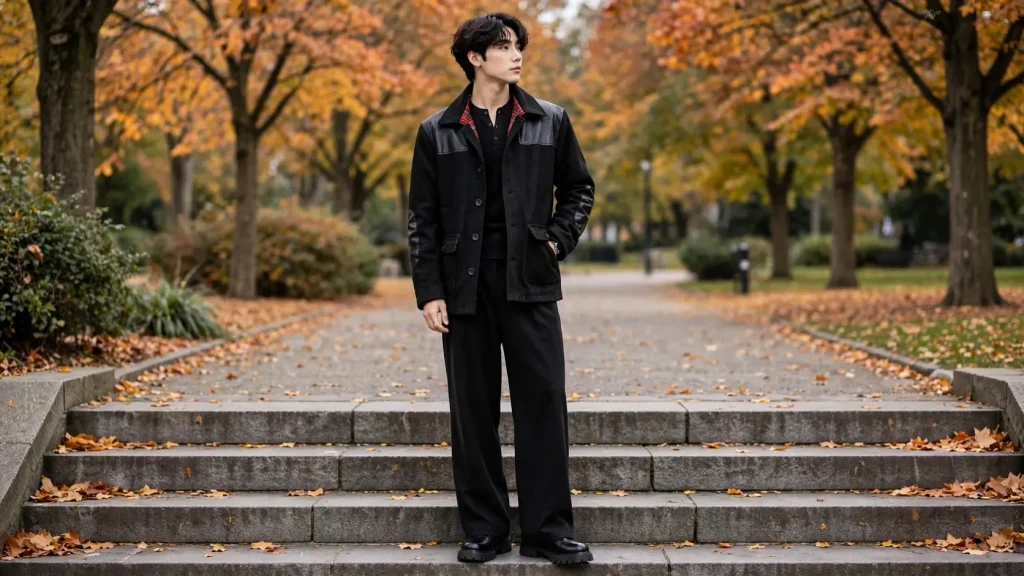
Picture a short, heavy wool jacket with a leather or vinyl panel across the shoulders. That’s the donkey jacket. It began as workwear for British laborers in the early 1900s.
Now it’s a cool, slightly rebellious layer. Throw it over a hoodie or a knit with jeans and boots. It adds toughness without looking costume-like.
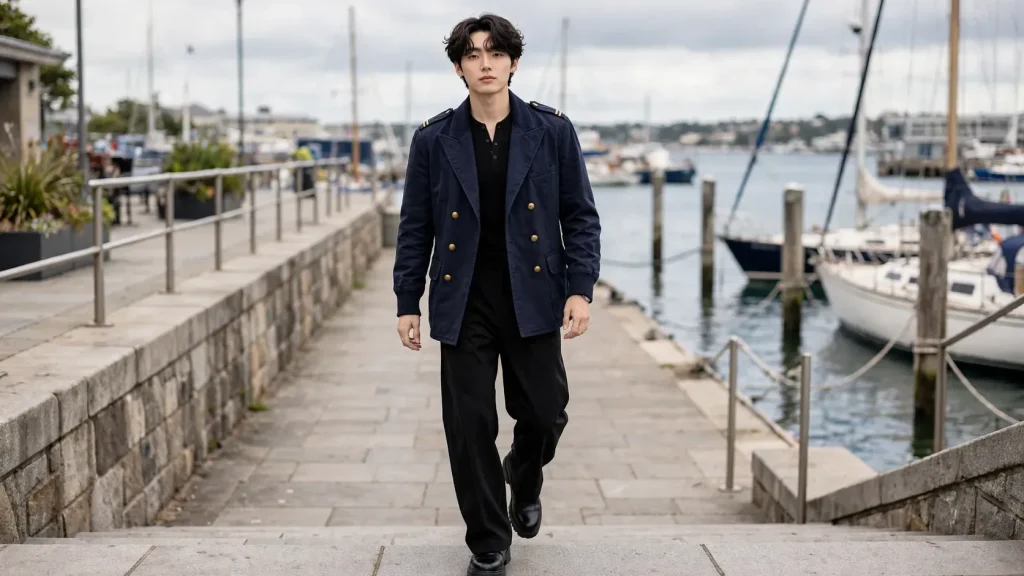
Deck Jacket
Navy sailors wore deck jackets to stay warm on cold ship decks. The original N-1 style has a cotton outer shell, a pile lining, and a snug knit collar.
It’s warmer than it looks, and it sits at the waist, so it pairs neatly with chinos or straight jeans. Olive and navy are the classic colors. If you want men’s apparel with real military roots, this is an easy place to start.
Eisenhower Jacket
Short, sharp, and very underrated.
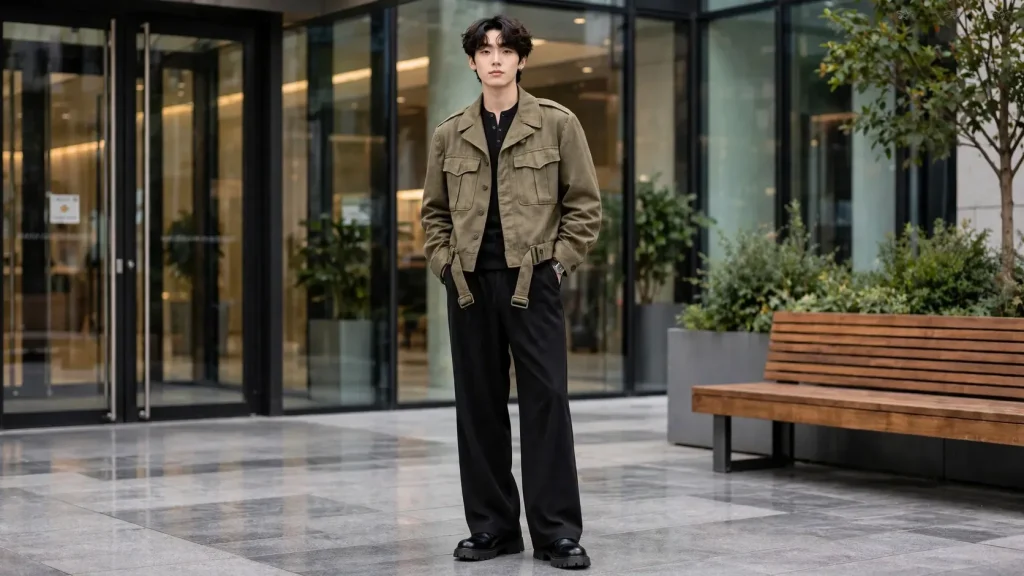
The Eisenhower jacket (also called the Ike jacket) is a waist-length jacket with a fitted band at the bottom, chest pockets, and a neat collar. It was designed for the military in the 1940s.
Because it ends at the waist, it makes your legs look longer. Try it in wool with tailored trousers, or in cotton with jeans.
Norfolk Jacket
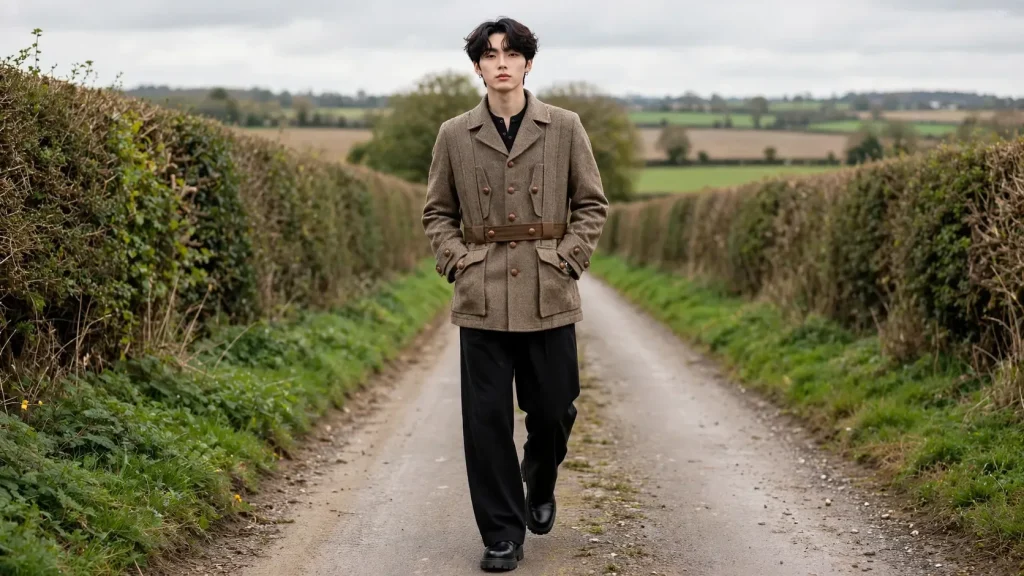
This is a tweed sport coat with a twist. A Norfolk jacket has box pleats on the front and back, plus a belt at the waist.
It was made for shooting and outdoor sports, so it’s roomy where you need movement. Today it feels heritage-inspired and a little bookish, in a good way. Wear it with a turtleneck and corduroy, or a plain shirt and dark denim.
When buying, check that the belt and pleats lie flat when you stand still. A Norfolk that puckers at the waist will always look like it’s pulling.
Evening and Formal Wear
From relaxed evenings to the strictest dress codes, these are the pieces that make big occasions feel special.
Smoking Jacket
Don’t let the name fool you. Nobody needs to smoke to wear one.
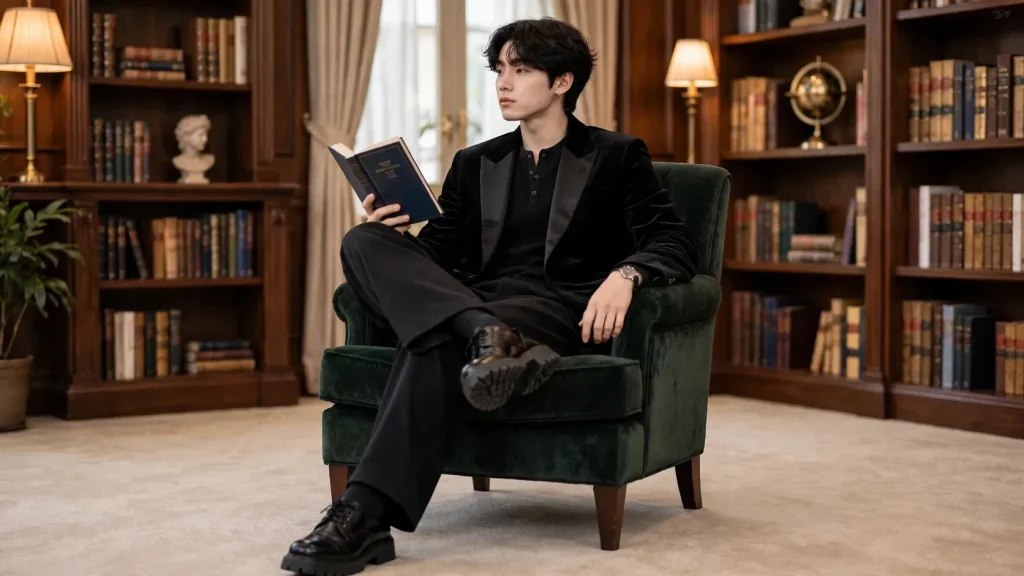
A smoking jacket is a soft velvet or silk jacket with a shawl collar and a tie or toggle closure. It’s made for relaxed evenings at home, small dinner parties, or holiday gatherings.
It’s one of the most fun pieces of men’s apparel you can own. Pair it with a dark rollneck and black trousers, and you instantly look like you’re hosting. Deep green, burgundy, and navy velvet all look rich in candlelight.
It isn’t only for home, either. A modern smoking jacket works well at an intimate evening event, a festive dinner, or a creative black tie gathering where a little personality is welcome.
Morning Suit
Here’s a piece most men only wear a few times, but those times really matter.
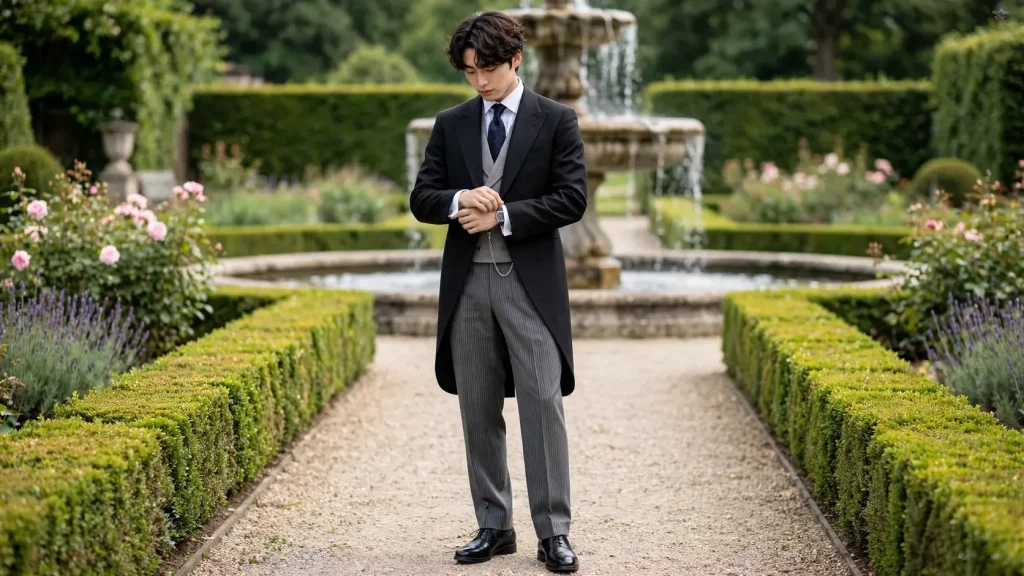
Morning dress is formal daytime attire. The jacket is a morning coat, which curves away from the front at the waist and runs down to tails at the back. It’s worn with striped or check trousers, a waistcoat, and usually a tie rather than a bow tie, for daytime weddings, races, and ceremonies.
Most people rent one. If you buy, look for a coat that closes with a single button at the waist without pulling, and trousers cut to sit at your natural waist so no shirt shows under the waistcoat.
Tailcoat for White Tie
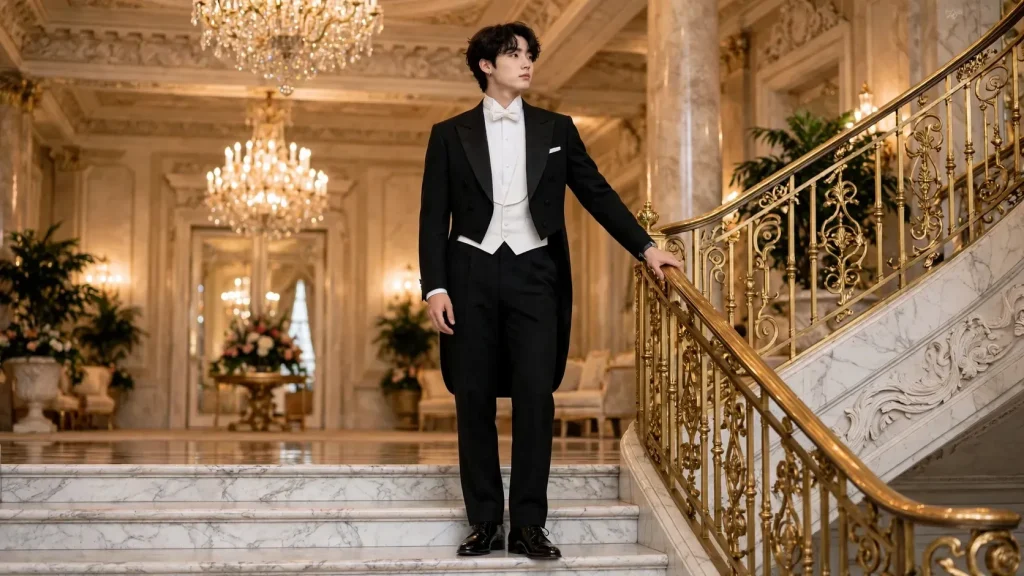
White tie is the highest level of traditional evening dress, and its tailcoat is a different garment from the morning coat. It’s cut straight across at the waist in front, with tails only at the back, and it’s worn open with a white piqué waistcoat, a stiff-front shirt, and a white bow tie.
You’ll only need it for state dinners, grand balls, or some opera galas. Rent it, have it tailored, and enjoy feeling very fancy for one night.
Mohair Tonic Suit
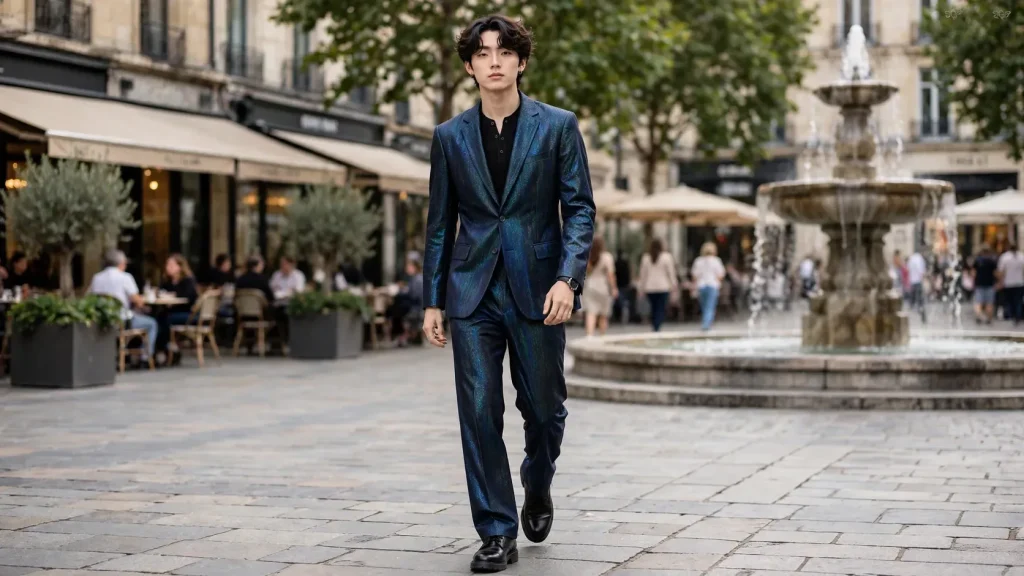
A tonic suit shimmers. The fabric is a mohair blend woven with two colors, so it shifts shade when you move under light.
It was huge in the mod scene of the 1960s. Today a slim tonic suit in navy, gray, or deep green looks sharp at evening events. Keep everything else simple. A plain white shirt and black shoes let the fabric shine. A tonic suit proves that men’s apparel can be bold without a single loud print.
Knitwear and Warm-Weather Pieces
Easy pieces for daily wear and sunny weekends.
Commando Sweater
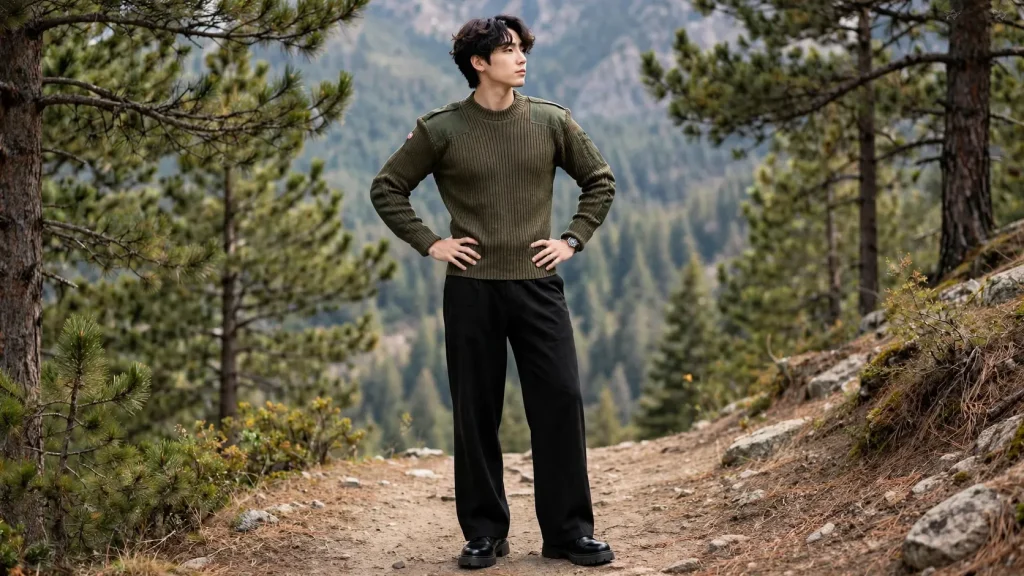
You’ve probably seen this without knowing its name. It’s a ribbed military sweater with fabric patches on the shoulders and elbows.
The patches stop wear from bag and gear straps, but today they just look great. Wear it over a collared shirt or on its own with olive trousers.
Lambswool V-Neck Sweater
Simple, but so useful.
A fine lambswool V-neck sits neatly over a shirt and tie, or over a plain tee. It’s softer than most sweaters and less bulky than a cable knit. Navy, bottle green, and burgundy are easy colors to start with.
This is the kind of men’s apparel that quietly makes every outfit look more finished.
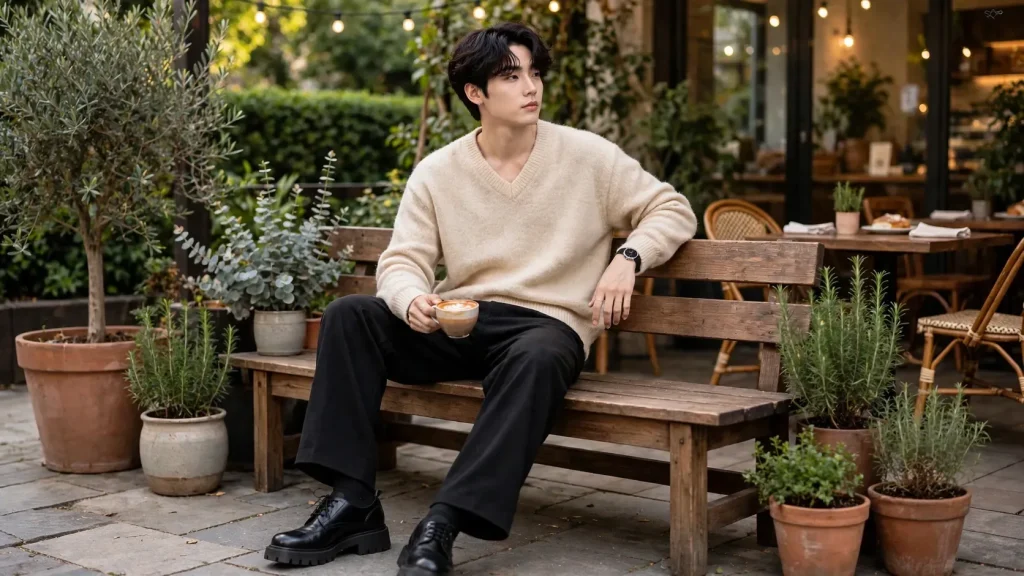
Aloha Shirt
The real Hawaiian aloha shirt is more than a loud print. Traditional versions use rayon or cotton with tropical motifs, a camp collar, and often a pocket matched perfectly to the pattern.
Here’s a styling example. Take a muted aloha shirt in navy or rust, add cream trousers and loafers, and you’re dressed for a summer dinner by the water.
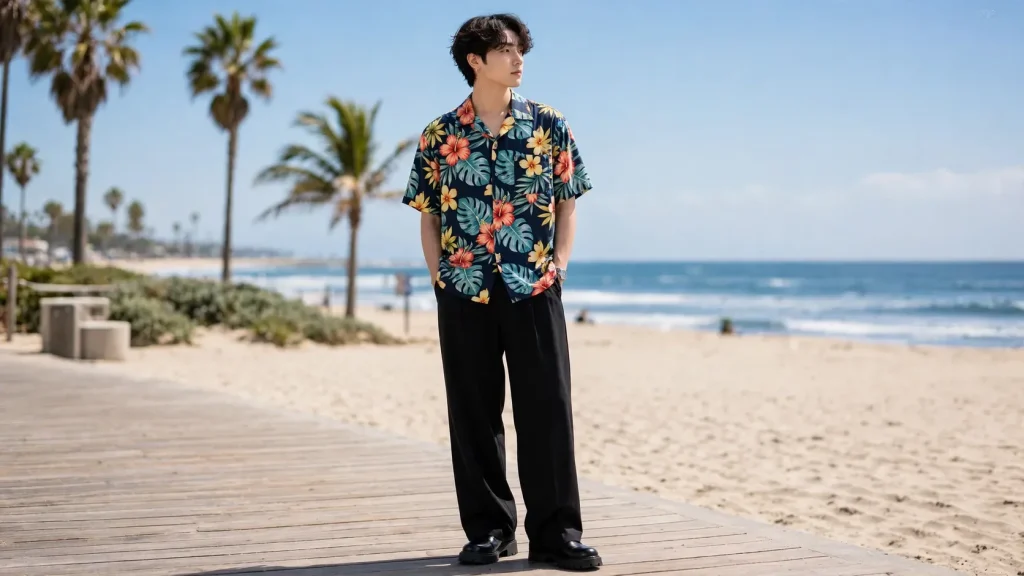
Swim Trunks
Every summer wardrobe needs a pair that looks good out of the water too.
Look for trunks with a mid-thigh length, a tailored waistband, and quick-dry fabric. Solid navy, olive, or a small geometric print are easy to wear.
The best pairs work for a swim, then lunch at a beach café with a linen shirt thrown over the top.
Traditional Men’s Clothing From Around the World
These garments carry deep cultural meaning in the places they come from.
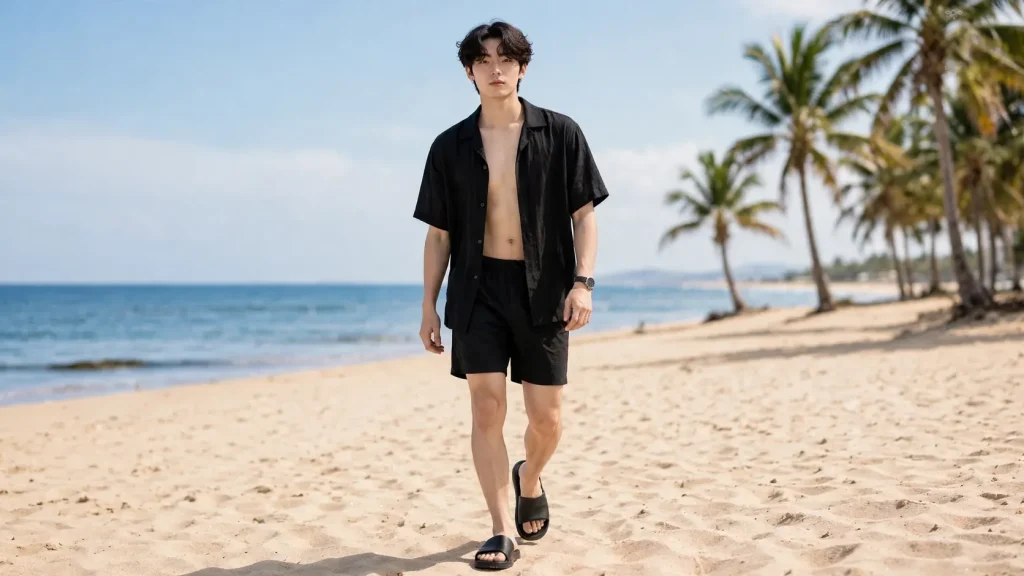
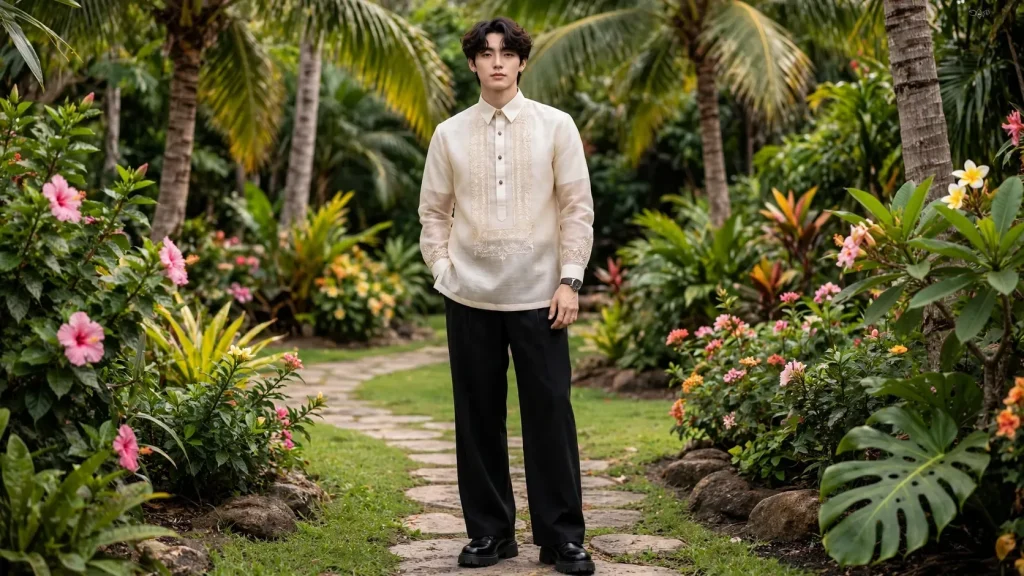
Barong Tagalog
The barong is the national formal garment of the Philippines. It’s an embroidered, lightweight shirt worn untucked over a plain undershirt. Traditional versions use fine fabrics such as piña (pineapple fiber) or jusi, and many modern barongs use other light, breathable materials.
In the Philippines, it’s worn for weddings, graduations, official events, and other important occasions, and the hand embroidery is a point of real pride.
It suits hot-weather formal events beautifully. The embroidery does all the work, so you don’t need a jacket or tie. Few pieces of formal men’s apparel are this comfortable in the heat.
Thobe
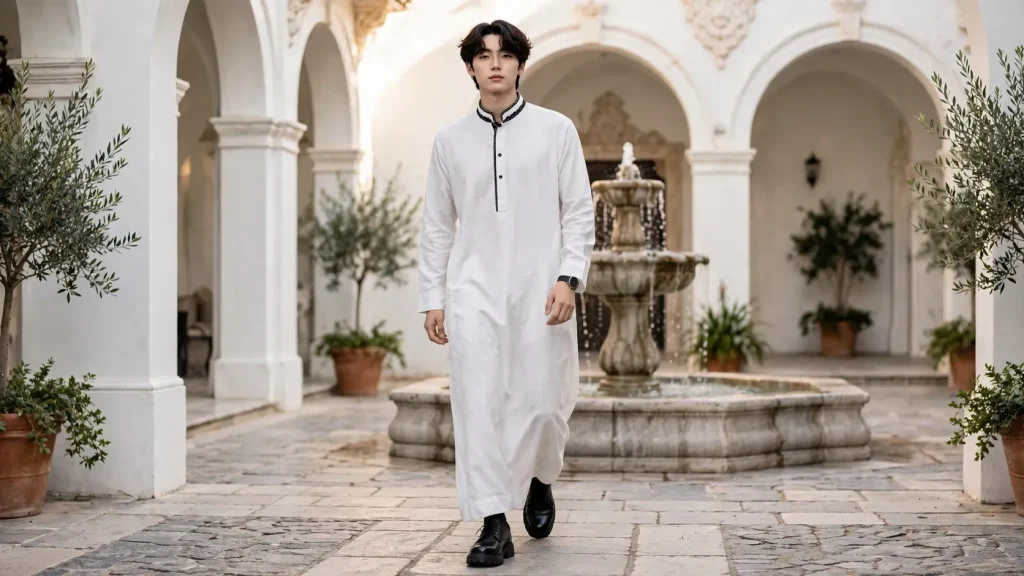
The thobe is an ankle-length garment worn by men across the Middle East. Depending on the region, similar garments are known as kanduras or dishdashas, with differences in collars, cuffs, and construction.
It’s everyday dress for many men, not a costume, and each country has its own preferred cut. White is the classic choice for heat, while darker wool versions appear in winter.
It’s comfortable, dignified, and right for Eid, Friday prayers, and family gatherings.
Agbada
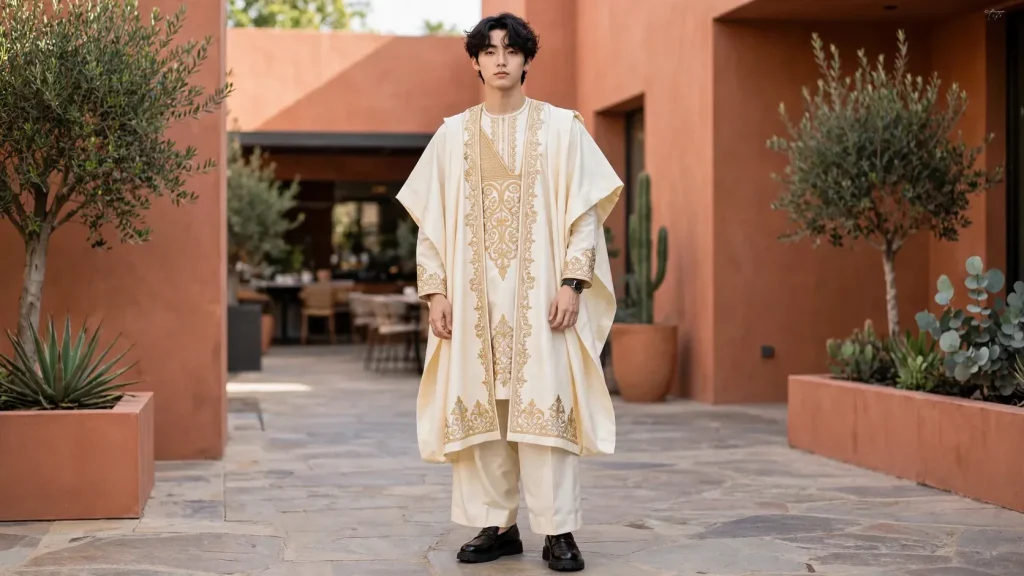
An agbada is a flowing, wide-sleeved robe from West Africa, especially Nigeria. It’s worn over a long shirt and matching trousers, and the full set often includes a cap.
Among the Yoruba people and across the region, it’s a statement piece for weddings, naming ceremonies, and other milestones. Rich embroidery around the neckline is what makes each one special.
If you’re buying one, ask about the fabric. Heavier brocades and damasks hold the dramatic drape best, while lighter cottons are easier to wear in heat.
Dashiki
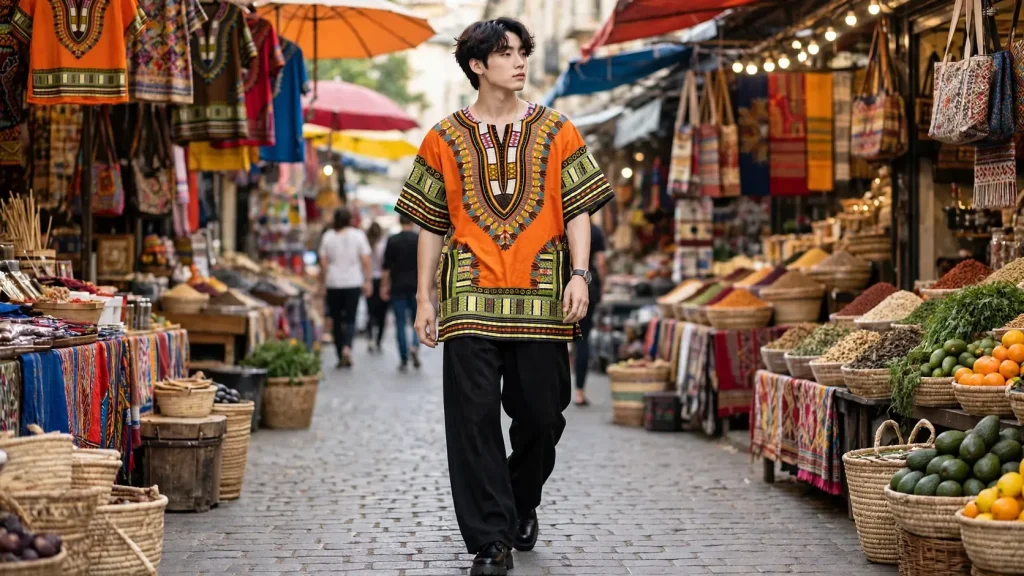
The dashiki is a colorful West African pullover top with a loose fit and decorative neckline. It’s much more casual than the agbada. It has roots in West African dress and later became a symbol of pride and heritage for many people in the African diaspora.
Wear it with plain trousers in black, khaki, or white so the print stays the focus, at summer festivals or cultural events.
Haori Jacket
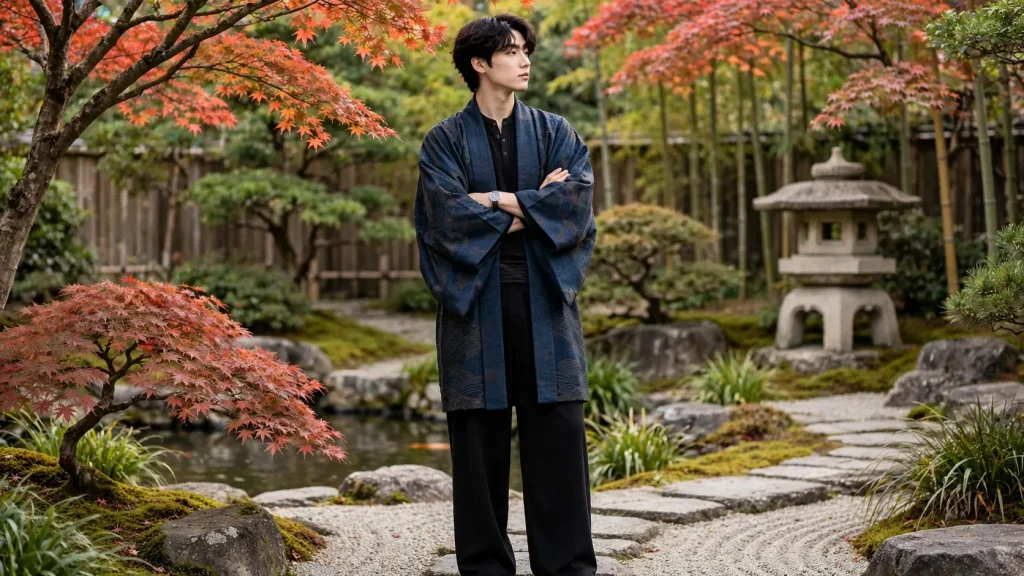
A haori is a traditional Japanese jacket worn over a kimono. It has a relaxed silhouette, straight lines, and sleeves that complement its flowing shape. It’s usually worn open, although decorative ties called himo can secure it at the front.
In Japan, men traditionally wear haori for formal and semi-formal occasions, and family crests sometimes appear on very formal versions.
Modern versions in cotton or linen work beautifully over a plain tee and wide trousers. They’re light, easy layers for spring and early fall. When shopping, look for one that falls around mid-thigh so it doesn’t overwhelm your frame, and choose plain or subtly patterned fabric for easy everyday styling.
Loungewear and Sportswear
Comfort matters too, and these get daily use.
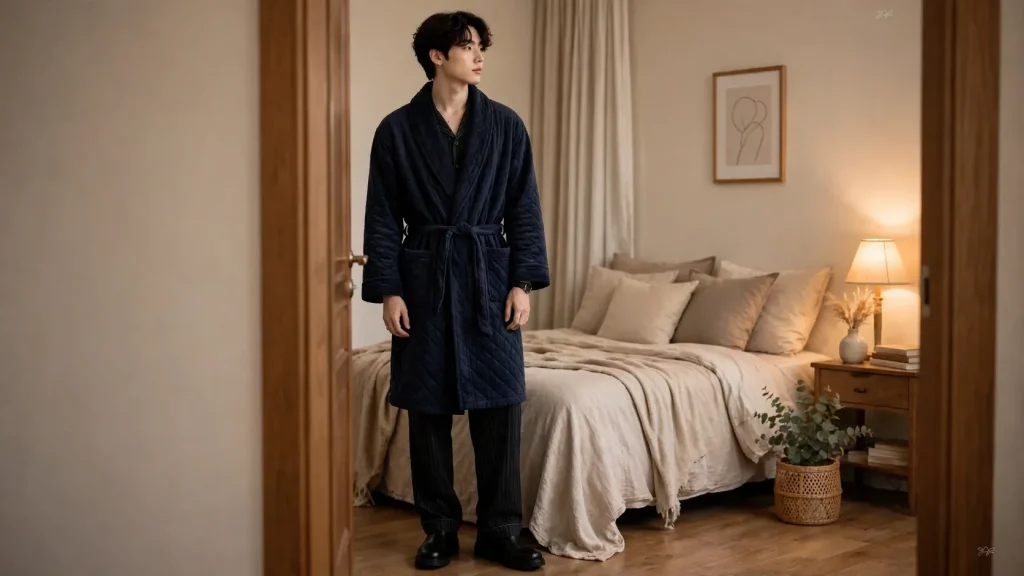
Dressing Gown
A good robe makes mornings feel calmer. Look for one in cotton, waffle knit, or soft flannel, with deep pockets and a shawl collar.
It’s not the most glamorous piece here, but it’s one you’ll use every single day.
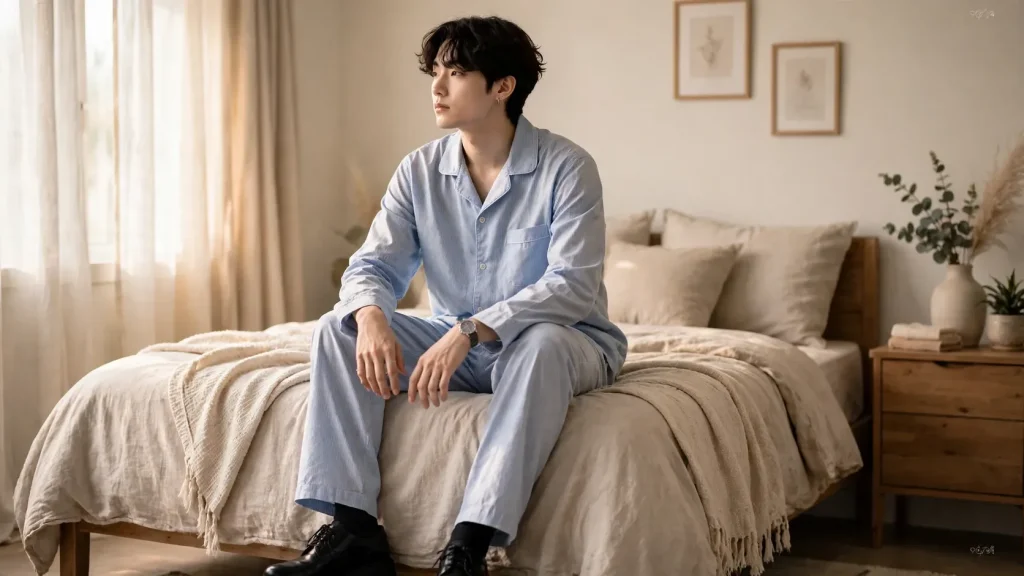
Button-Up Cotton Pajamas
Old-school pajamas are back for a reason. A matching set with a notch collar, piped edges, and a breast pocket looks neat and feels great.
Poplin is cool for summer. Brushed cotton keeps you warm in winter.
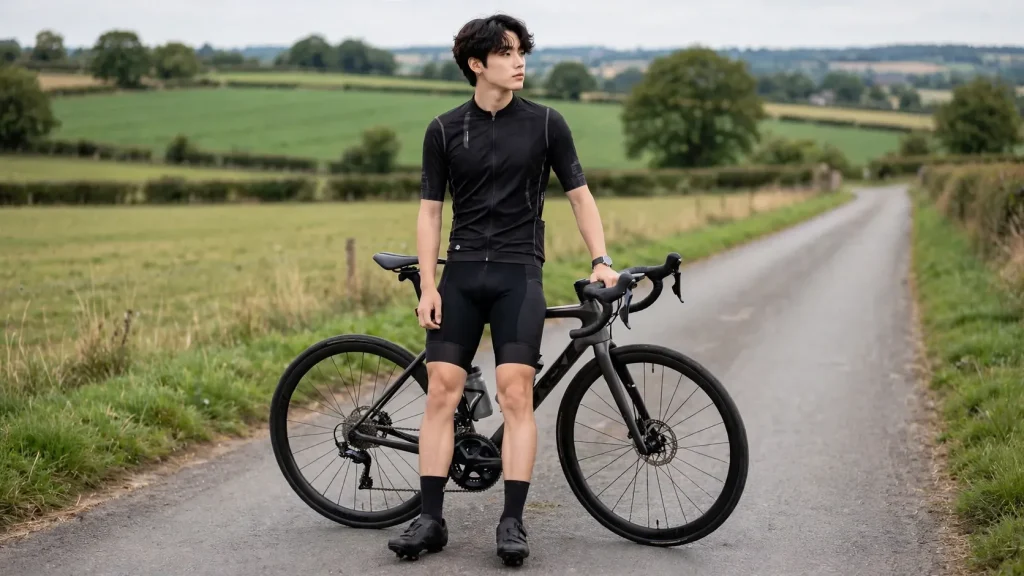
Cycling Jersey
Even if you only ride on weekends, a proper cycling jersey beats a cotton tee. It’s made from fabric that pulls sweat away from your skin, it fits close so it doesn’t flap, and it has back pockets for your phone and snacks.
Choose a long-sleeve version for cooler mornings. A plain dark color looks cleaner than heavily branded designs. When buying, check that the back pockets sit low enough to reach while riding, and that the zip is long enough to cool down on climbs.
Building Your Own Mix
You don’t need all 23. That would be a lot of coats.
Here’s a simple way to choose:
- Pick one coat from the covert, ulster, loden, donkey, or deck jacket options, based on your weather.
- Pick one knit for daily wear, like the commando sweater or a lambswool V-neck.
- Pick one piece that’s just for joy. That might be a smoking jacket, an aloha shirt, or a beautiful barong.
- Add one comfort piece for home, like pajamas or a robe.
Four thoughtful pieces will change your wardrobe more than twenty cheap ones. That’s the real secret to men’s apparel that feels personal.
Men’s Apparel Questions, Answered
What is the most versatile piece of men’s apparel?
A well-fitted overcoat in a neutral color comes close. It works over suits, knits, and even hoodies, so it covers most of the year in colder places.
Is it okay to wear traditional clothing from another culture?
Many people wear garments like the haori or dashiki with respect and appreciation. Buying from makers in that culture and learning a little about the garment’s meaning are good places to start.
How do I care for wool coats and sweaters?
Brush coats after wear, hang them on wide hangers, and let them rest between wears. Hand wash or dry clean sweaters, and fold them instead of hanging so they don’t stretch.
Do I need to own formal wear like a morning suit?
Usually not. Renting is smart if you go to formal events once in a while. Buying makes sense only if those events come up every year.
The Pieces That Tell Your Story
The best men’s apparel has something behind it. A sailor’s deck jacket. An Alpine coat built for snow. A Filipino barong embroidered by hand.
When your clothes carry a bit of history, getting dressed feels less like routine and more like choosing who you want to be that day.
Start with one piece from this list. Wear it often. Then add the next when the right one comes along.