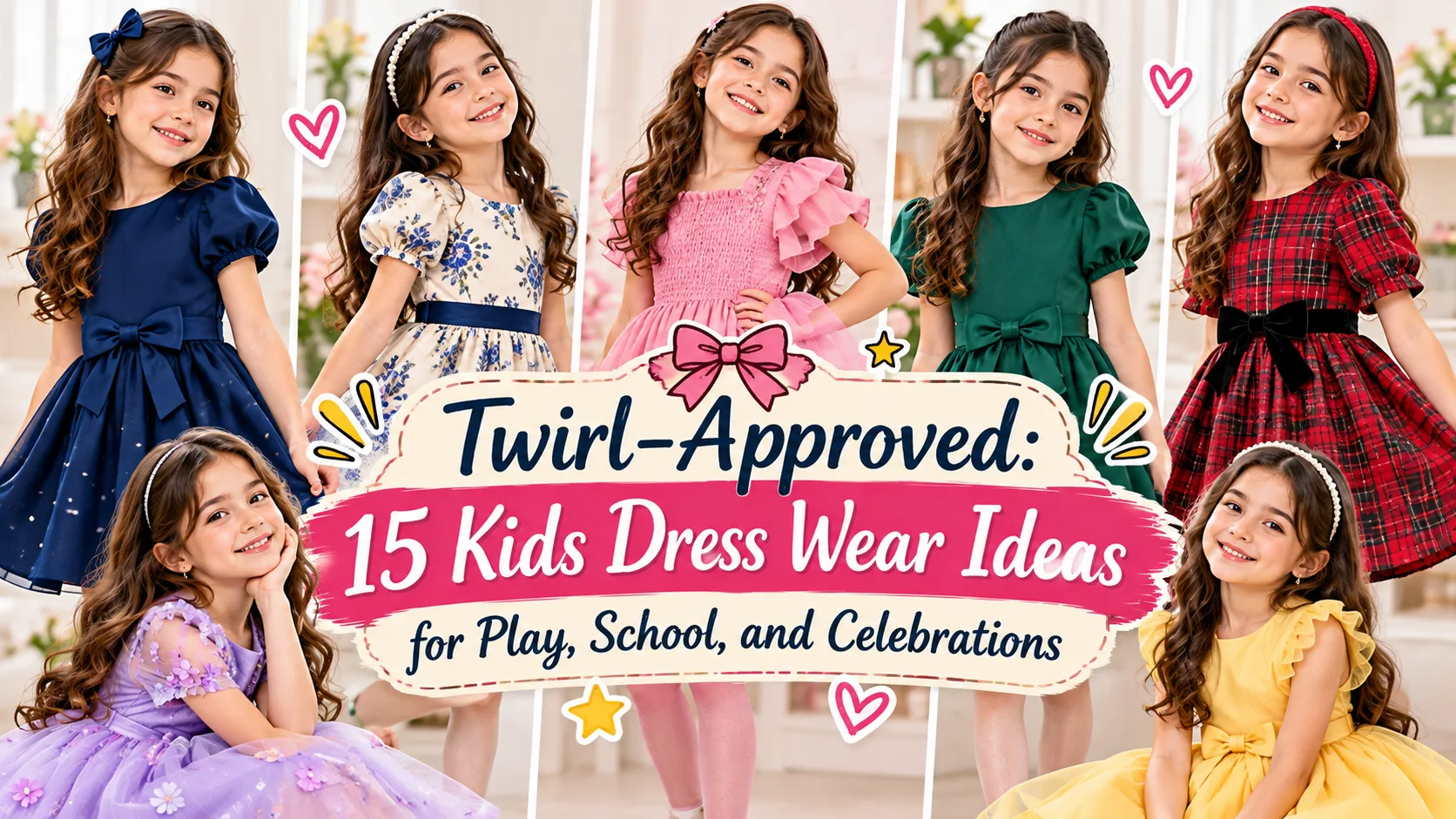
Twirl-Approved: 15 Kids Dress Wear Ideas for Play, School, and Celebrations
It’s 7:45 on a school morning. You’ve laid out a lovely dress, and your daughter is standing in the hallway with her arms crossed.
“It’s itchy. It has no pockets. I can’t climb in it.”
Honestly? She has a point.
Good kids dress wear isn’t just about looking sweet. It has to pass a child’s test first: soft, easy to move in, and ideally with somewhere to stash a rock or two. When a dress ticks those boxes, kids actually want to wear it.
Below you’ll find 15 dress ideas for girls, from everyday play dresses to classic styles and outfits for cultural celebrations. Every idea has sleeves and comfortable coverage, and each one is chosen with real kids in mind.
What Makes a Great Kids’ Dress
Whether you’re shopping for kids dresses for school or parties, keep this short checklist handy.
- Soft fabric inside and out. Cotton, jersey, and brushed knits are usually the most comfortable.
- Easy fastenings. Pull-on styles or wide necklines help kids dress themselves. Buttons at the back can be tricky.
- Room to move. A-line, tiered, and wrap shapes allow climbing, running, and sitting cross-legged.
- Pockets. Kids love them. They’re also handy for tissues and treasures.
- Machine washable. Dresses that can go straight in the wash get worn far more often.
- Gentle on skin. Flat seams, tagless labels, and soft waistbands help kids with sensitive skin.
- The right length. A skirt that ends around the knee is easiest for running, climbing, and stairs. Very long skirts can trip little feet.
Everyday play dresses (five ideas):
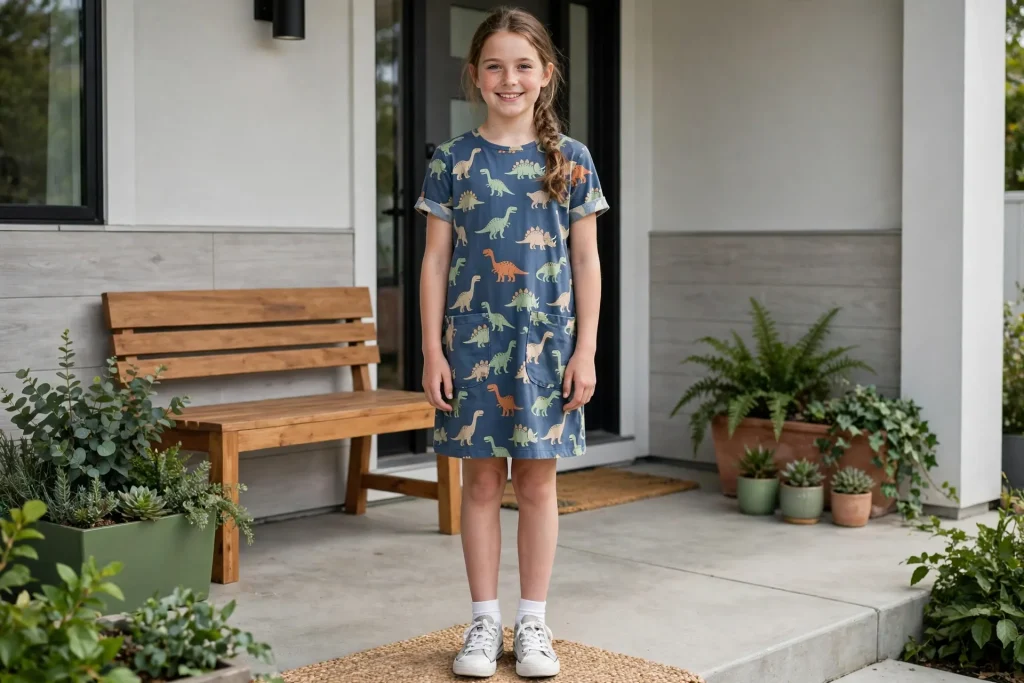
Dinosaur Print Dress With Big Pockets
Who says dresses can’t be fun?
A long-sleeve jersey dress covered in friendly dinosaurs, with roomy front pockets, is perfect for kids who love adventure. Look for prints in green and blue, or soft pastel versions with pink and lilac dinos.
Pair it with leggings and sneakers for school, playgrounds, or museum trips. It’s a great reminder that dresses can suit every kind of personality.
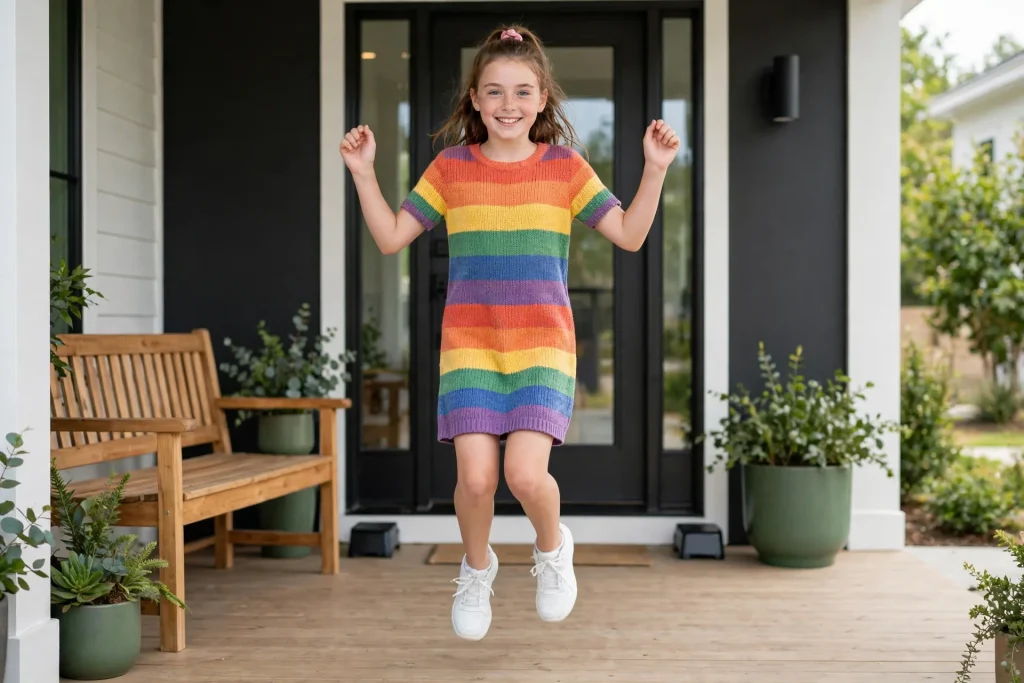
Rainbow Stripe Knit Dress
Bright rainbow stripes are cheerful, bold, and easy to style.
Choose a soft knit dress with wide, bright rainbow stripes in cheerful colors. Long sleeves and a gentle A-line shape keep it cozy and comfortable.
How to wear it:
- With white or gray tights in cooler months
- With bike shorts underneath for active play
- With simple white sneakers to let the colors shine
It’s an easy pick for birthday parties, art classes, and gray winter days.
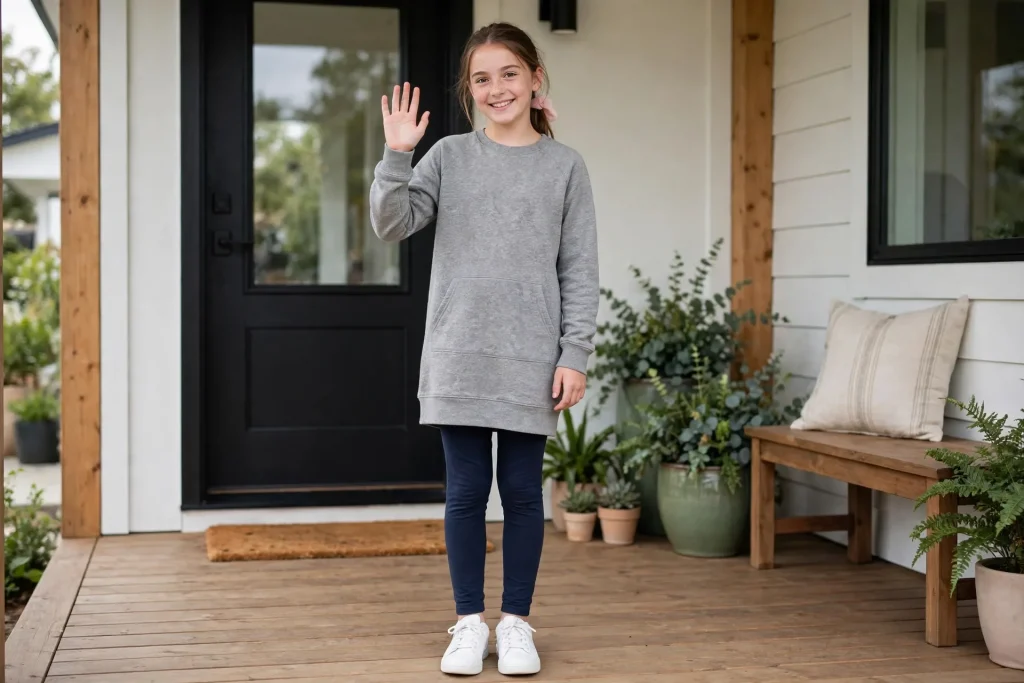
Sweatshirt Dress With Leggings
If your child lives in sweatshirts, this dress is the perfect compromise.
A sweatshirt dress has the soft brushed inside of a classic sweatshirt but falls to the knee like a dress. It’s warm, easy to pull on, and great for chilly mornings.
Gray, navy, and pale pink are versatile colors. Some versions have a fun graphic or a front pouch pocket.
Add fleece-lined leggings and boots in winter, and it’s almost as comfortable as a favorite sweatshirt.
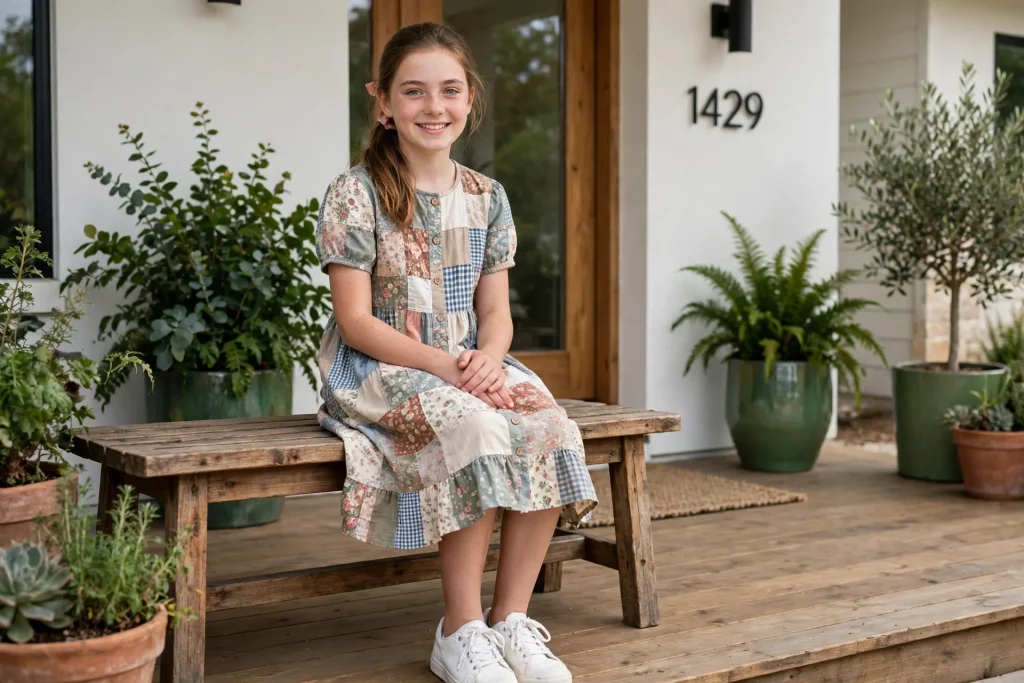
Patchwork Print Cotton Dress
Patchwork prints combine small squares of different patterns, like florals, checks, and dots, into one fabric. They have a charming, handmade-inspired look.
A long-sleeve patchwork cotton dress with a round collar and tie waist feels a little vintage. Soft colors like dusty blue, rose, and mustard work well together.
Pair it with a solid cardigan and plain tights to balance the busy print. Patchwork prints also hide small marks well, which makes them a smart choice for messy art days.
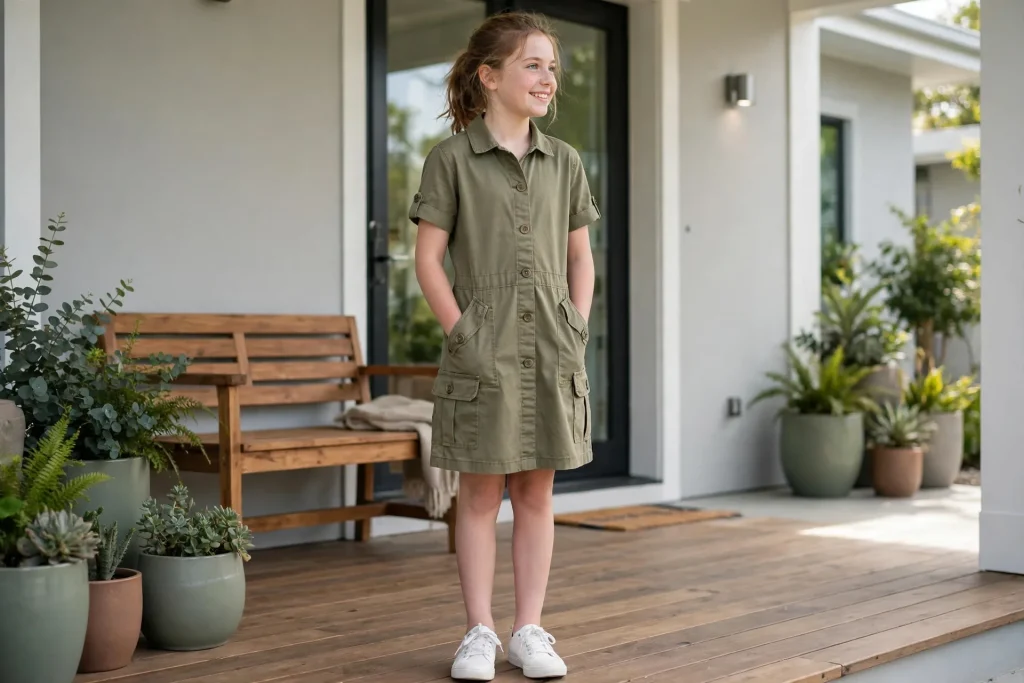
Utility Twill Dress With Cargo Pockets
For kids who love collecting things, a utility dress is a game changer.
This style is made from sturdy cotton twill, often in olive, tan, or navy, with button-flap cargo pockets on the skirt. Long sleeves with roll-up tabs make it practical in changing weather.
Why parents love it:
- Durable enough for outdoor play
- Hides grass stains better than pale colors
- Pockets big enough for small treasures, gloves, or toys
Add leggings and hiking-style boots for nature walks or weekend adventures.
Classic and timeless (four ideas):
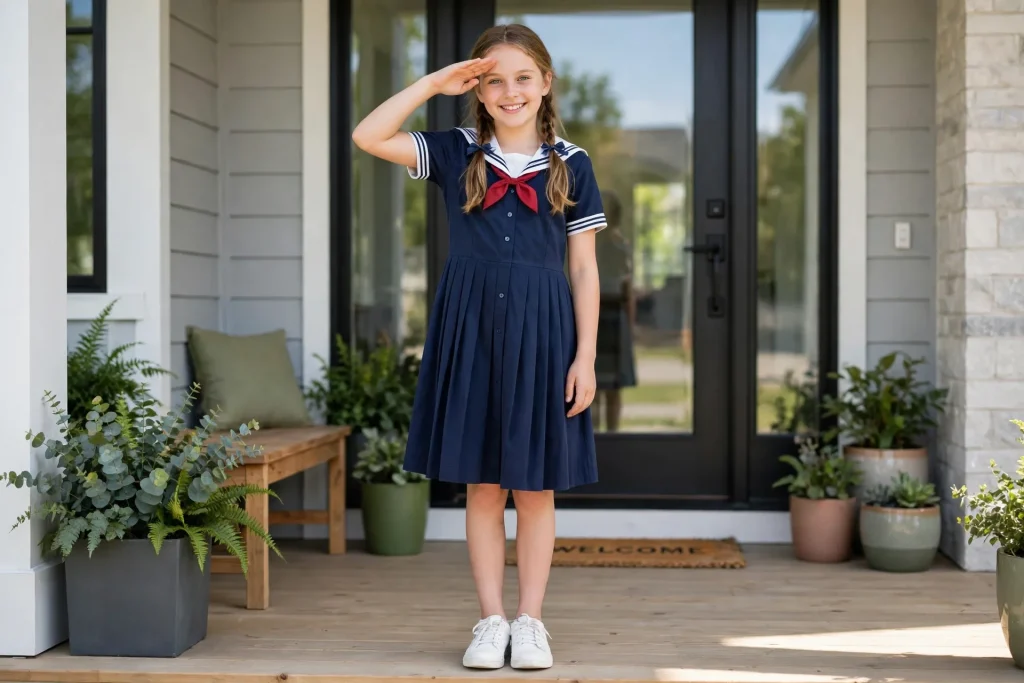
Sailor-Collar Dress
The sailor dress is a classic for a reason. A wide square collar with contrast stripes looks crisp and smart.
Navy with a white collar is traditional, but red and white or light blue and white feel fresh too. Long sleeves and a pleated or A-line skirt complete the look.
It’s lovely for family photos, holidays by the sea, or a special lunch. Add white tights and simple shoes. Look for a collar that lies flat and soft, so it doesn’t flip up or rub the neck during play.
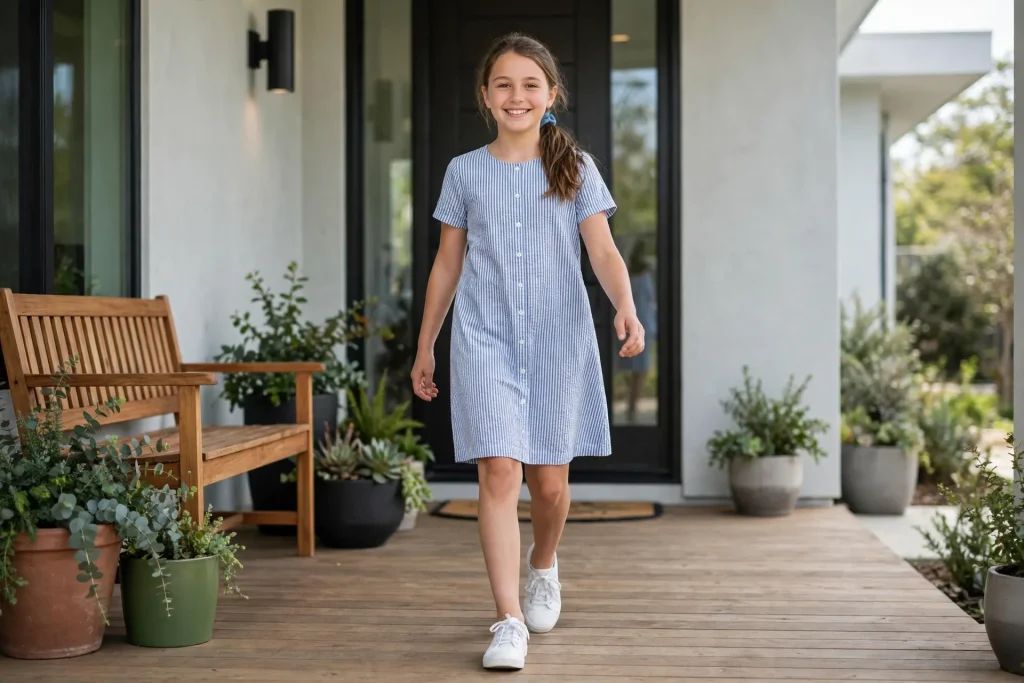
Seersucker Stripe Dress
Seersucker is a lightweight cotton with a puckered texture that keeps it slightly away from the skin. That makes it a great choice for warmer days.
A long-sleeve seersucker dress in blue, pink, or green stripes feels fresh and relaxed. Because the fabric is so light, long sleeves stay comfortable even in spring and early summer.
Seersucker generally resists creasing better than many lightweight cotton fabrics, so it still looks neat after car rides and playtime.
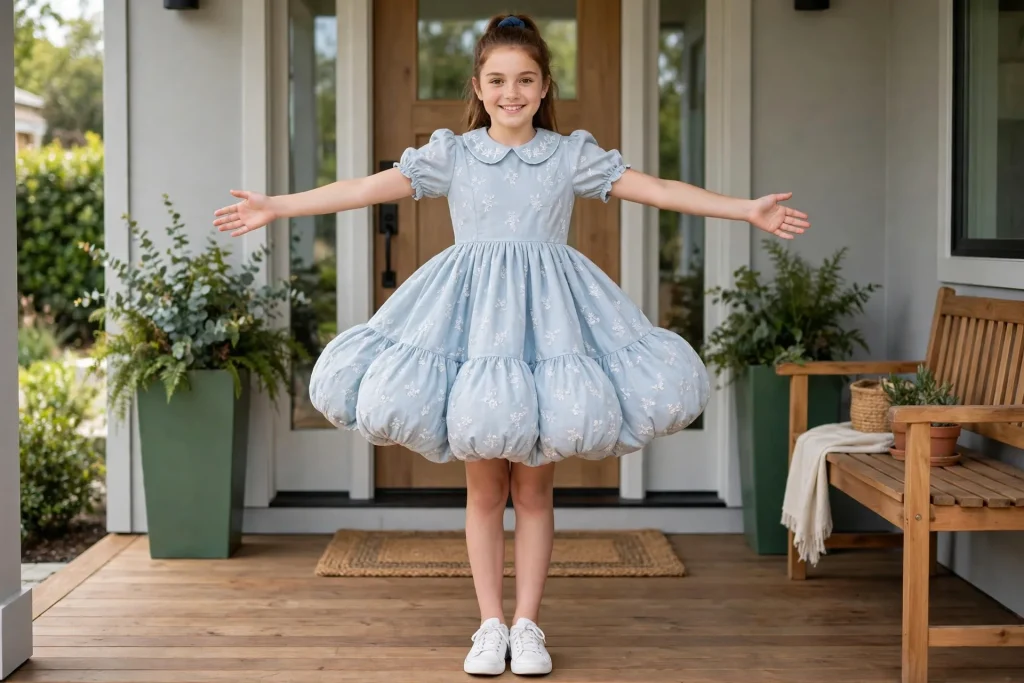
Bubble Hem Dress
A bubble hem dress has a skirt that curves inward at the bottom, creating a soft, puffy shape.
It looks playful and slightly retro, especially in solid colors like cherry red, sunflower yellow, or soft sage. A fitted long-sleeve top half balances the rounded skirt.
The playful shape is especially popular with younger children, who love the bouncy feel. Pair it with tights and Mary Janes for parties, or leggings and sneakers for everyday wear.
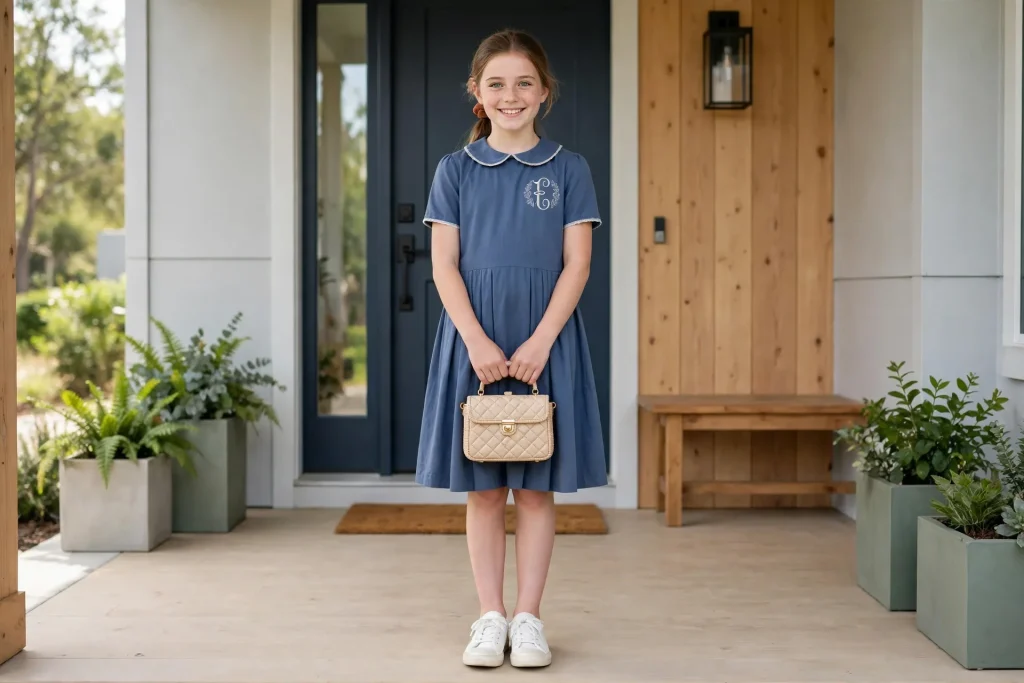
Monogrammed Dress
A small embroidered monogram, like a child’s initials on the collar or chest, makes a simple dress feel special and personal.
Choose a solid cotton or knit dress in a soft color, then add embroidery in a contrasting thread. Navy initials on a cream dress or white initials on a green dress both look classic.
Monogrammed dresses make thoughtful gifts for birthdays and holidays. Many small online shops offer personalization.
When personalizing children’s clothing, privacy is worth a thought. Many families stick to initials or keep them subtle, rather than displaying a child’s full name in public.
Dressy but comfortable (two ideas):
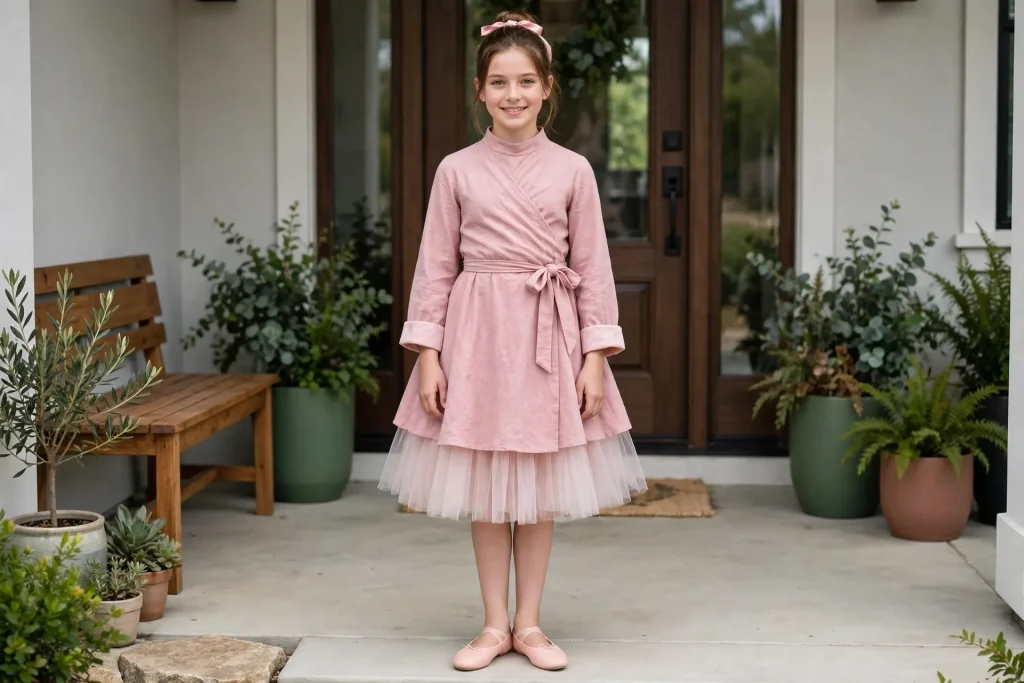
Ballet-Inspired Wrap Dress With a Soft Tulle Underskirt
Little dancers often love dresses that remind them of ballet class.
This style has a wrap-front top with long sleeves, like a ballet wrap cardigan, and a skirt with a soft tulle layer underneath. The tulle adds a gentle swish without the scratchiness of a full tutu.
Blush pink, lilac, and soft gray are popular colors. Pair it with ballet flats and tights for recitals, parties, or simply twirling around the living room.
Choose a stitched-in wrap front or secure closures, so the top stays in place during twirls, and check that the tulle is lined so it doesn’t rub bare legs.
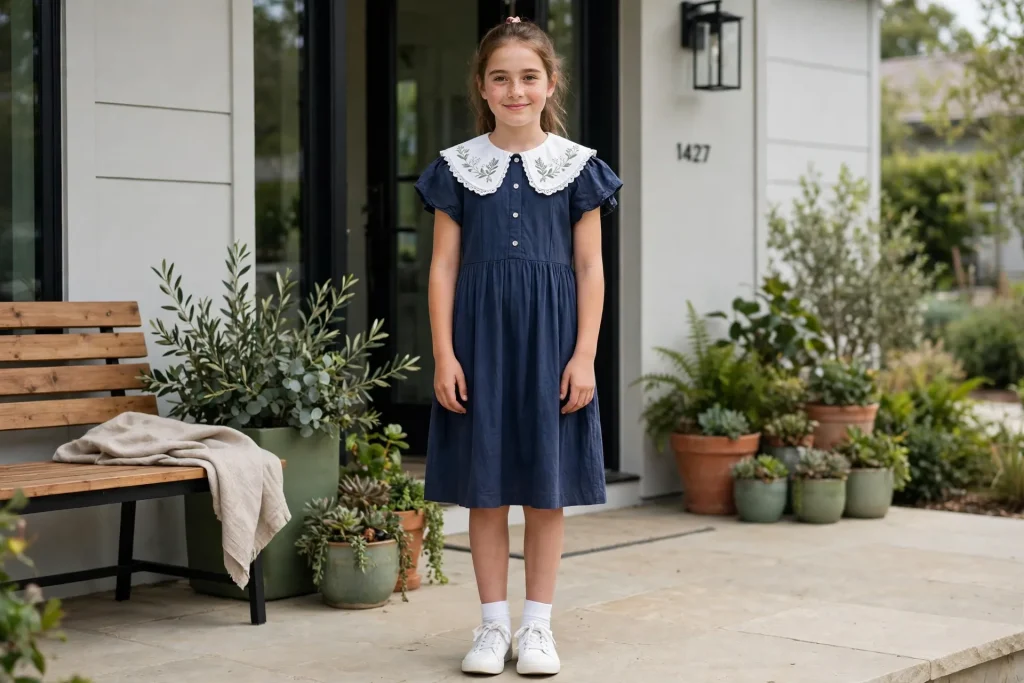
Dress With a Detachable Statement Collar
A detachable collar changes one plain dress into several different looks.
Start with a simple long-sleeve dress in navy, black, or burgundy. Then add a removable collar, such as a lace collar, a velvet bow collar, or an embroidered floral one.
It’s a clever way to stretch one dress across school events, family dinners, and holidays.
Choose collars with secure fastenings so they stay put and don’t go missing. For toddlers, skip collars with beads, sequins, or small attached pieces that could come loose.
For cultural celebrations (four ideas):
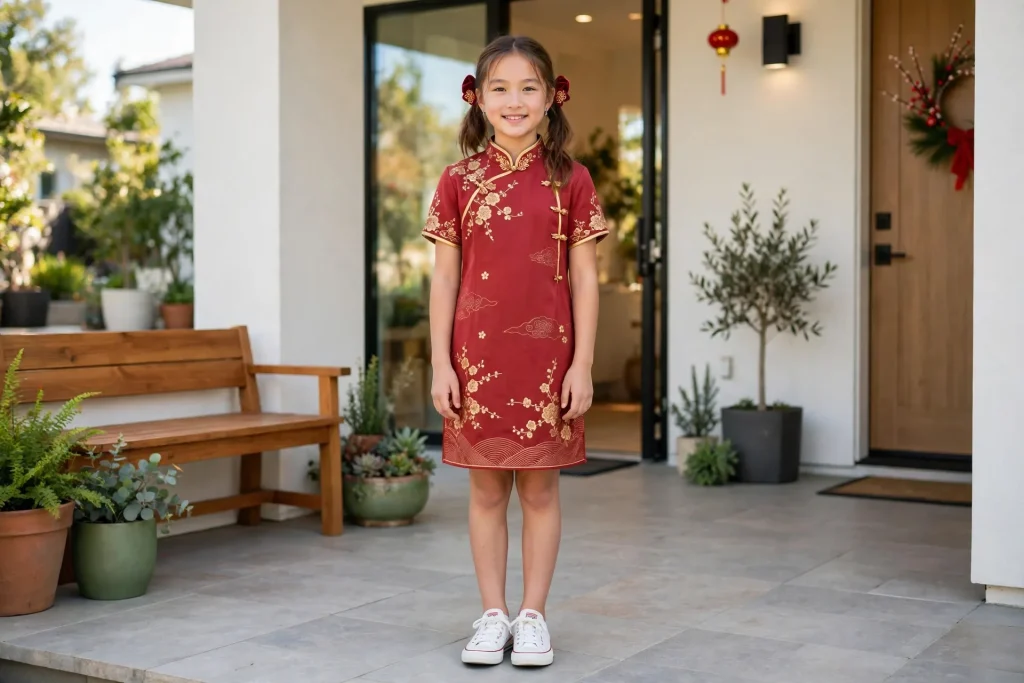
Cheongsam-Inspired Dress for Lunar New Year
The cheongsam, also called a qipao, is a traditional Chinese dress with a mandarin collar and decorative frog closures.
Red and gold are popular choices for Lunar New Year, since they’re associated with luck and celebration. Long-sleeve styles in soft brocade or cotton blends feel festive and comfortable.
Many kids’ cheongsam-inspired dresses have a looser fit than adult versions, so they’re easier to move in. If you’re buying for a celebration, shops run by Chinese makers or community stores can help you find a meaningful style.
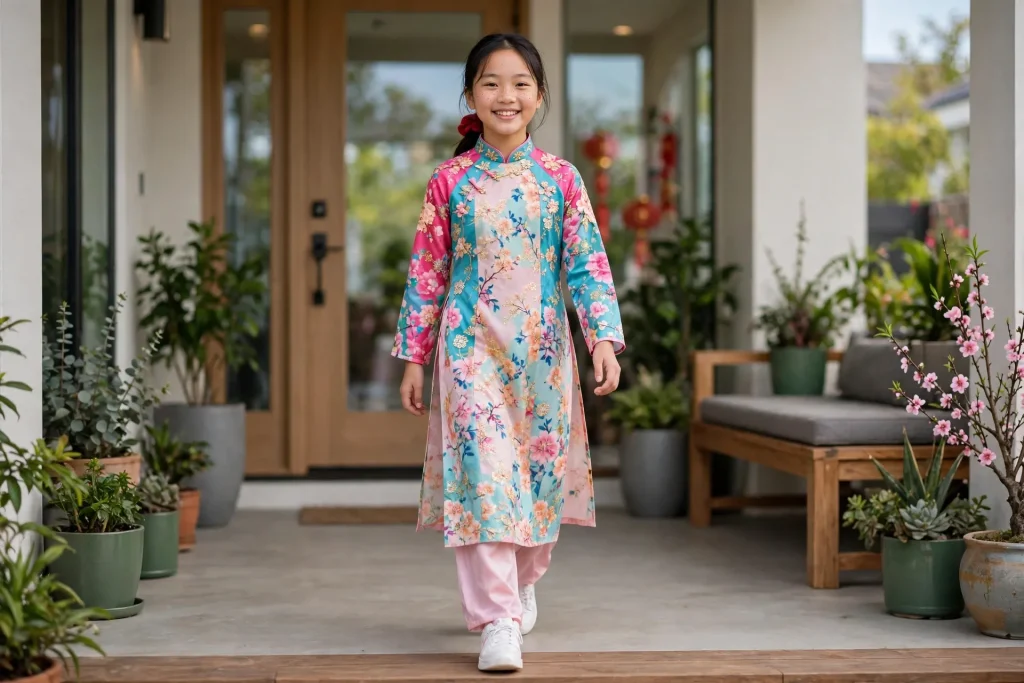
Áo Dài for Tết and Family Celebrations
The áo dài is Vietnam’s traditional long tunic, worn over loose trousers. It’s especially popular during Tết, the Vietnamese Lunar New Year.
Modern children’s áo dài vary in fabric, decoration, and silhouette, and many come in bright colors like red, yellow, and pink with floral or embroidered designs. The tunic has long sleeves and side slits, while the trousers give plenty of freedom to move.
It’s elegant, comfortable, and perfect for family visits and festive photos.
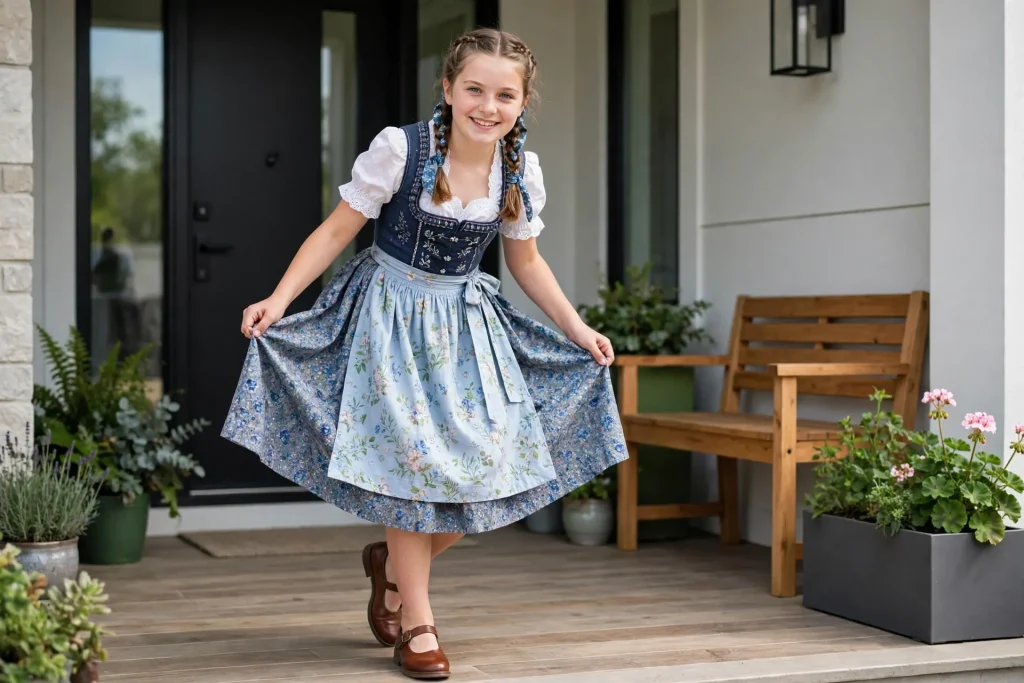
Dirndl for Festivals
The dirndl is a traditional dress from Bavaria and Austria. It includes a fitted bodice, a full skirt, a blouse underneath, and an apron tied at the waist.
Children’s dirndls are often worn to local festivals and cultural events. For full coverage, pair the bodice with a comfortable long-sleeve blouse and a skirt that falls to the knee or below. Styles vary by region, and some families have their own traditional patterns.
Classic colors include green, blue, and red with checked or floral aprons. Lace-up details should be secure and comfortable for kids.
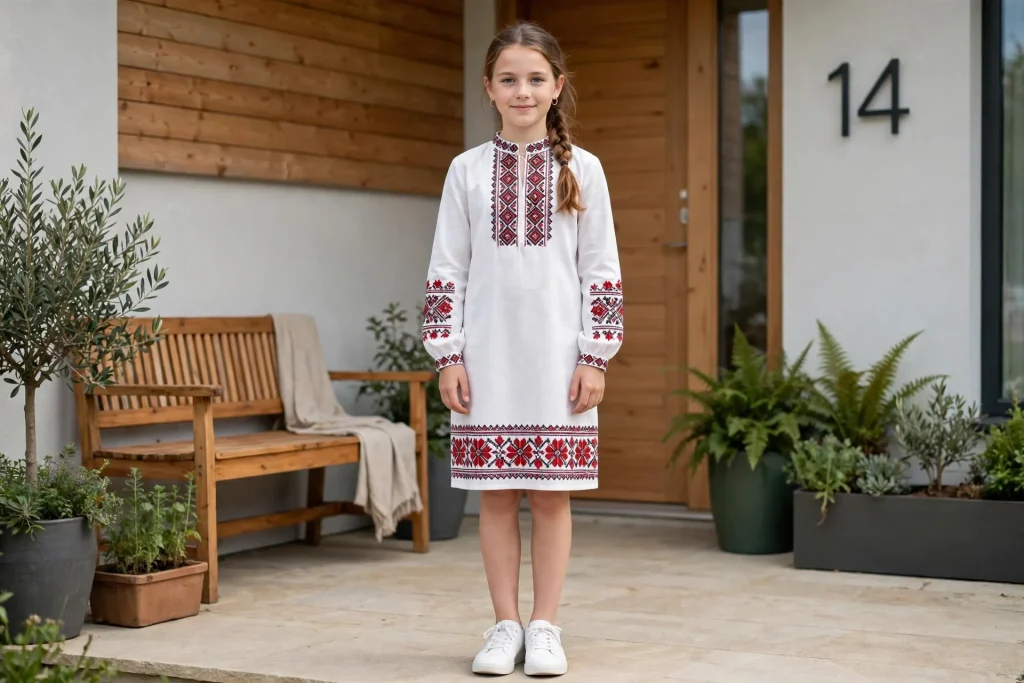
Vyshyvanka-Inspired Embroidered Dress
A vyshyvanka is a traditional Ukrainian embroidered shirt, known for detailed patterns around the neckline, sleeves, and hem. Embroidered dresses in the same style are often worn for celebrations and family events.
Kids’ versions are usually white or cream linen or cotton, with red, black, or colorful embroidery. The patterns often carry regional meaning.
If you’d like one for your child, look for makers who share the background of their designs. Many families treasure these dresses and pass them down.
How Many Dresses Does a Child Need?
A simple dress capsule:
- Two or three everyday play dresses for school and weekends
- One classic dress for photos and family events
- One dressy option for parties and holidays
Choose colors that mix well with your child’s tights, leggings, and cardigans. That way, every piece of kids dress wear in the closet can be worn many different ways.
Making Dresses School-Ready
For school days, pair dresses with leggings or bike shorts, comfortable sneakers, and a cardigan for chilly classrooms. If your school has a uniform policy, check the rules on colors and styles before buying dresses specifically for school.
Making Dresses Work in Every Season
Spring: seersucker, cotton prints, and sailor dresses with light tights.
Summer: lightweight cotton dresses with long, airy sleeves, plus breathable bike shorts underneath. Tightly woven fabrics give more sun protection than loose weaves, but still use sunscreen, hats, and shade as needed.
Fall: patchwork prints, utility dresses, and rainbow knits with ribbed tights.
Winter: sweatshirt dresses, knit dresses, and fleece-lined leggings with boots.
Layers and Shoes That Go With Everything
A few basics make almost any dress work harder.
Leggings and bike shorts: essential for climbing, cartwheels, and windy days.
Tights: ribbed or opaque tights add warmth and a polished look in cooler months.
A neutral cardigan: cream, navy, or gray goes with nearly every print.
Comfortable shoes: sneakers for play, Mary Janes or ballet flats for special days, and boots for winter.
Letting Kids Help Choose
Kids dress wear works best when children have a say. Offer two or three options you’re happy with, then let them pick.
Ask what they like about a dress. Is it the color, the pockets, or how it twirls? Their answers make future shopping much easier, and you’ll spend fewer mornings negotiating in the hallway.
Care Tips That Keep Dresses Looking New
- Follow the garment’s care label first
- Wash printed dresses inside out to protect colors
- Use a gentle cycle for embroidered or tulle details
- Air dry delicate pieces to prevent shrinking
- Treat food stains quickly with cold water
- Store special dresses in breathable garment bags
A Real-Life Example
Imagine a seven-year-old who loves climbing, drawing, and dinosaurs, but also has a cousin’s birthday party coming up.
On school days, she wears the dinosaur print dress with leggings and sneakers. On weekends, she switches to the utility twill dress for park trips. For the party, she wears the ballet-inspired wrap dress with soft tights and flats.
Three dresses cover most of her week, and every one of them lets her move freely.
Kids’ Dress Mistakes to Avoid
Buying itchy fabrics. If it feels scratchy in the store, it’ll feel worse after an hour.
Choosing tight fits. Kids need room to sit, stretch, and play.
Forgetting what goes underneath. Leggings, tights, or bike shorts make dresses practical for active days.
Ignoring your child’s preferences. Kids who choose their own dress are much more likely to wear it happily.
Questions About Kids’ Dresses
What fabrics are best for kids’ dresses?
Cotton, jersey, and soft knits are usually the most comfortable and easiest to wash, which is why they’re so common in girls’ dresses.
How can girls wear dresses for active play?
Pair dresses with leggings or bike shorts underneath and choose comfortable sneakers.
Are long-sleeve dresses okay in summer?
Yes, if they’re made from light, breathable fabrics like cotton or seersucker. Long sleeves can also help protect skin from the sun.
How do I choose the right dress size?
Check the brand’s size chart, since sizing for dresses for kids varies a lot, and measure your child’s height and chest. A little extra room is fine, but avoid dresses that are too long or loose to move in.
What are good dresses for cultural celebrations?
Many families choose traditional styles like the cheongsam, áo dài, dirndl, or embroidered folk dresses, depending on their heritage and the event.
Twirl-Tested and Ready
The best kids dress wear is the kind your child grabs from the closet without being asked. Soft fabrics, room to move, and a few favorite prints go a long way.
Start with one or two dresses that match your child’s personality, add leggings and a cardigan, and watch how quickly they become wardrobe favorites.