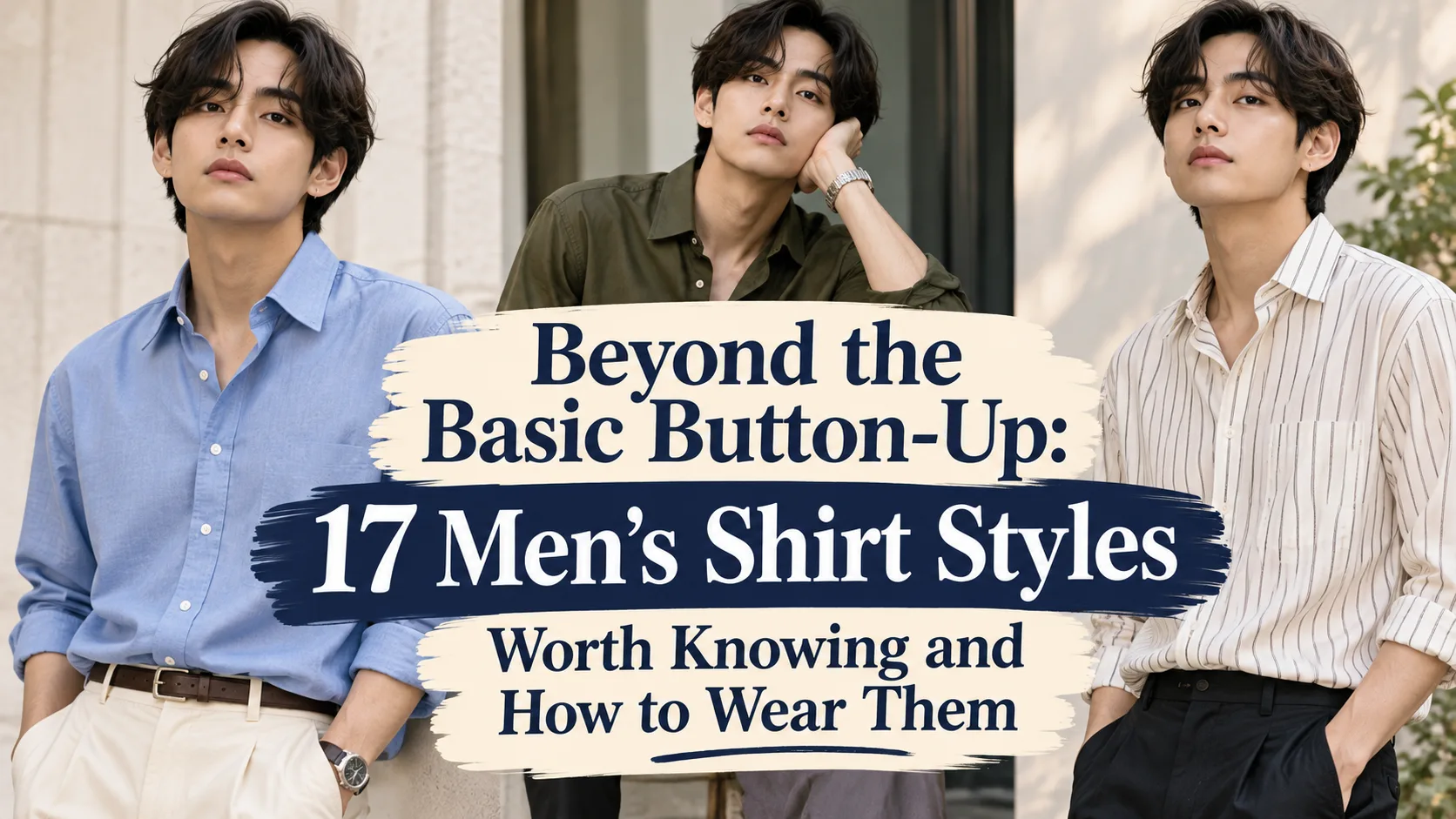
Beyond the Basic Button-Up: 17 Men’s Shirt Styles Worth Knowing and How to Wear Them
When it comes to men’s shirt styles, most wardrobes hold the same three. A white one, a blue one, and a check one bought for a wedding years ago.
There’s nothing wrong with those. But shirts come in far more styles than most people realize, and each one does a slightly different job.
This guide walks through 17 men’s shirt styles and how to wear each one. You don’t need all of them. Most men only need a handful that suit their work and climate.
Before the list, a quick word on fit. It matters more than a shirt’s name or price, so it’s worth checking first.
The 30-Second Fit Check
Run through these quick checks in the fitting room.
Shoulders. The shoulder seam should sit right at the edge of your shoulder, not halfway down your arm.
Collar. Button it up and slide two fingers inside. If they fit comfortably, the collar is right. If you can fit your whole hand, it’s too big.
Chest. Look at the buttons from the side. If the fabric pulls into little X shapes between them, size up or try a different cut.
Sleeves. With your arms relaxed, the cuff should land around the base of your thumb, so roughly 1/4 to 1/2 inch shows past a jacket sleeve.
Length. A shirt meant to be tucked should stay tucked when you raise your arms. For an untucked casual shirt, ending around the middle of your back pocket is a useful rough guide, though designs vary.
Every style below looks better when the fit is right.
Office and formal shirts (five styles):
The French Cuff Dress Shirt
A French cuff, sometimes called a double cuff, is a long cuff that folds back on itself and fastens with cufflinks instead of buttons.
It’s one of the dressiest details a shirt can have, which is why it shows up at weddings and formal business occasions. For black tie, choose a shirt designed for a tuxedo, since the front and collar matter too.
Pair it with a dark suit, a silk tie, and simple cufflinks. Silver or gold knots, plain discs, or something small and personal all work well.
Choose white or pale blue for the most formal look. Save louder cufflinks for celebrations rather than serious meetings.
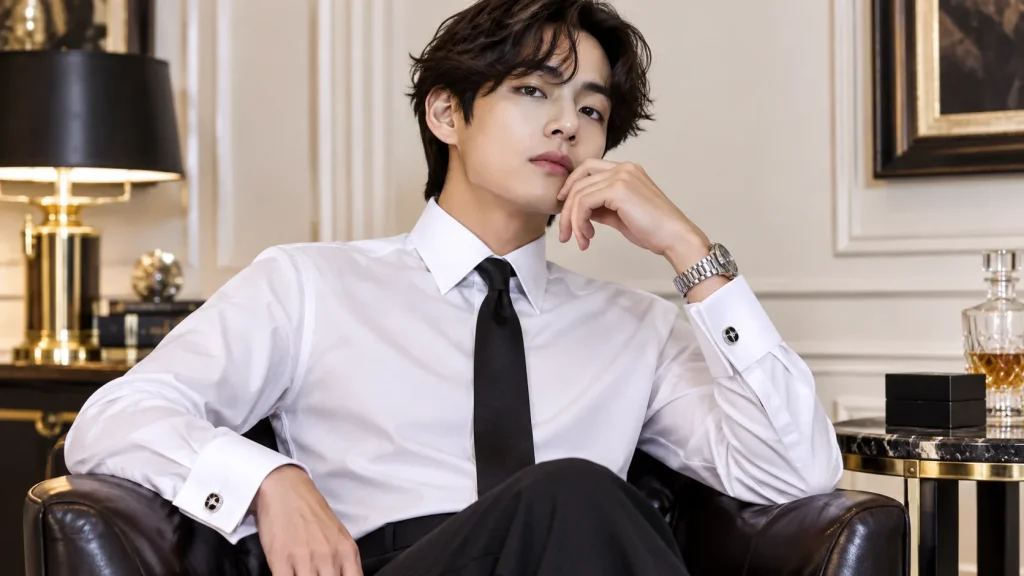
The Cutaway Collar Shirt
On a cutaway collar, the points are spread very wide, almost horizontal. It looks sharper and a little more modern than a standard collar.
Some men like it with a narrower face, since the wide spread can add a bit of width, but that’s a matter of taste rather than a rule. It also suits fuller tie knots, which fill the larger gap nicely.
A cutaway collar works surprisingly well without a tie, too. Worn open under a navy blazer, it frames the neck neatly and doesn’t collapse the way a soft collar can.
Pale blue twill is an easy starting point. It looks polished, hides small creases better than plain poplin, and goes with almost any suit.
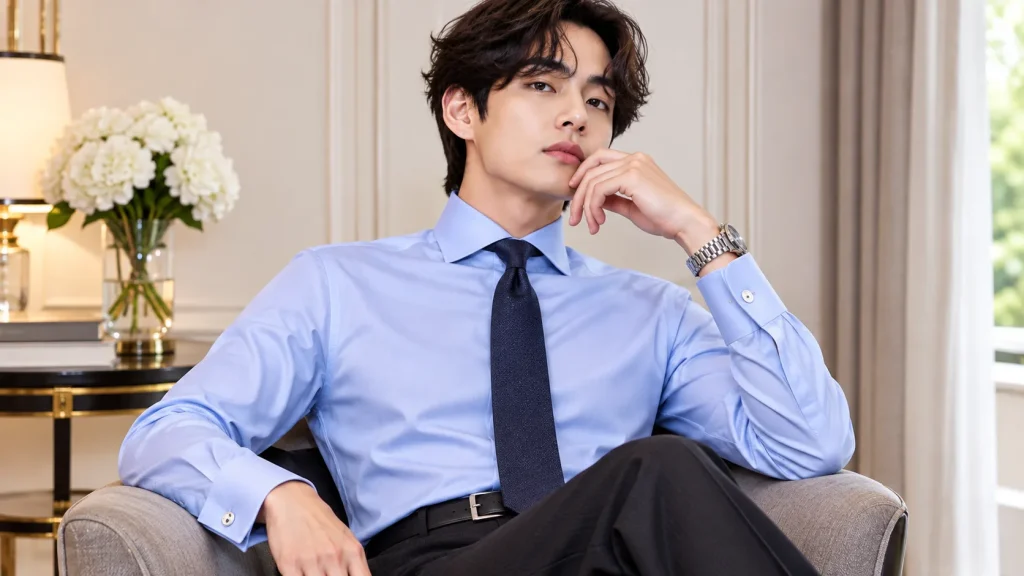
The Tuxedo Shirt
A proper tuxedo shirt is different from a regular white dress shirt. It usually has a pleated or textured bib front, French cuffs, and small studs instead of standard buttons.
There are two main collar types. A turndown collar is the most common choice today and pairs neatly with a bow tie. A wing collar, with small points that stand up, feels more traditional.
The rest of the look is straightforward. A black bow tie, matching studs and cufflinks, and a well-fitted tuxedo are all you need.
If you only attend a few black-tie events, renting or buying one good tuxedo shirt is usually smarter than trying to make an ordinary dress shirt work.
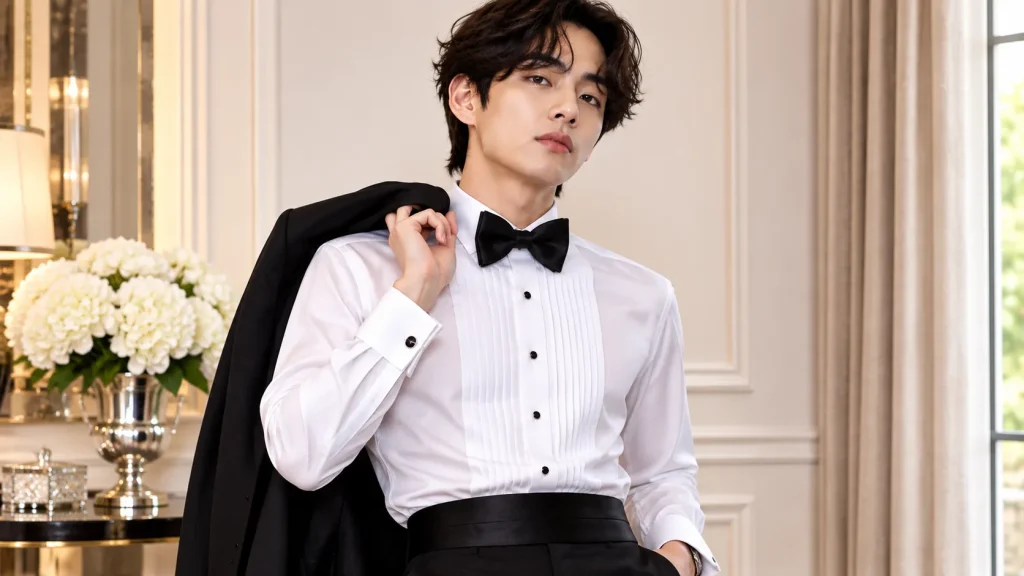
The Non-Iron Performance Shirt
Some modern dress shirts use stretch fabrics or special finishes. A wrinkle-resistant shirt creases less than plain cotton, while a non-iron shirt is treated to look smooth straight from the wash or dryer, with little or no pressing.
Why people like them:
- They come out of a suitcase looking fairly smooth
- Stretch fabric makes long days and commutes more comfortable
- Many are machine washable and need little or no ironing
How breathable they feel depends on the fabric blend and finishing process, so try one before buying several.
They’re handy for travelers and anyone who hates ironing.
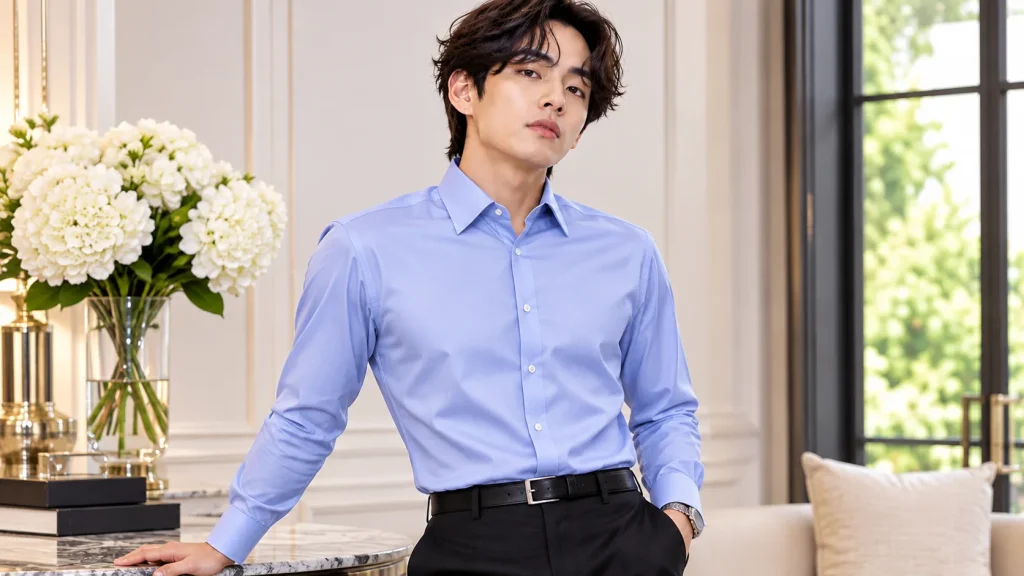
The Club Collar Shirt
A club collar has rounded points instead of sharp ones. It was popular in the early 20th century and has a gentle, slightly vintage feel.
It’s a small detail that makes a regular outfit look more considered. A white club collar shirt with a gray suit and a knit tie looks quietly stylish without being costume-like.
For a retro touch, add a collar bar, which needs a shirt with matching collar eyelets, or a simple tie bar. It looks just as good on its own.
Patterned shirts (four styles):

The Bengal Stripe Shirt
Bengal stripes are traditionally bold stripes of similar width, usually alternating between a color and white. They’re wider and more noticeable than thin pinstripes.
Picture a blue Bengal stripe shirt with navy trousers and brown loafers. It’s office-appropriate, but it has more personality than a plain shirt.
Because the stripes are strong, keep the rest of the outfit calm. A solid tie or no tie, plain trousers, and simple shoes are enough.
The Tattersall Shirt
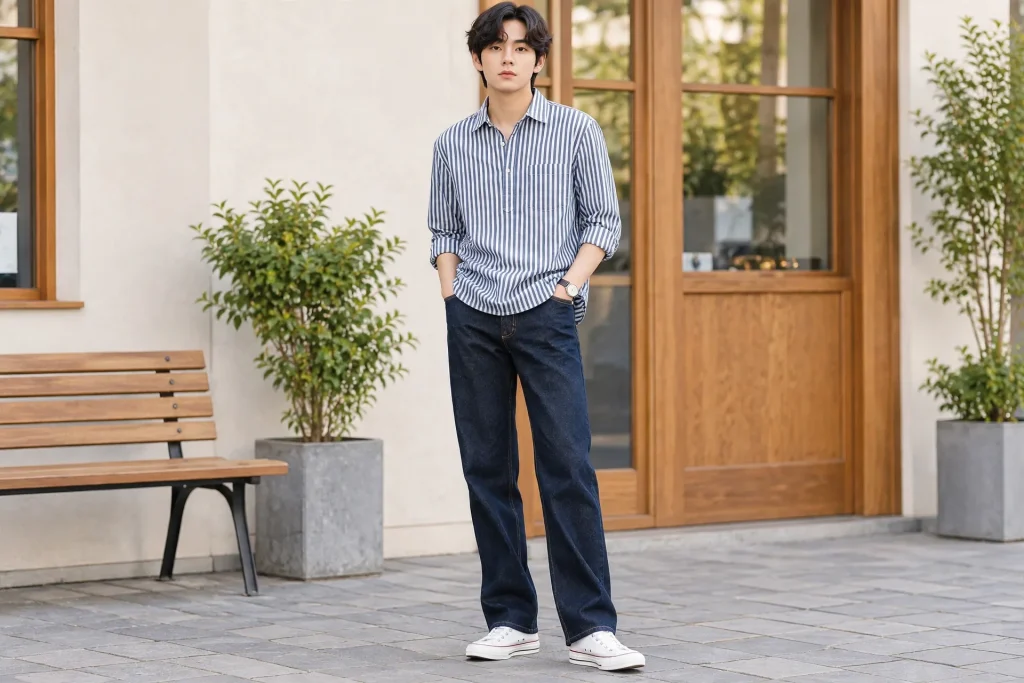
Tattersall is a small check made from thin lines in two alternating colors, usually on a cream or white background. Unlike gingham, which is made of solid colored squares, tattersall uses only thin crossing lines. Windowpane has thin lines too, but the squares are much larger. Tattersall has a traditional, countryside feel and suits smart-casual weekends.
A few easy pairings:
- Under a tweed or wool sport coat
- With brown corduroy or cotton trousers
- Under a crewneck sweater, with just the collar showing
Tattersall shirts look best when the rest of the outfit uses warm, earthy colors like brown, olive, tan, and burgundy.
The Windowpane Check Shirt
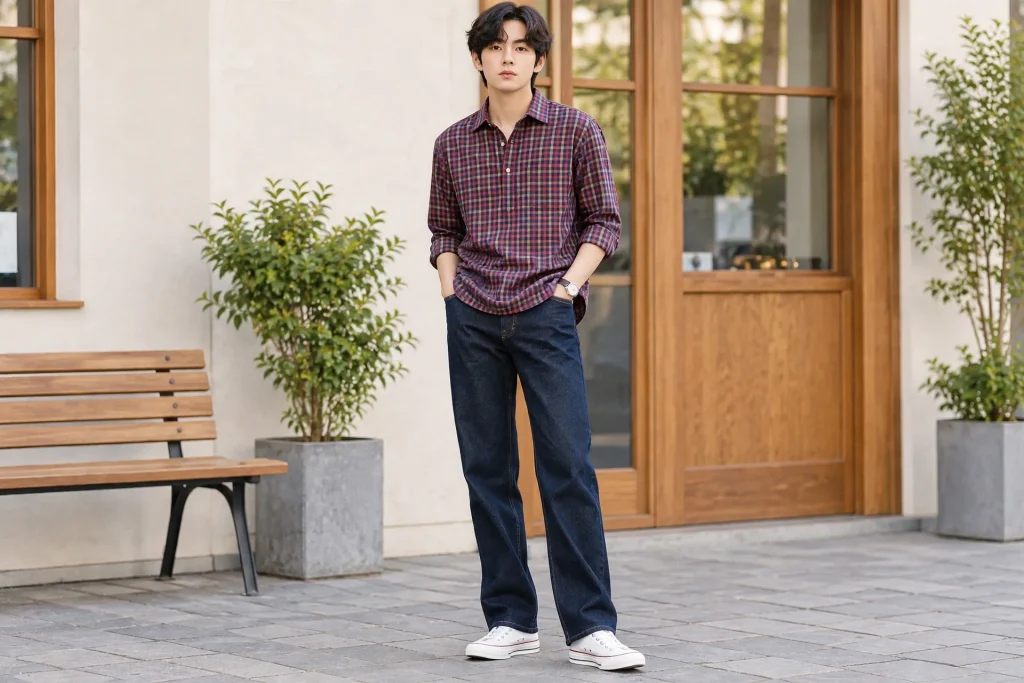
A windowpane check uses thin lines that form large squares, a bit like the panes of a window. The background usually stays plain, so the pattern feels light and open.
If bold checks feel like too much, this is a gentle starting point.
Wear a light blue windowpane shirt with gray trousers and a navy knit, or tuck it into dark chinos for a relaxed office look.
With a plain navy blazer, it looks smart without trying hard. If the jacket is patterned too, choose one with a very different scale.
The Madras Shirt
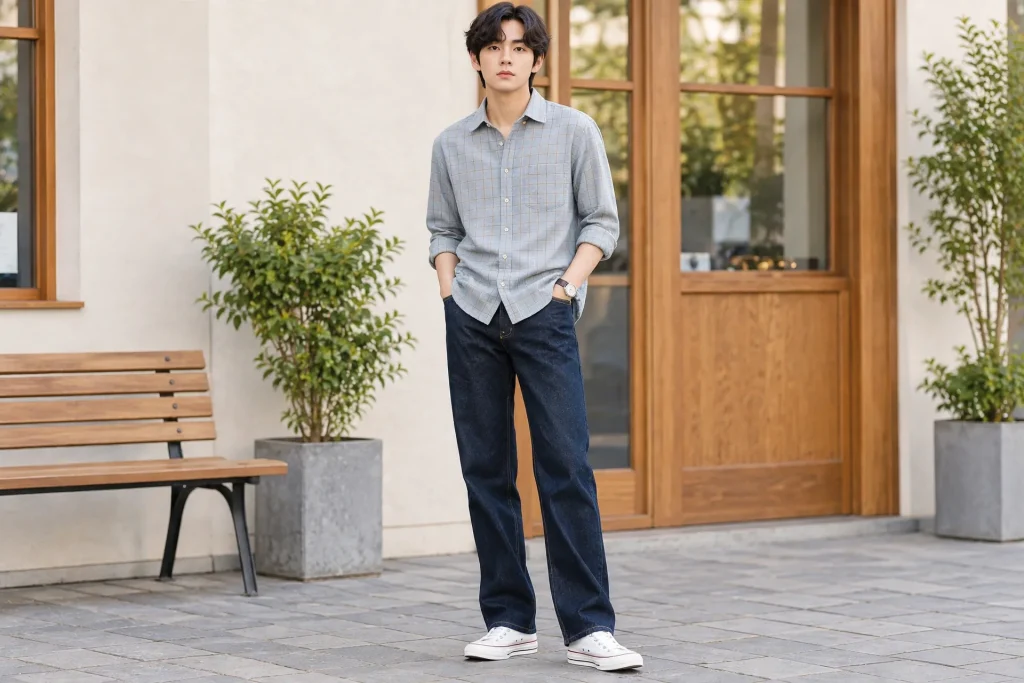
Madras is a lightweight cotton fabric with a bright, colorful plaid. It gets its name from the Indian city of Madras, now Chennai.
The fabric is breathable, which makes it perfect for summer. Traditional madras was known for colors that soften and blend over time.
Wear a madras shirt untucked with tan chinos or navy shorts and canvas shoes. Let it be the only bold piece in the outfit.
Some traditional madras fabrics may bleed color, depending on the dye and fabric treatment. Wash it separately in cold water at first.
Shirts for warm weather (four styles):
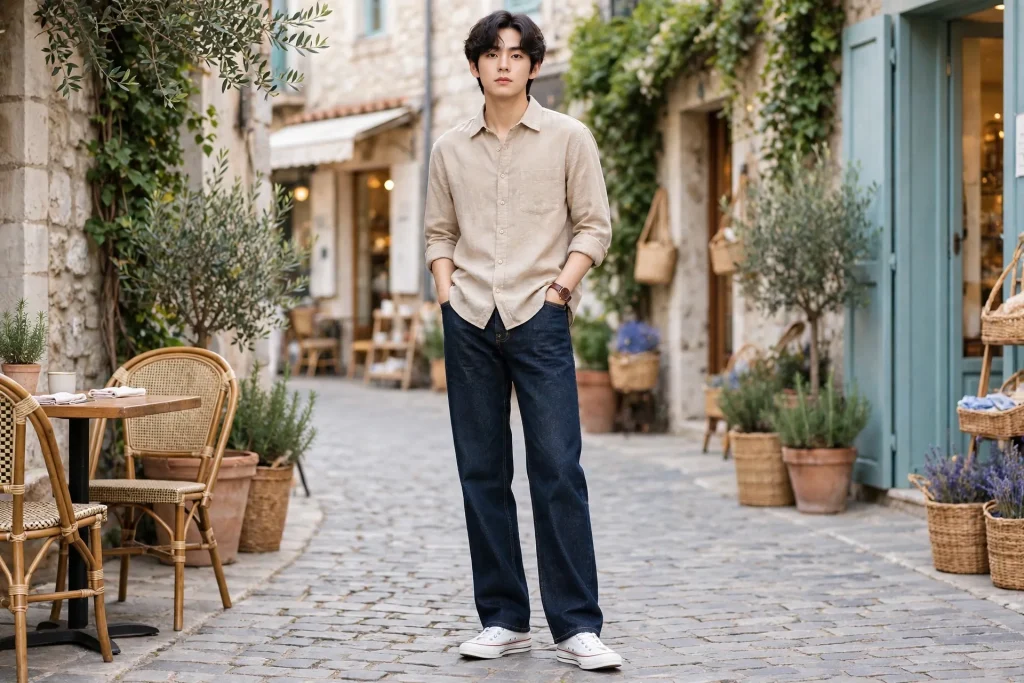
The Washed Linen Shirt
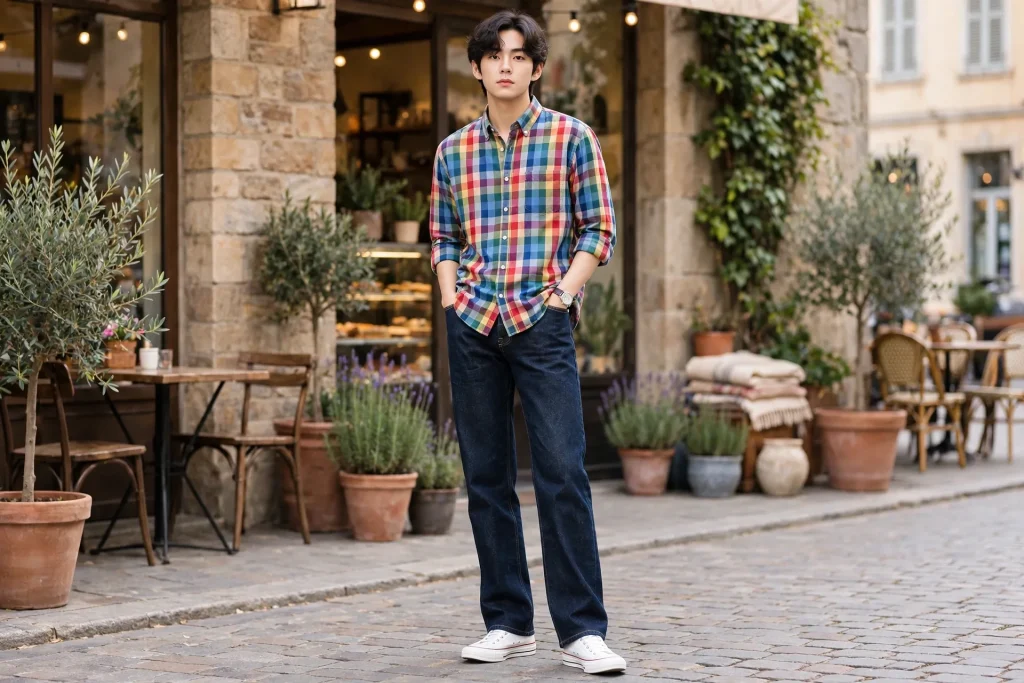
Linen is light, breathable, and gets softer with every wash.
A washed or garment-dyed linen shirt has a relaxed, slightly rumpled look that’s meant to be worn that way.
Drawstring trousers, light chinos, or tailored shorts all work, with loafers or leather sandals.
Earthy colors like sand, olive, terracotta, and sky blue suit linen beautifully. A white linen shirt is a summer classic, but it can be slightly see-through, so check it in good light.
The Seersucker Shirt
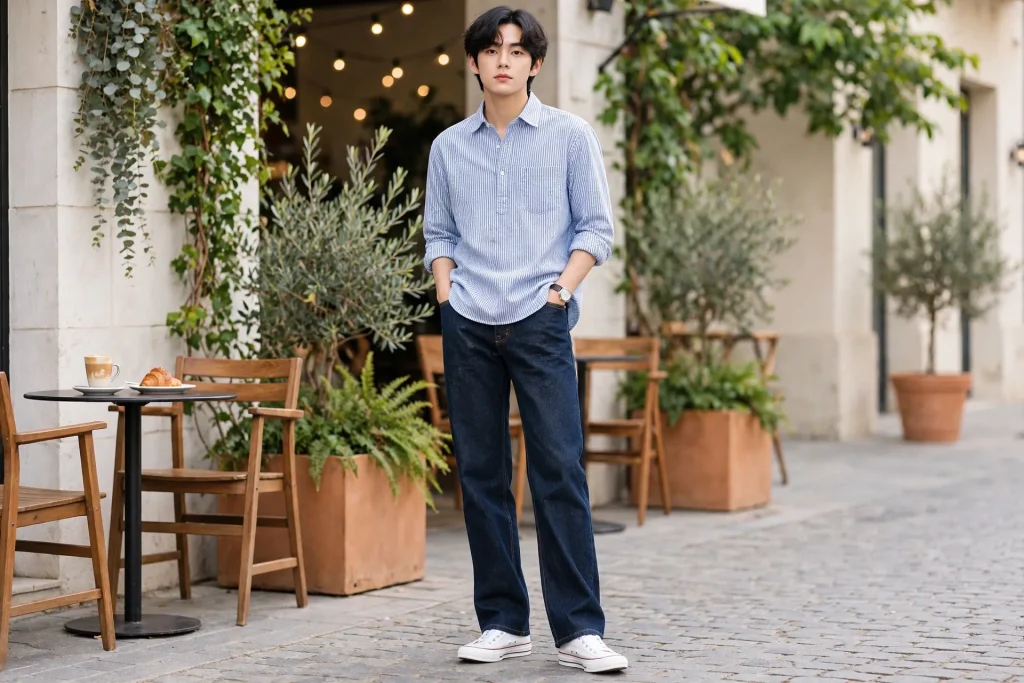
Seersucker is a cotton fabric with a puckered, crinkled surface. Those little ridges hold the fabric slightly away from your skin, which helps air move and keeps you cooler.
It also hides wrinkles, which helps when traveling.
Blue and white stripes are the classic look, but seersucker also comes in solids and checks. A short-sleeve seersucker shirt with navy shorts is ideal for beach towns, barbecues, and summer holidays.
For something smarter, try a long-sleeve version with cream chinos.
The Guayabera
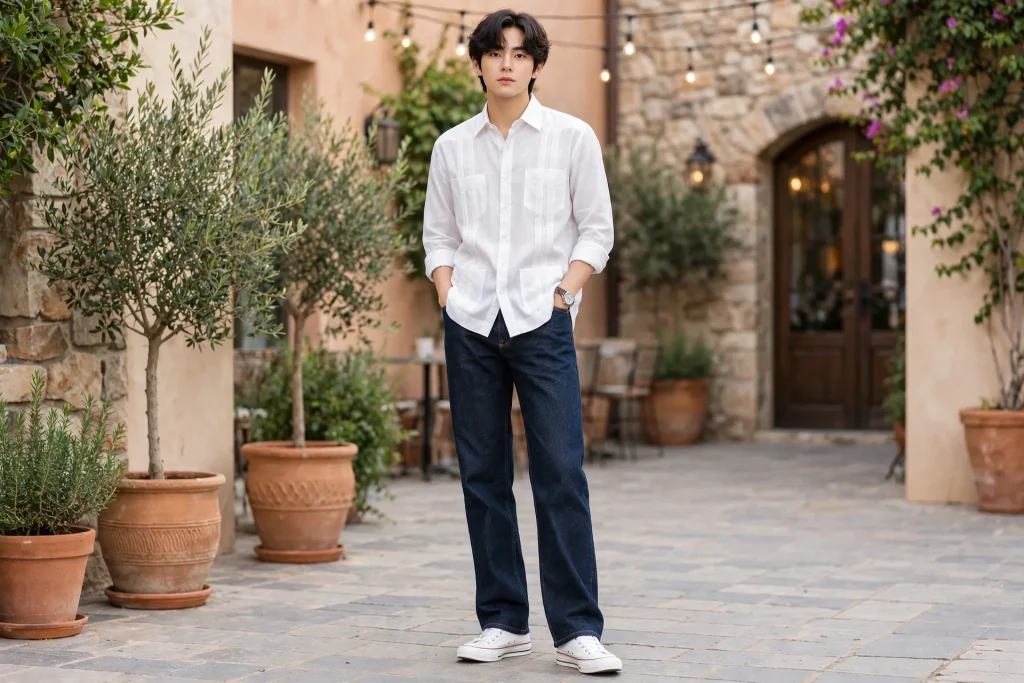
The guayabera is a traditional shirt worn across Cuba, Mexico, the Caribbean, and much of Latin America. It’s usually made from lightweight cotton or linen.
Most guayaberas have two or four pockets on the front and vertical rows of narrow pleats or embroidery running down the chest and back.
It’s designed to be worn untucked, which makes it comfortable in heat.
In some regions, a crisp long-sleeve guayabera is worn to weddings and formal celebrations, but whether it suits a particular event depends on the dress code, location, and local tradition. A short-sleeve version suits relaxed gatherings and holidays.
Pair it with light trousers and simple leather shoes. Let the shirt’s details stand on their own.
The Batik Shirt
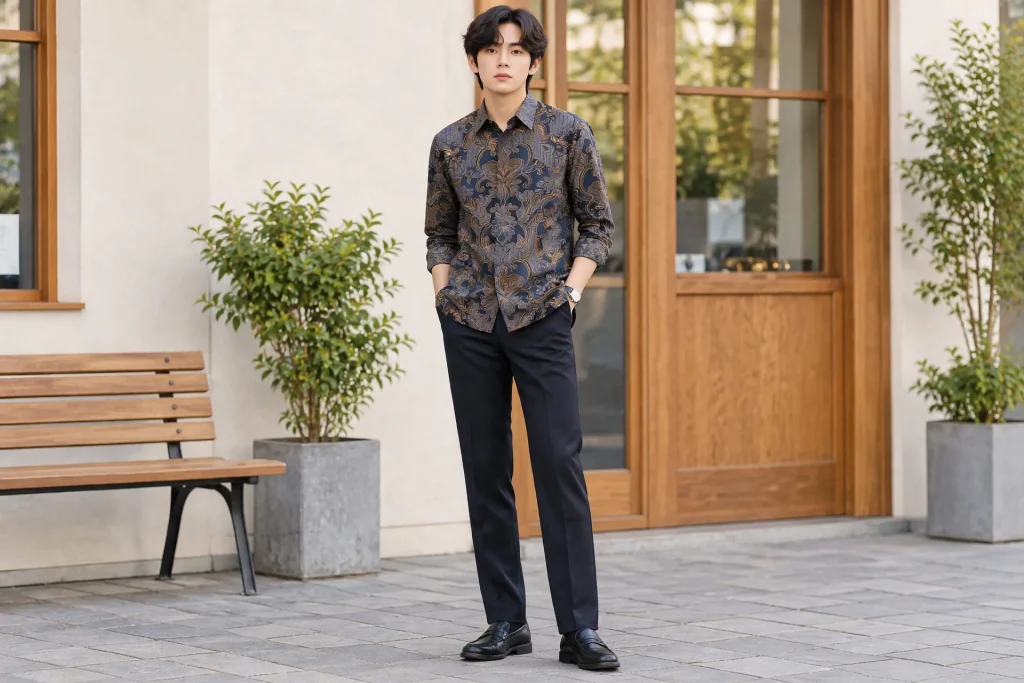
Batik is a traditional Indonesian textile art. Patterns are made by applying wax to fabric, dyeing it, and repeating the process to build layers of color.
In Indonesia, batik shirts are often worn as smart or formal wear, including at offices, weddings, and official events. Long-sleeve versions are usually seen as dressier.
How to wear one:
- Check the occasion, since styling conventions vary by region and garment design, though many batik shirts are worn untucked
- Pair it with plain dark trousers, so the pattern stands out
- Choose leather shoes for formal events or loafers for smart-casual ones
Hand-drawn batik, called batik tulis, usually costs more than printed versions because of the time it takes.
Shirts for cooler weather and layering (four styles):
The CPO Shirt
CPO stands for Chief Petty Officer. The style comes from a heavy wool shirt issued to chief petty officers in the US Navy, with two flap chest pockets and a straight hem. Traditional versions are wool, while many modern ones use cotton, flannel, or blends, which feel lighter and are often easier to wash.
It sits somewhere between a shirt and a light jacket.
Wear it buttoned over a tee or open over a crewneck sweater. Navy is the classic color, but plaid, olive, and charcoal versions are common too.
Try a navy wool CPO shirt open over a white tee, with gray trousers and suede boots.
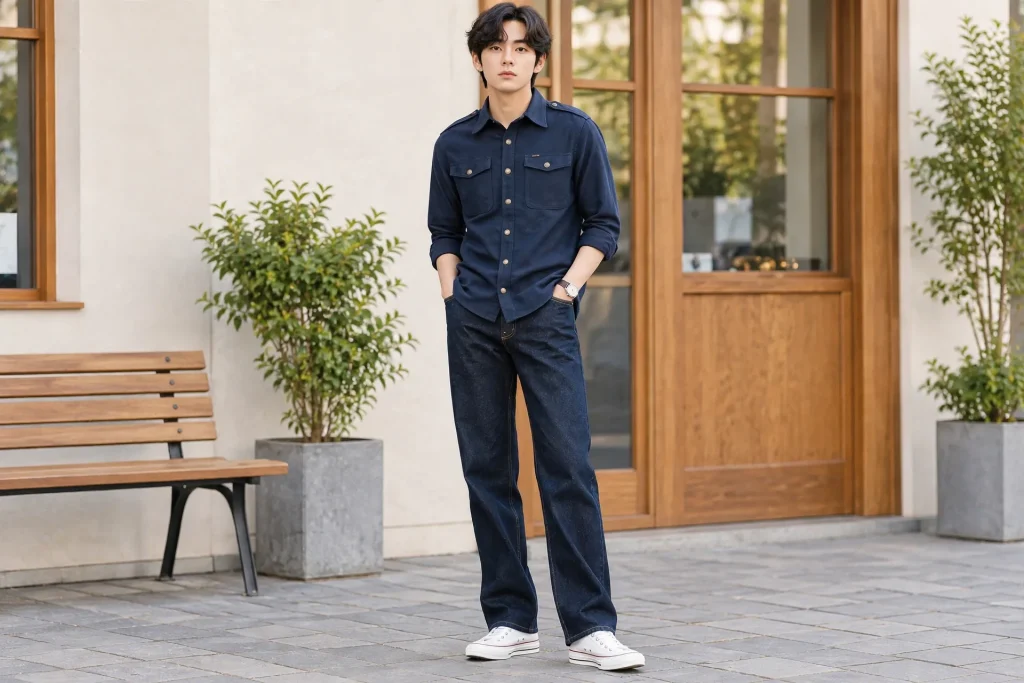
The Two-Pocket Field Shirt
A field shirt borrows from military clothing, but it’s lighter than a CPO and is meant to be worn as a shirt, not a layer. Compared with an ordinary utility shirt, it has more structure, with buttoned chest pockets, sometimes shoulder epaulettes, and sturdy cotton twill.
Khaki, olive, and stone are the most common colors. Wear it with dark jeans and boots for a casual look, or under a waxed or canvas jacket on cooler days.
Roll the sleeves up once or twice for a relaxed finish.
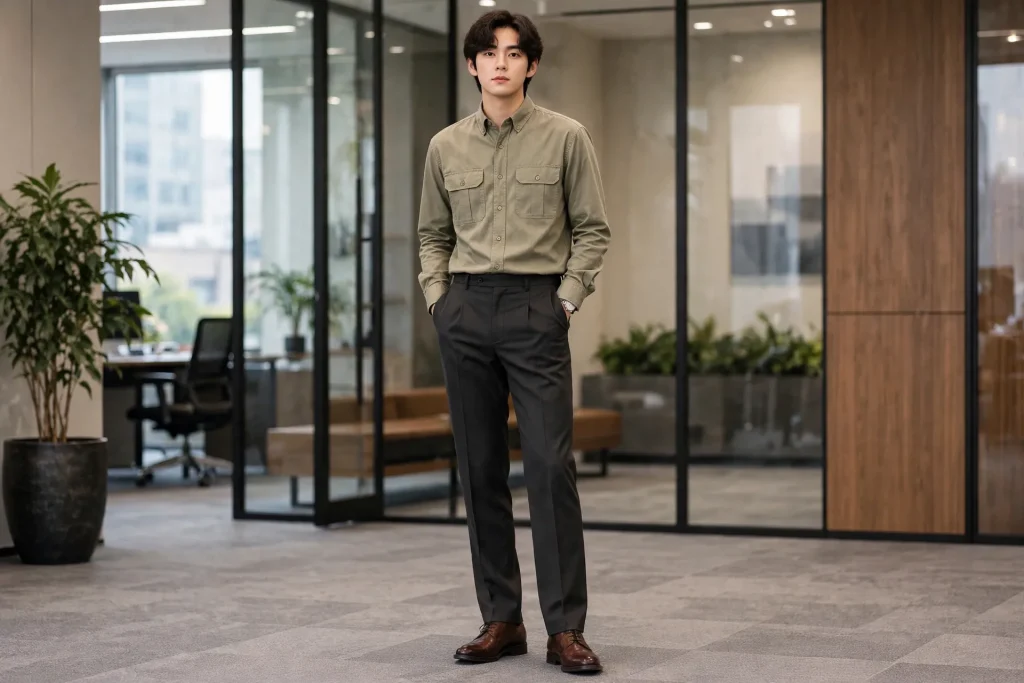
The Brushed Herringbone Twill Shirt
Herringbone is a woven V-shaped pattern that looks a bit like the bones of a fish. In a brushed cotton shirt, it adds soft texture and warmth.
It’s ideal for fall and winter. Wear it under a shawl-neck cardigan or quilted jacket, or on its own with dark trousers and leather boots.
Charcoal, navy, brown, and forest green are easy colors to start with.
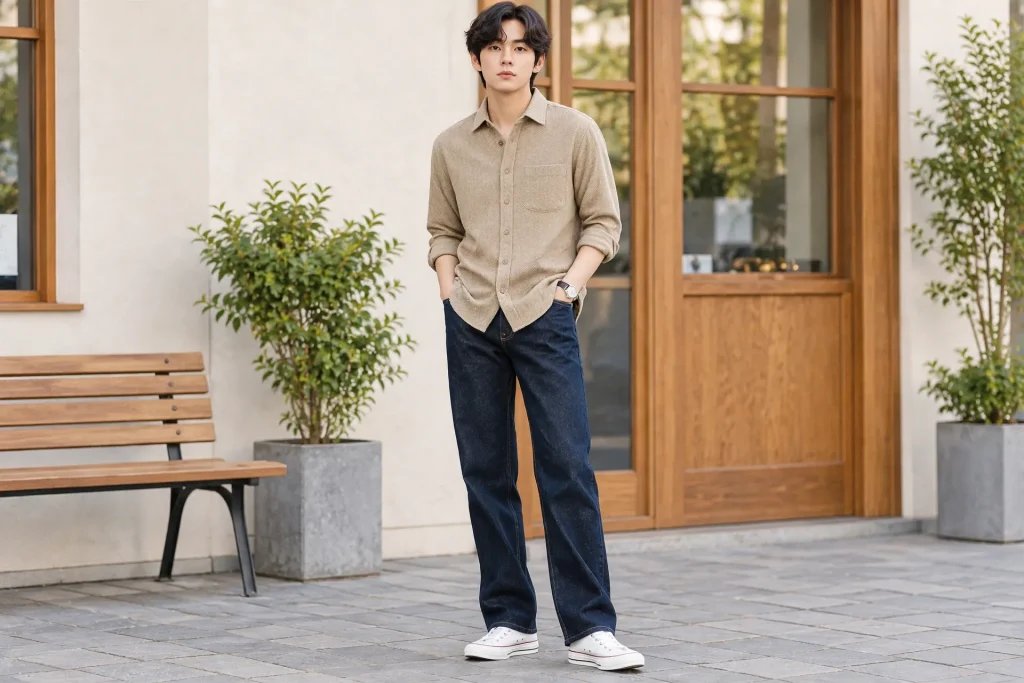
The Velvet Evening Shirt
A velvet shirt is a bold but surprisingly simple way to dress up for winter evenings and holiday events.
Cotton velvet has a soft, rich texture that catches the light. Deep colors like bottle green, burgundy, navy, and black look most refined.
Pair it with black or charcoal trousers and polished shoes. You can wear it alone, buttoned up, or under a dark blazer.
An open collar is one easy option, since velvet already makes a statement. Velvet can crush or mark, so check the care label and store it on a hanger with space around it.
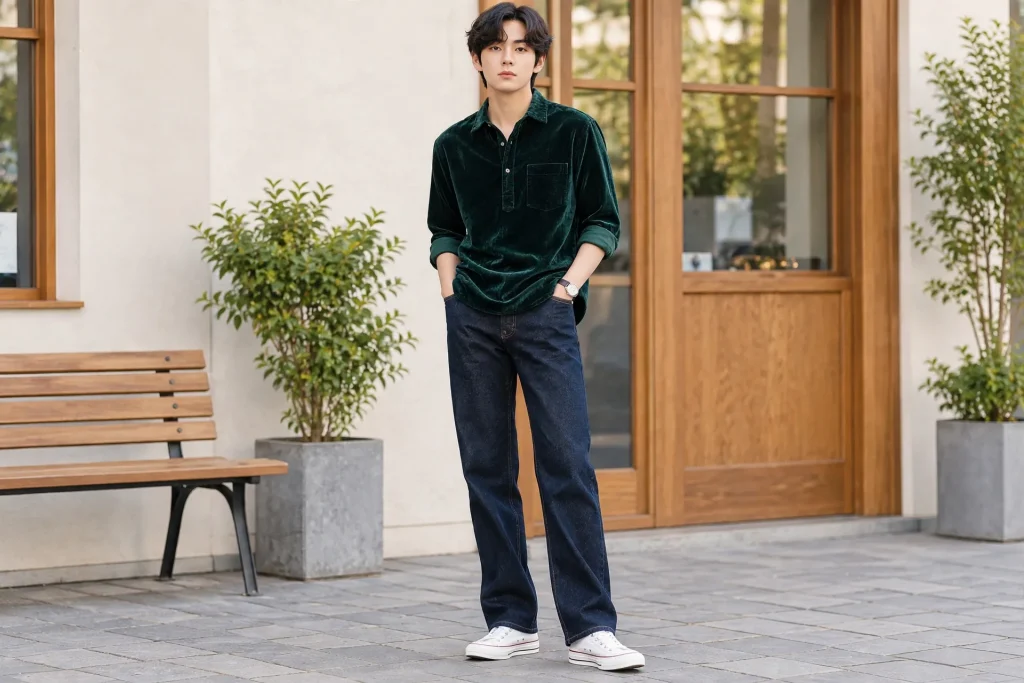
One Shirt, Three Outfits
A good test for a new shirt is whether you can wear it at least three ways.
Here’s how that might look with a pale blue cutaway collar shirt.
For a meeting: tucked into charcoal suit trousers, with the matching jacket, a navy tie, and black oxfords.
For dinner: collar open, sleeves neat, with a navy blazer, gray trousers, and brown loafers.
For the weekend: worn under a crewneck sweater with just the collar showing, plus dark jeans and suede boots.
A shirt that only works one way can still be worth it, as long as you’ll wear that outfit often.
Quick Care Tips
Unbutton everything before washing. That includes collar points and cuffs. It helps prevent stress on buttonholes.
Wash similar colors together. Bright patterns like madras should be washed separately at first.
Hang shirts on proper hangers. Wide, shaped hangers support the shoulders better than thin wire ones.
Iron while slightly damp. Cotton and linen smooth out more easily that way.
Follow the care label for delicate fabrics. Velvet and some batik shirts may need gentle washing or dry cleaning.
Shirt Mistakes Men Often Make
Buying for the chest and ignoring the shoulders. Sleeves and body can be altered, but shoulders are much harder to fix.
Tucking in shirts made to be worn untucked. Guayaberas and most short-sleeve casual shirts are usually designed to stay out.
Wearing sleeves that are too long. Fabric bunching at the wrist makes even an expensive shirt look sloppy.
Pairing strong patterns with other strong patterns. If the shirt is bold, keep the tie, jacket, or trousers plain.
Questions About Men’s Shirt Styles
How many shirts does a man really need?
It depends on your work and lifestyle. Many men find that five to seven well-fitting shirts cover most needs, with a few extra for special occasions.
What is the most versatile men’s shirt?
A light blue shirt is one of the most versatile. It works with suits, chinos, and jeans, and it flatters many skin tones.
Should a shirt be tucked or untucked?
Shirts with long tails and dressy fabrics are usually meant to be tucked. Shirts with straight hems, like guayaberas and many casual shirts, are designed to be worn untucked.
What collar is best for a round face?
Many people find that longer, narrower collar points balance a rounder face, but treat it as a guide, not a rule. Try a few and see what you like.
Can I wear a short-sleeve shirt with a tie?
You can, but it usually looks less polished. For a smart look with a tie, a long-sleeve shirt is the safer choice.
Find the Few That Fit Your Life
You don’t need every one of these men’s shirt styles. Start with the fit, choose a few that suit your days, and add one new style at a time.