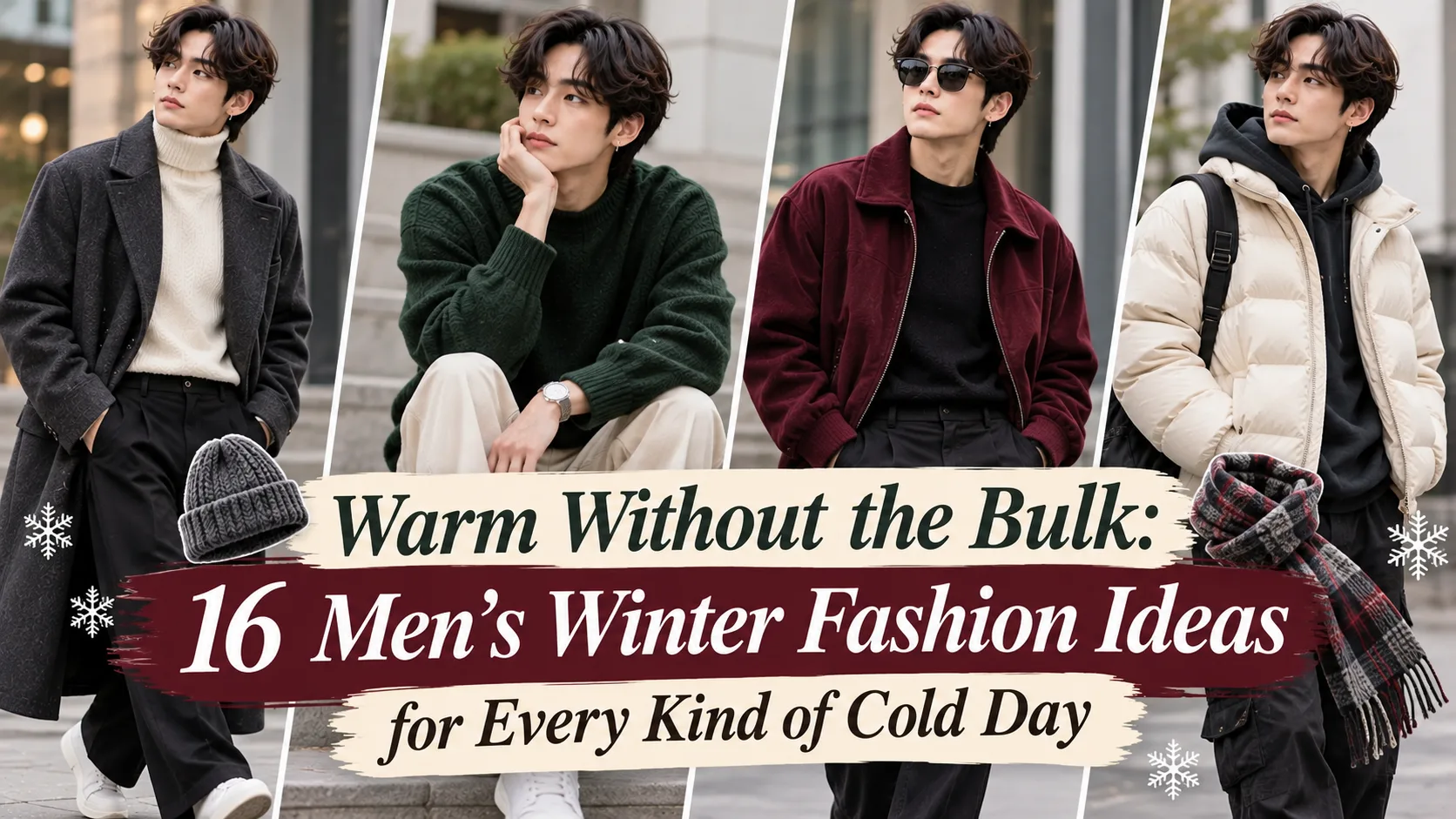
Warm Without the Bulk: 16 Men’s Winter Fashion Ideas for Every Kind of Cold Day
There’s a moment every winter when you step outside and realize you got it wrong.
Either you’re freezing in a thin jacket that looked great indoors, or you’re sweating on the train in a huge coat over three sweaters, feeling like a sleeping bag with legs.
Good men’s winter fashion sits in between. It keeps you warm without hiding every bit of style, and it handles the jump from icy sidewalks to heated offices without a fuss.
The 16 outfits below are grouped by where you’re going: the office, smart-casual plans, weekends outside, and a few special occasions. Each one is built from pieces that layer well, so you can add or remove warmth as the day changes.
Men’s Winter Fashion: How to Layer Without Looking Bulky
Almost every warm, comfortable winter outfit follows the same simple structure.
Base layer. The piece closest to your skin. Merino wool or a synthetic thermal top keeps you comfortable and manages sweat. Fine cotton is fine for mostly indoor days.
Mid layer. This traps warmth. Think sweaters, knit polos, flannel, fleece, or a blazer.
Outer layer. Your coat or jacket blocks wind, rain, and snow.
Get these three right and you can stay warm without piling on bulk. Cotton absorbs moisture and dries slowly, making it less suitable for prolonged outdoor activities in cold weather. Merino wool and synthetic fabrics are generally better base-layer choices.
For the office and formal days (four outfits):
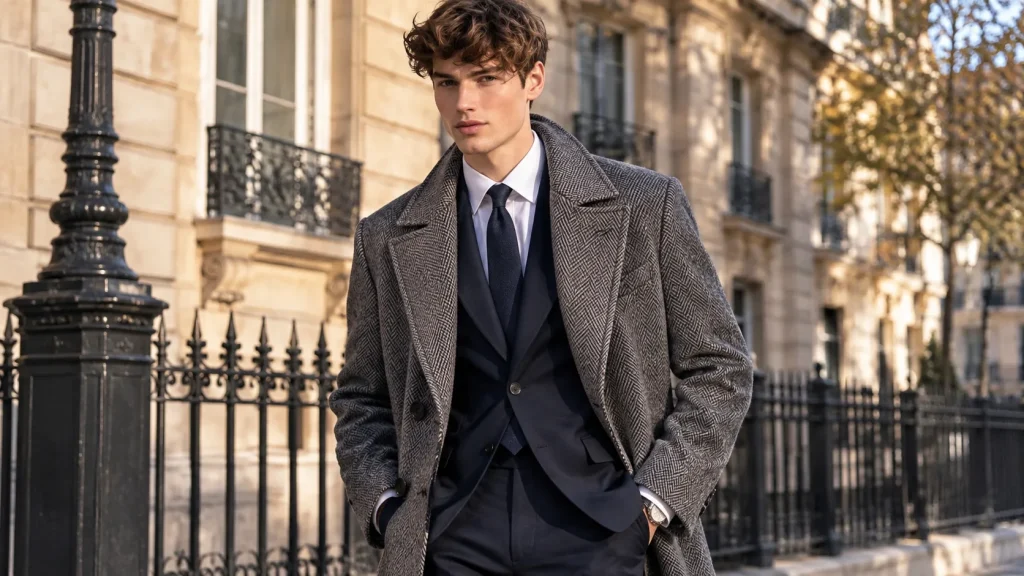
Gray Herringbone Overcoat With a Navy Suit
For formal business days, a navy suit is a winter workhorse. Over it, a gray herringbone overcoat adds texture and warmth without looking stiff.
The herringbone pattern, a subtle zigzag weave, gives the coat depth, so even a plain suit looks considered.
Finish with:
- A white or light blue shirt and a dark tie
- Black leather Oxfords or Derbies with a rubber sole for icy sidewalks
- A charcoal or burgundy wool scarf
Make sure the coat is long enough to cover your suit jacket fully. A coat that ends at mid-thigh or the knee usually works best.
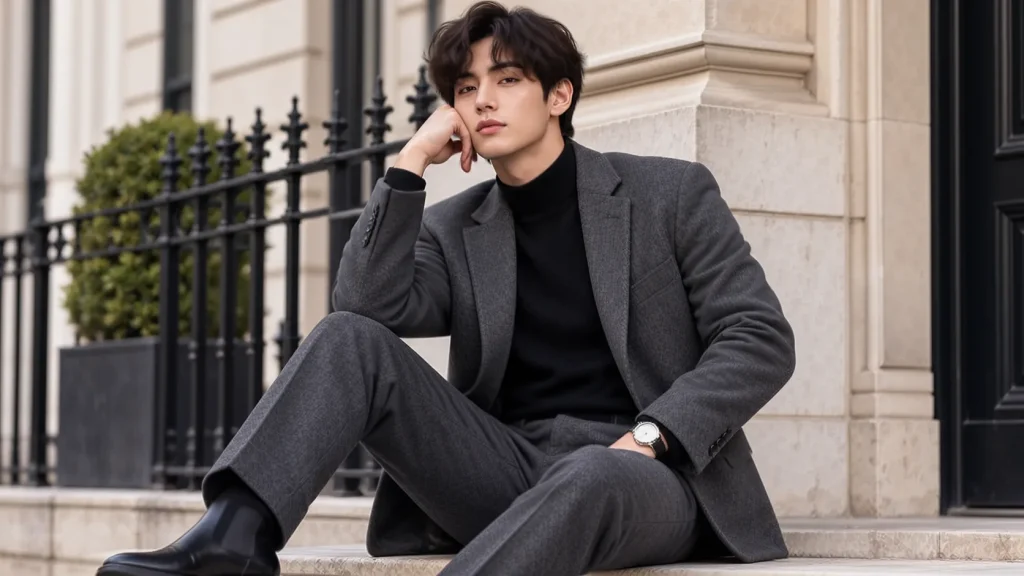
Gray Flannel Suit With a Mock-Neck Knit
Wool flannel has a soft, slightly brushed surface. It’s warmer than a standard worsted suit and perfect for cold months.
Instead of a shirt and tie, wear a fine merino mock-neck sweater underneath. The low, folded collar looks modern and polished, and it keeps your neck warm.
Navy or black knits pair well with mid-gray flannel. Add brown leather Chelsea boots or weather-resistant Derbies, which handle wet sidewalks better than suede.
Where the navy suit is for formal business, this look suits creative offices, client lunches, and winter events where a tie feels like too much.
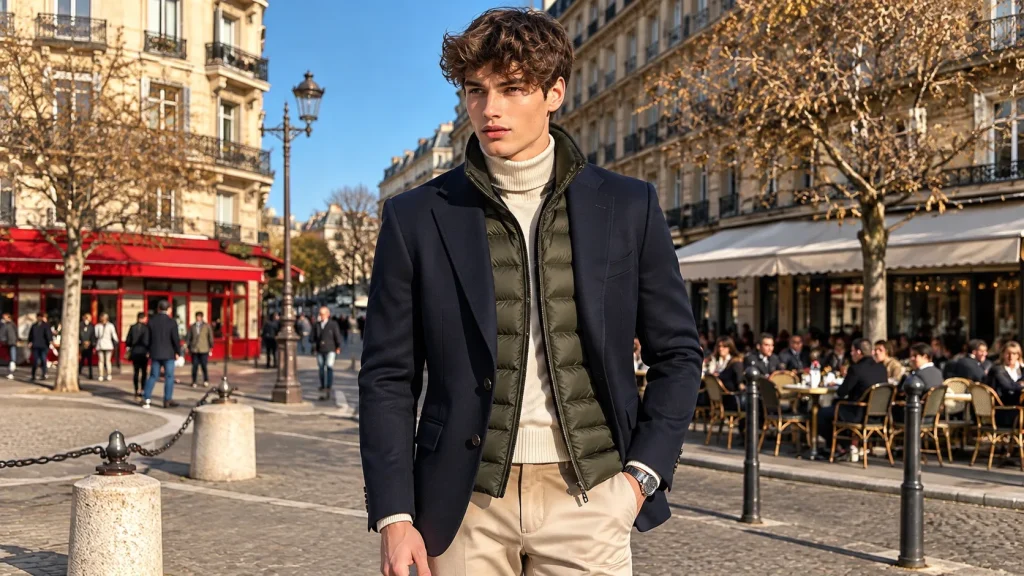
Down Gilet Over a Tailored Blazer
This is a contemporary smart-casual styling choice rather than traditional business attire, and it’s a smart way to add warmth on milder winter days or short walks between buildings.
A slim, quilted down gilet, also called a vest, goes over a wool blazer. The blazer sleeves keep your arms covered, while the gilet keeps your core warm.
Keep it sharp by:
- Choosing a slim gilet in navy, black, or olive, so it doesn’t look bulky
- Wearing a crisp shirt or fine knit under the blazer
- Pairing it with wool trousers rather than jeans
On really cold days, you’ll still want a proper coat. But for the commute between car and office, it’s a clever middle ground.
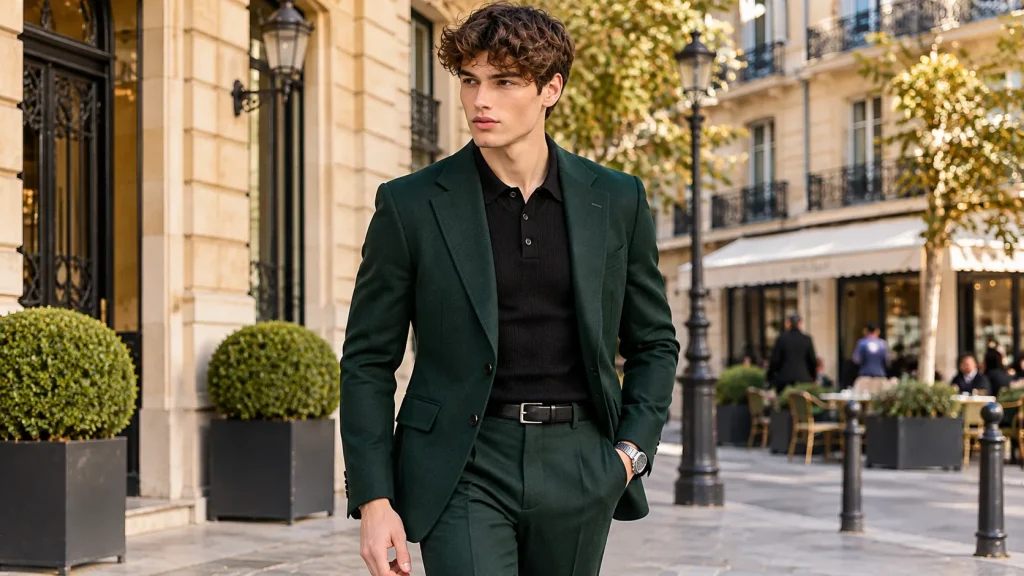
Bottle Green Wool Suit With a Black Knit Polo
For winter parties, holiday dinners, and end-of-year events, a deep green suit feels festive without being loud.
Bottle green looks rich in wool or flannel. Instead of a shirt, wear a long-sleeve black knit polo. It’s dressier than a T-shirt but more relaxed than a shirt and tie.
Add black loafers or Chelsea boots, and you’re ready for anything from a work party to a family celebration.
If green feels too bold, a deep burgundy or navy suit works the same way. A pocket square in a soft cream or gold adds a festive touch without going over the top.
For smart-casual plans (four outfits):
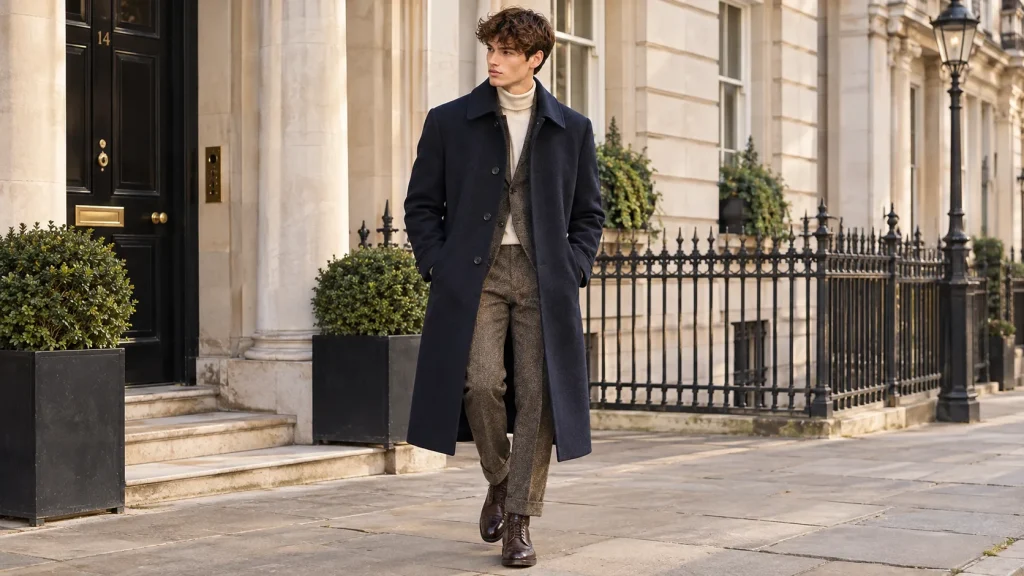
Balmacaan Coat With Tweed Trousers and Brogue Boots
A balmacaan is a classic overcoat with raglan sleeves, meaning the sleeves run in one piece up to the collar, and a short, turn-down collar. It feels relaxed and roomy, so it layers easily over thick knits.
Pair a stone or charcoal balmacaan with brown tweed trousers, a cream knit, and leather brogue boots.
It’s a great outfit for weekend lunches, museum days, or a winter walk in the countryside. Because the cut is roomy, try the coat on over your thickest sweater before buying, so you know it still drapes well.
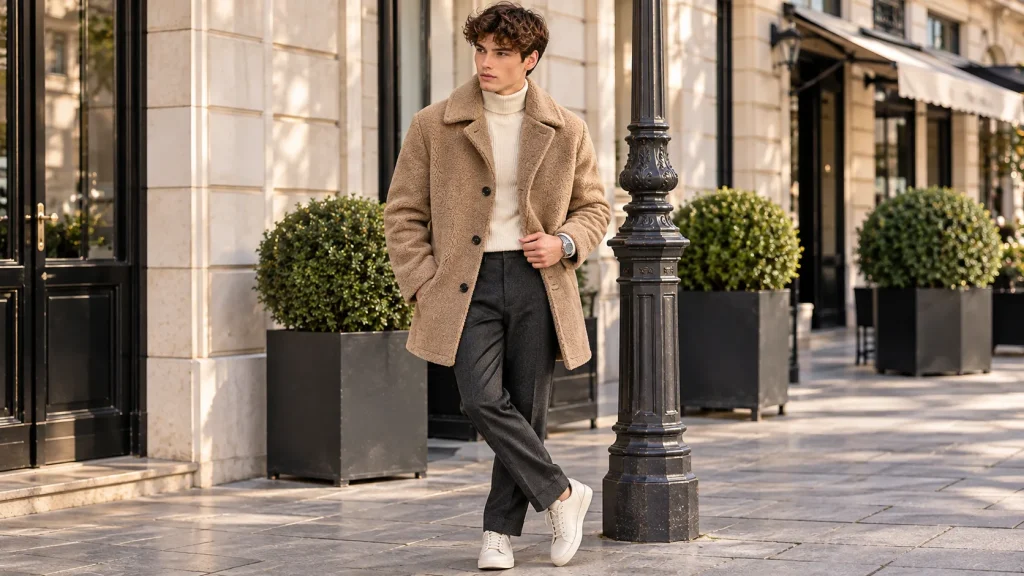
Teddy Coat With a Cream Turtleneck and Charcoal Trousers
Teddy coats have a soft, fuzzy texture, a bit like a teddy bear. They can be made from synthetic fleece, wool blends, or other textured fabrics, and they look surprisingly sharp in a tailored cut.
A camel or oatmeal teddy coat over a cream turtleneck and charcoal wool trousers feels cozy and refined at the same time.
Finish with black or brown leather boots. A gray wool scarf ties the softer coat and the sharper trousers together.
Teddy fabrics can shed or pill, so brush them gently and avoid rubbing against rough bag straps.
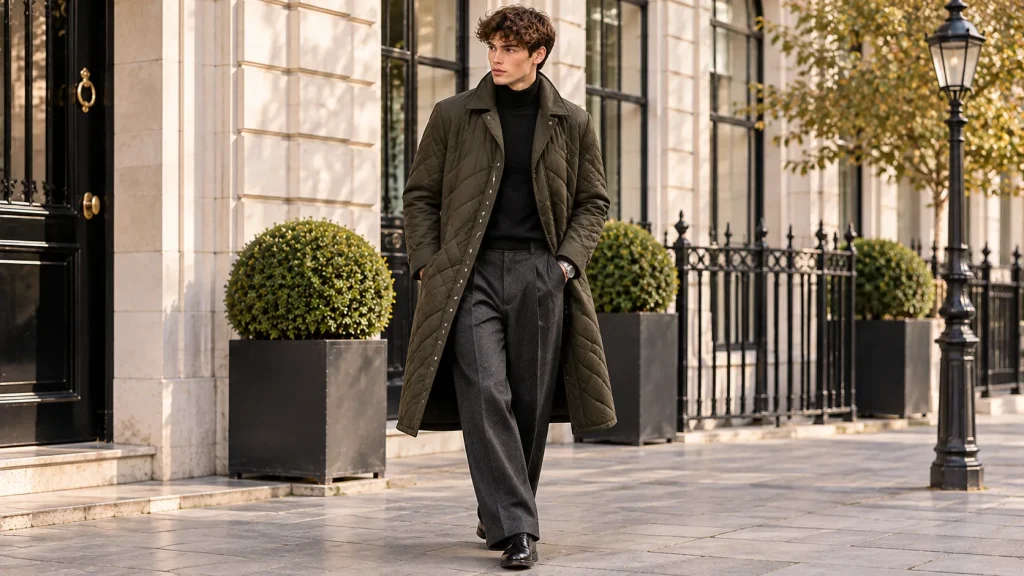
Longline Quilted Coat With Wide Wool Trousers
A longline quilted coat offers a clean, minimalist look. It’s padded but sleek, falling to the knee or just below.
Why it works:
- It’s warmer than a classic overcoat without much extra weight
- The quilting adds texture without needing pattern
- The longer length protects your legs from wind
Pair a black or navy quilted coat with relaxed wide-leg wool trousers, a simple crewneck knit, and minimal leather sneakers or boots.
It’s a modern, slightly fashion-forward look that still feels practical.
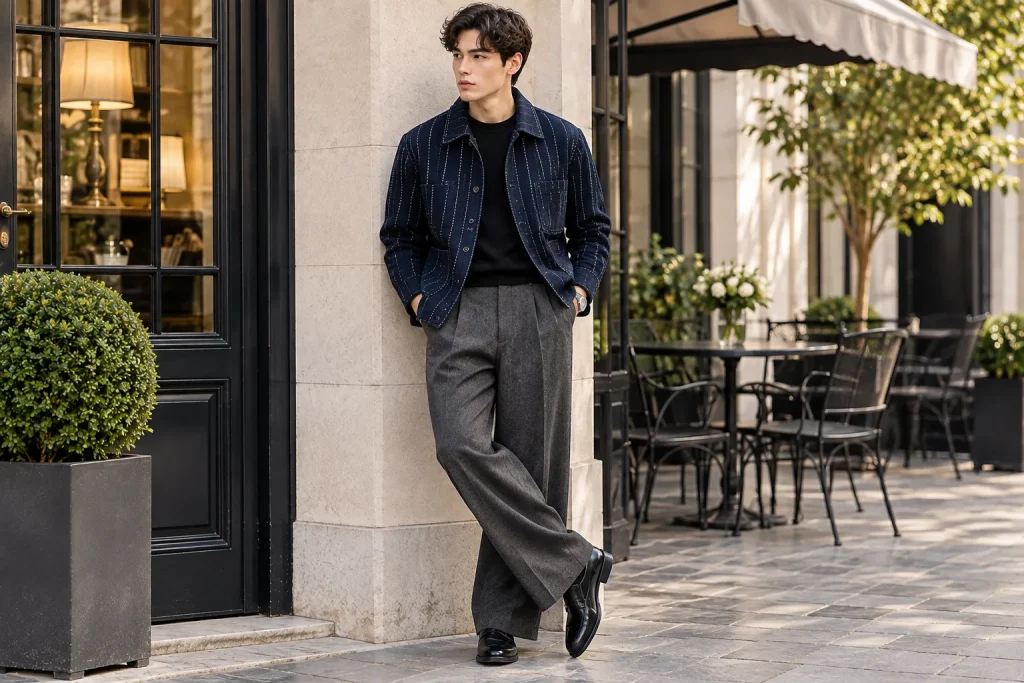
Sashiko Indigo Jacket With Wide Gray Trousers
Sashiko is a traditional Japanese stitching technique, originally used to reinforce and repair fabric, often in repeating geometric patterns. Not every indigo jacket with visible stitching is genuine sashiko, but jackets made with the traditional technique look handcrafted and full of character.
Wear one over a thick knit or flannel-lined shirt, with wide gray trousers and leather boots.
Since many sashiko jackets are lightweight cotton, add a warm layer underneath, or wear it on milder winter days. Look for pieces from makers who explain where and how they were made, if authenticity matters to you.
For weekends and outdoor days (five outfits):
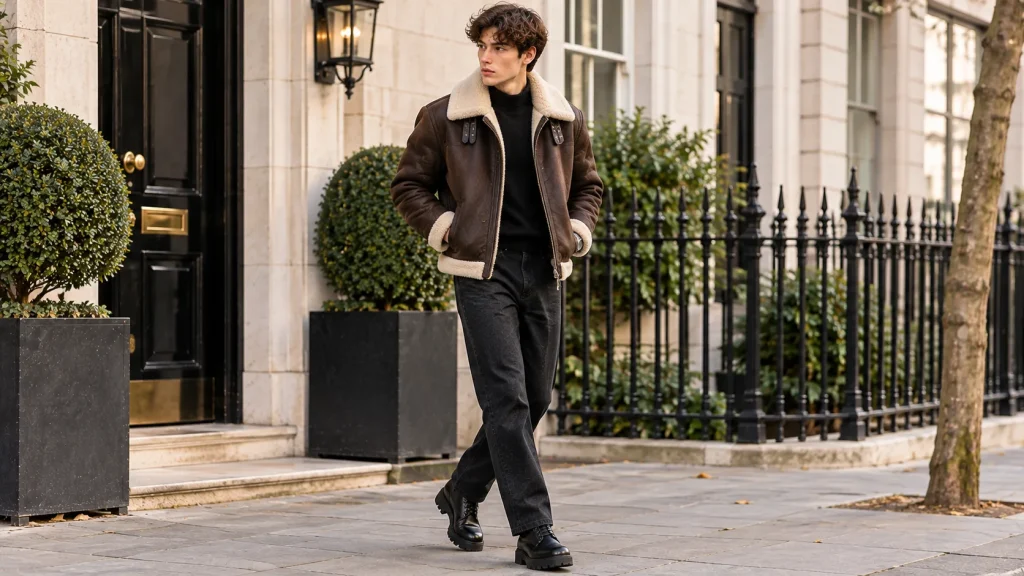
Shearling Bomber With Dark Jeans and Lug-Sole Boots
The shearling-lined leather bomber, often called a B-3 style, was originally designed for pilots flying in freezing conditions. Depending on its construction and lining, it can provide substantial warmth.
The outfit:
- A brown leather or suede bomber with a shearling collar
- A gray or cream knit underneath
- Dark straight jeans
- Leather boots with chunky lug soles for grip
It’s rugged, warm, and timeless. If you prefer to avoid real shearling and leather, faux versions offer a similar look.
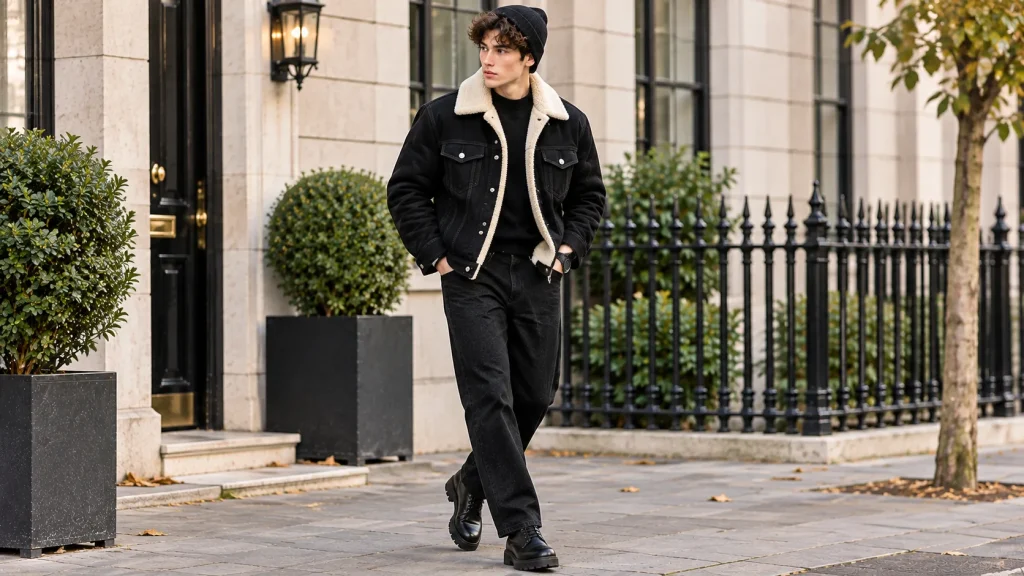
Sherpa-Lined Trucker Jacket With Black Jeans and a Beanie
A denim or corduroy trucker jacket lined with sherpa fleece is a casual winter favorite.
The lining adds a lot of warmth, while the classic trucker shape keeps it familiar and easy to style.
Wear it with black jeans, a plain long-sleeve tee or hoodie, a ribbed beanie, and sturdy boots or high-top sneakers.
It suits errands, casual weekends, and evening plans with friends. On very cold days, layer a light down vest underneath for extra warmth.
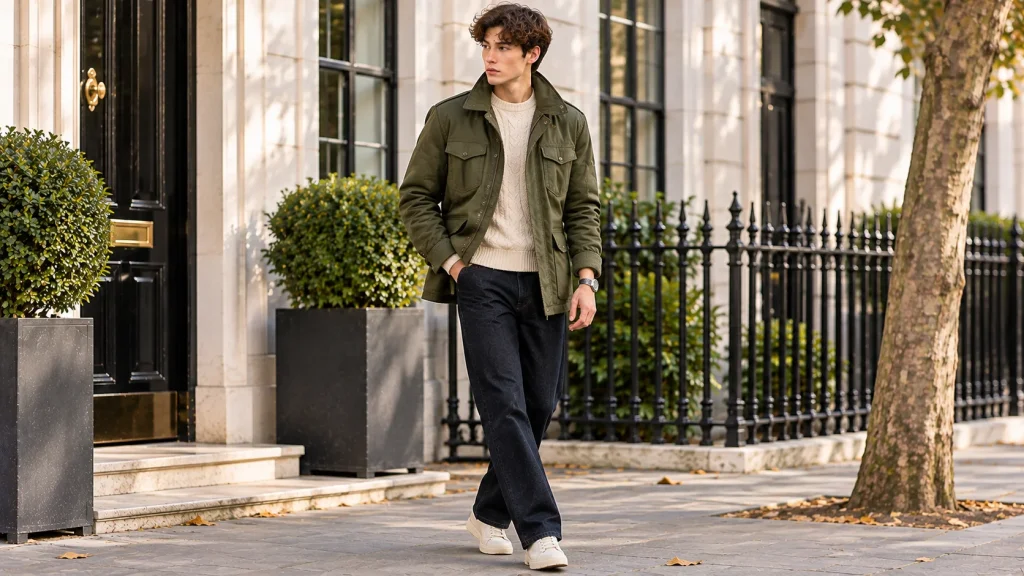
Olive M-65 Field Jacket With a Cream Cable Knit
The M-65 is a classic military field jacket, recognized by its four front pockets and stand collar. Some original models and M-65-inspired jackets include a hidden hood and a removable insulated liner, so check the construction before buying.
Pair an olive M-65 with a cream cable-knit sweater, gray chinos, and brown leather boots.
The contrast between the rugged jacket and the soft knit makes the outfit feel balanced. If yours has the hidden hood, it’s a handy backup for sudden snow or rain.
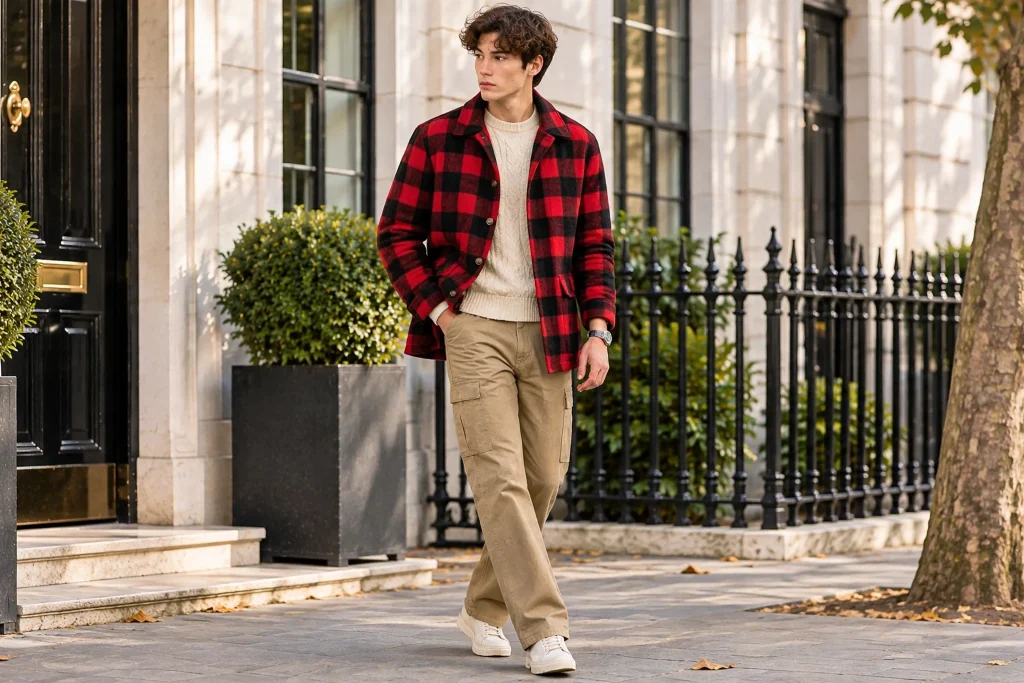
Buffalo Plaid Mackinaw With a Thermal and Canvas Trousers
A mackinaw is a thick wool jacket, often in a bold buffalo plaid, with deep pockets and a slightly boxy cut. It has deep roots in North American outdoor and work clothing.
Wear it over a smooth thermal top, with sturdy canvas work trousers and leather work boots.
Tip: let the plaid be the only pattern. Keep everything else in plain neutrals, like gray, brown, or black.
It’s perfect for woodland walks, cabin weekends, and outdoor chores.
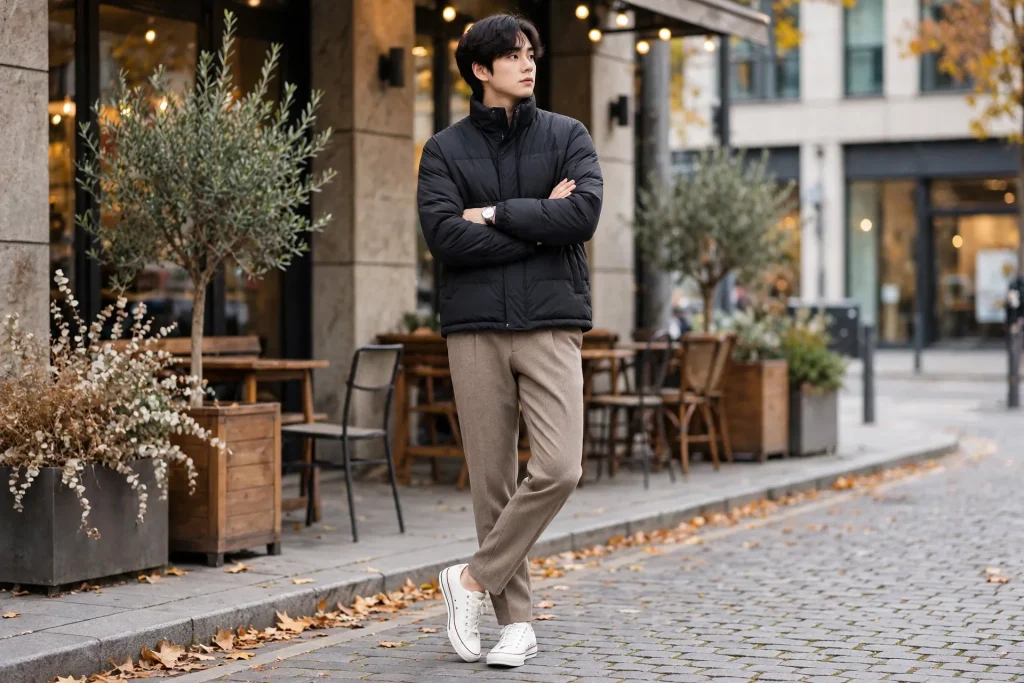
Matte Down Puffer With Tapered Wool Trousers
A down puffer doesn’t have to look sporty. In a matte finish, like black, navy, or deep olive, it can look clean and grown-up.
Pair it with tapered wool trousers, a fine-knit crewneck, and leather sneakers or Chelsea boots. The smart trousers balance the casual jacket.
What to look for:
- A water-resistant outer fabric
- A fill that suits your climate. Fill power measures the loft of down, while fill weight also affects how warm a jacket will be, so consider both
- A hood for snowy or rainy days
If you prefer not to wear down, synthetic insulation is a good alternative and can stay warm even when damp.
For snow days and special occasions (three outfits):
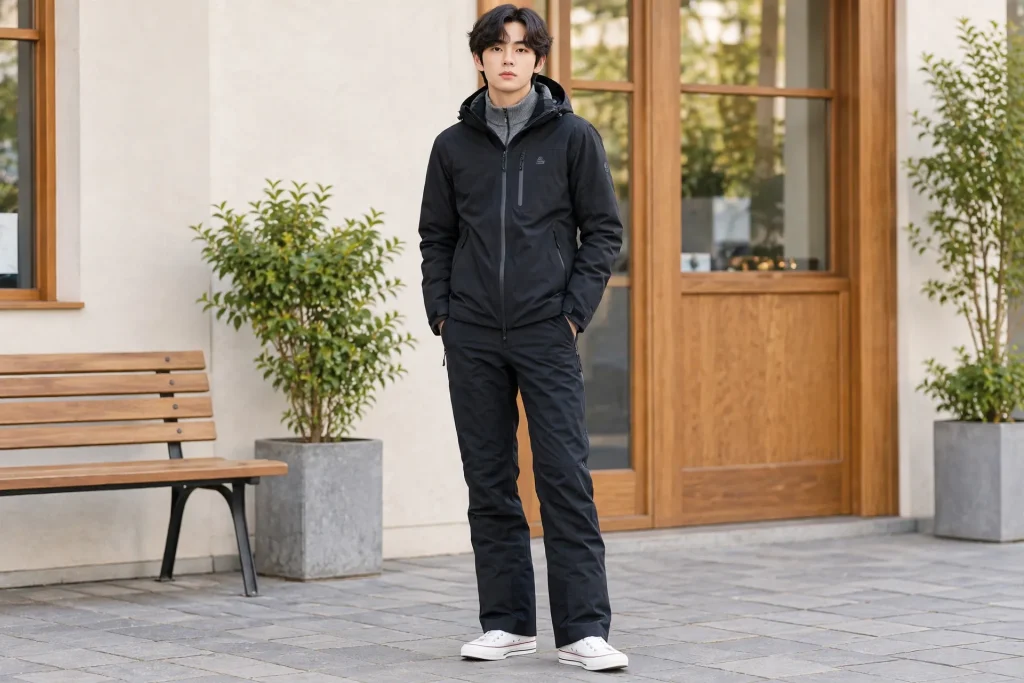
Ski Shell With a Merino Base Layer and Snow Pants
For ski trips, snowy hikes, or a day in the mountains, technical layers matter more than style.
Start with:
- A merino wool base layer top and leggings
- A fleece or light down mid layer
- A waterproof, breathable shell jacket
- Insulated snow pants
A waterproof shell protects against wind and snow but usually provides little insulation on its own. The mid layer and insulated snow pants do most of the warming, so choose them according to the temperature and activity.
Finish with a warm hat, waterproof gloves, a neck gaiter, and snow-ready boots or ski boots.
Bright colors like red, orange, or cobalt blue aren’t just stylish. They help you stay visible in snowy landscapes. Always check weather forecasts and mountain safety advice before heading out.
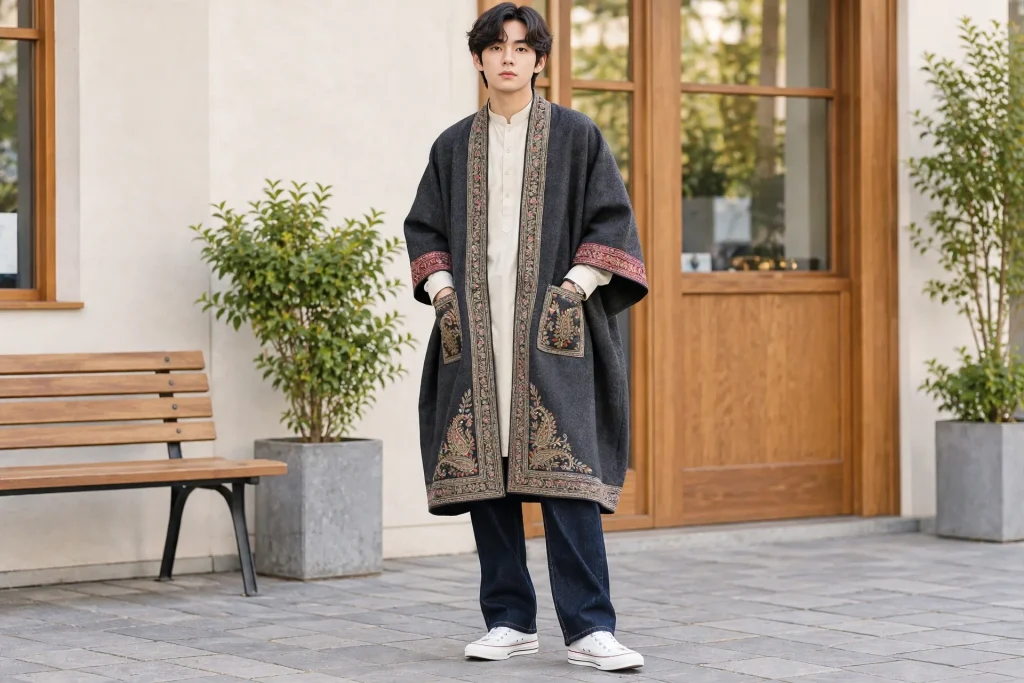
Kashmiri Pheran Over a Long-Sleeve Kurta
A pheran is a traditional long, loose winter garment from Kashmir. It’s usually made from wool or tweed and often features embroidery around the neckline and cuffs.
Worn over a long-sleeve kurta and warm trousers, it’s comfortable, generous in shape, and very warm.
Pherans vary in fabric, embroidery, and regional craftsmanship, from everyday wool versions to finely embroidered pieces for special occasions. Many men wear them for winter gatherings, family events, and everyday life in cold regions. If you’re wearing one outside its cultural context, choose a piece made by Kashmiri artisans and wear it with respect for its heritage.
Pair it with leather shoes or boots, and a wool cap or scarf on very cold days.
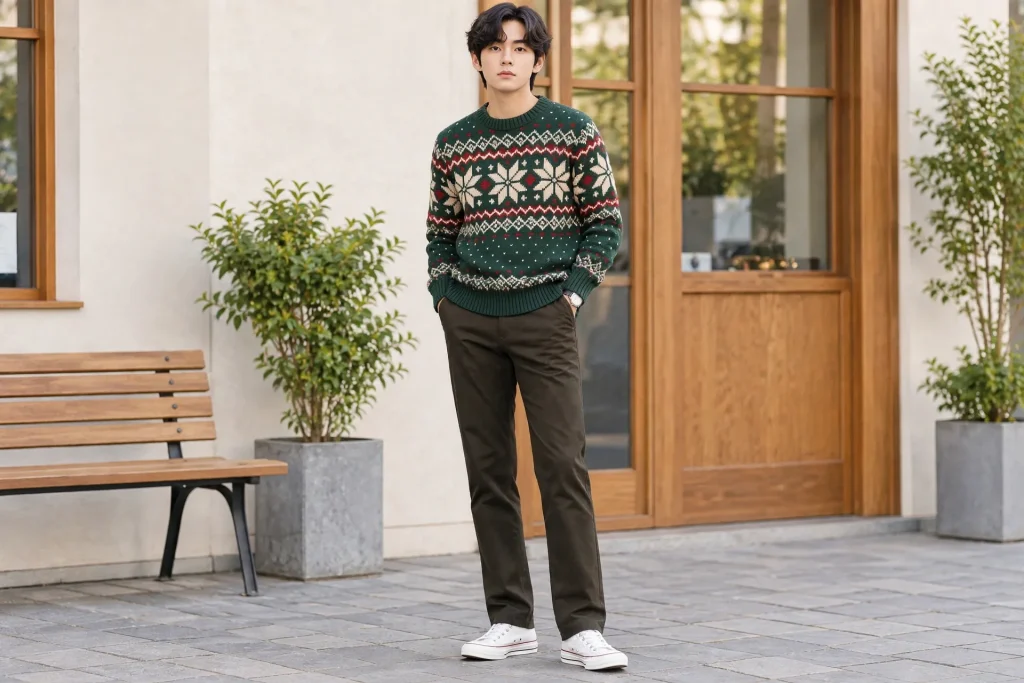
Festive Knit Sweater With Dark Chinos
The holiday sweater doesn’t have to be a joke. A well-made knit with a subtle winter pattern, like snowflakes, reindeer, or a geometric border, can look stylish and cheerful.
Choose one in a classic color, like navy, red, or forest green, and pair it with dark chinos and brown leather boots or loafers.
Keep the rest of the outfit simple, so the sweater stays the focus.
It’s perfect for holiday dinners, family gatherings, and winter parties where a suit feels too formal.
A Real-World Example
Imagine a man who commutes by train and spends weekends outdoors. A flannel suit and herringbone overcoat cover his workdays, a sherpa-lined trucker handles Saturday errands, and an M-65 takes him on Sunday walks. A few key pieces cover the whole week.
Buying Smarter for Winter
Fabrics worth knowing. Merino wool is soft, warm, and breathable for base layers. Cashmere is very soft and warm but more delicate. Wool flannel suits trousers and suits. Fleece is light and warm, though less wind-resistant. Down is very warm for its weight, while synthetic insulation stays warmer when damp.
Coat fabric. Check the label. Coats with a higher wool percentage generally feel warmer and hold their shape better.
Waterproof or water-resistant? Water-resistant fabrics handle light rain and snow. Waterproof fabrics, often with sealed seams, are better for heavy, wet weather.
Boot soles. Look for deep tread or rubber lug soles for grip on ice and slush.
Coat fit. The shoulder seam should sit at your natural shoulder, and the sleeves should cover your shirt cuffs. Try coats on over your thickest sweater or blazer, so there’s room to layer.
Men’s Winter Fashion Mistakes to Avoid
Wearing cotton as a base layer for long outdoor days. It dries slowly when damp. Merino or synthetic base layers usually work better.
Ignoring your shoes. Slippery soles and thin leather can make icy days miserable. Look for grippy soles and water-resistant finishes.
Choosing a coat that’s too tight. You need room for a sweater or blazer underneath.
Forgetting accessories. A good scarf, hat, and gloves add a lot of warmth for very little bulk.
Questions About Men’s Winter Fashion
What should a man wear in winter?
A warm base layer, a sweater or blazer as a mid layer, and a good coat cover most situations. Add a scarf, hat, gloves, and sturdy boots for very cold days.
What is the warmest type of men’s winter coat?
Well-made down and shearling jackets are among the warmest, though construction and fit matter too. Longer coats also protect more of your body from wind and cold.
How do I stay warm without looking bulky?
Use thin, warm layers like merino wool instead of one very thick sweater, and choose a coat that fits well over a mid layer.
What shoes are best for winter?
Leather boots with rubber or lug soles offer grip and warmth. Water-resistant finishes help in rain and snow.
Can I wear a suit in winter?
Yes. Choose warmer fabrics like flannel or tweed, and wear a long overcoat on top.
Layer Smart, Look Sharp
The best men’s winter fashion keeps you warm without making you look like you’ve given up on style.
Start with a good coat, a few warm knits, and boots you can trust on icy days. Build your outfits in three layers, and you’ll be ready for whatever winter throws at you.