Hairstyles for Thin Hair: 9 Looks That Add Instant Fullness
Three Myths Worth Dropping First
Before getting into cuts and styles, it helps to clear up a few ideas that hold a lot of people back.
Myth one: Thin hair should be kept long to look like more hair. Often the opposite happens. Long, fine hair can look stringy at the ends because there’s less hair at the bottom than at the roots. A shorter, more solid length usually looks thicker.
Myth two: Lots of layers add volume. Some layering helps. Too much can remove weight from already fine hair and leave the ends looking wispy.
Myth three: More product means more volume. Heavy creams and oils often flatten fine strands. A little lightweight product, used in the right place, usually does far more.
Keep those in mind, because the hairstyles for thin hair below are built around the opposite approach: solid ends, smart placement, and lightweight styling. They’re split into three groups. First, cuts to ask your stylist for. Then, color tricks that create depth. Finally, styles you can do yourself at home.
One quick note: if your hair has started thinning suddenly or noticeably, it’s worth speaking to a doctor or dermatologist. Hairstyles can make hair look fuller, but they can’t address the underlying cause.
Part One: Cuts to Ask Your Stylist For
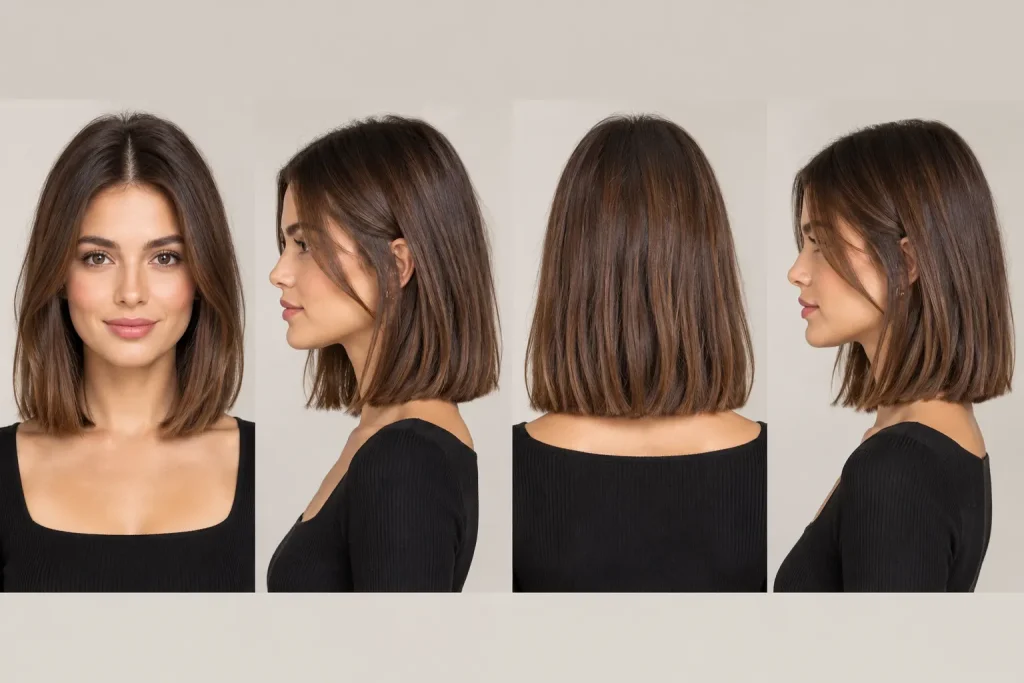
The Blunt Collarbone Lob
A lob is a long bob, and the collarbone length is a sweet spot for fine hair. It’s long enough to tie back, but short enough that the ends stay thick.
The secret is the word “blunt.” Ask your stylist to cut the ends in a straight, solid line rather than thinning or feathering them. That crisp edge creates the look of density, even when the hair itself is fine.
Wear it sleek and straight with a middle part, or tuck one side behind your ear for a more relaxed feel. Either way, the ends will look full and healthy.
What to say at the salon: “Collarbone length, blunt ends, and please don’t thin out the bottom.”
Invisible Layers
If you love some movement but worry about losing thickness, this is a clever compromise.
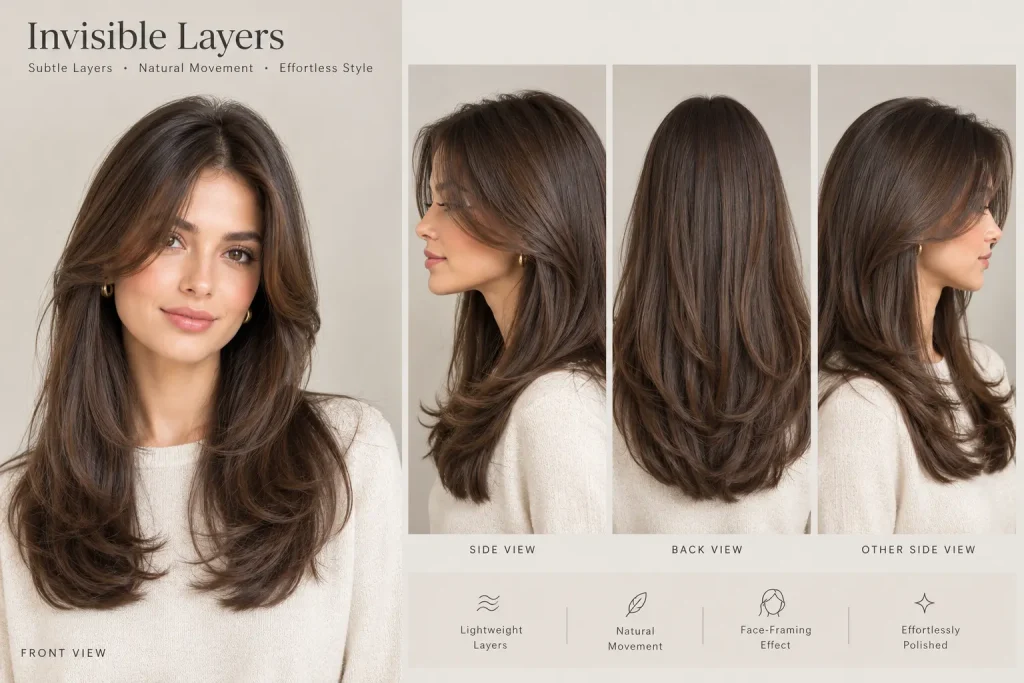
Invisible layers, sometimes called ghost layers, are cut underneath the top section of hair. From the outside, the hair looks like one solid length. Underneath, the shorter pieces give lift and bounce, so the hair doesn’t lie completely flat against your head.
It works especially well on shoulder-length and longer hair. You get the full-looking perimeter of a blunt cut, with a bit of hidden body.
Not every stylist uses the same name for this technique, so describe the result you want: layers that sit underneath, with the outer shape kept solid.
Soft Side-Swept Bangs
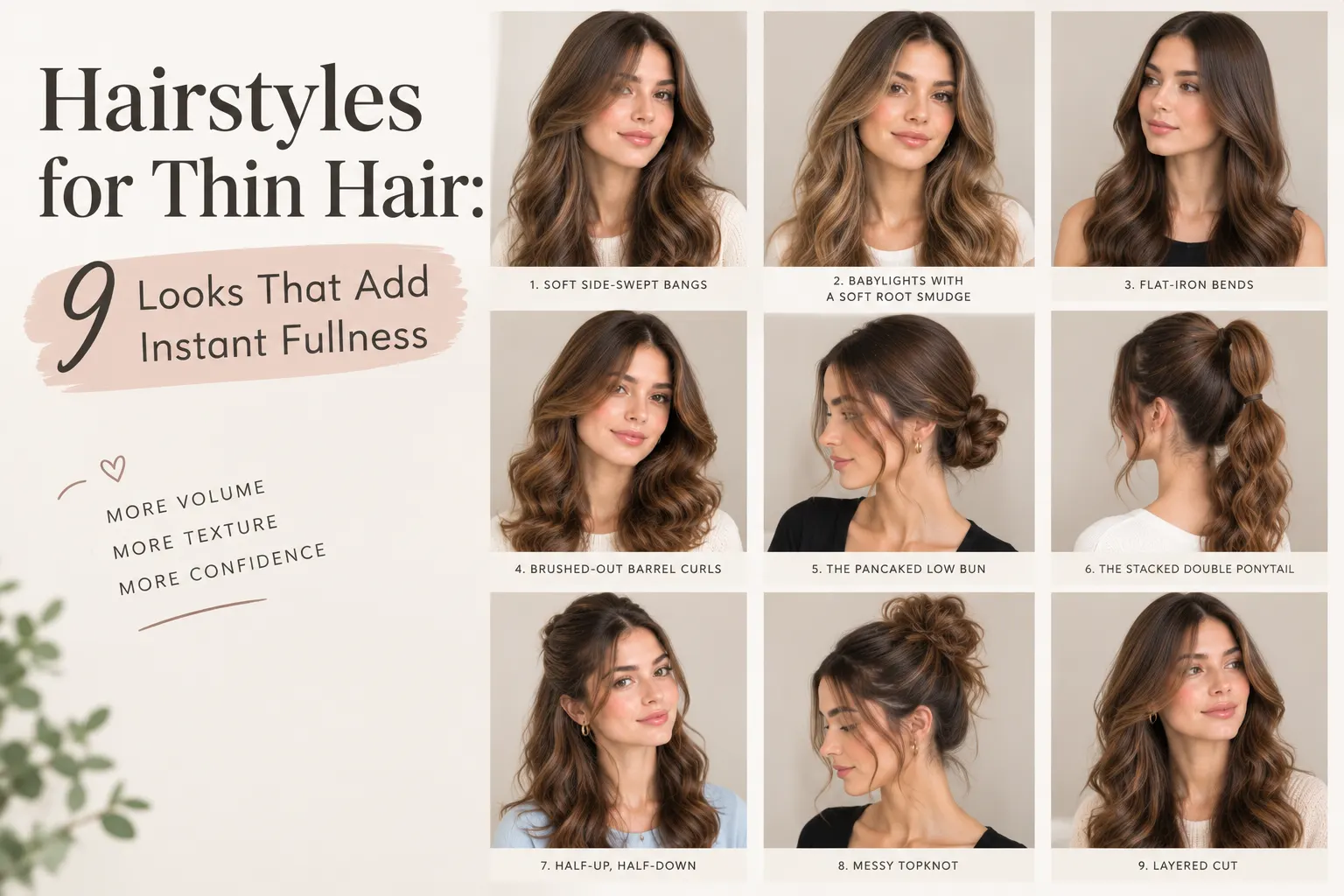
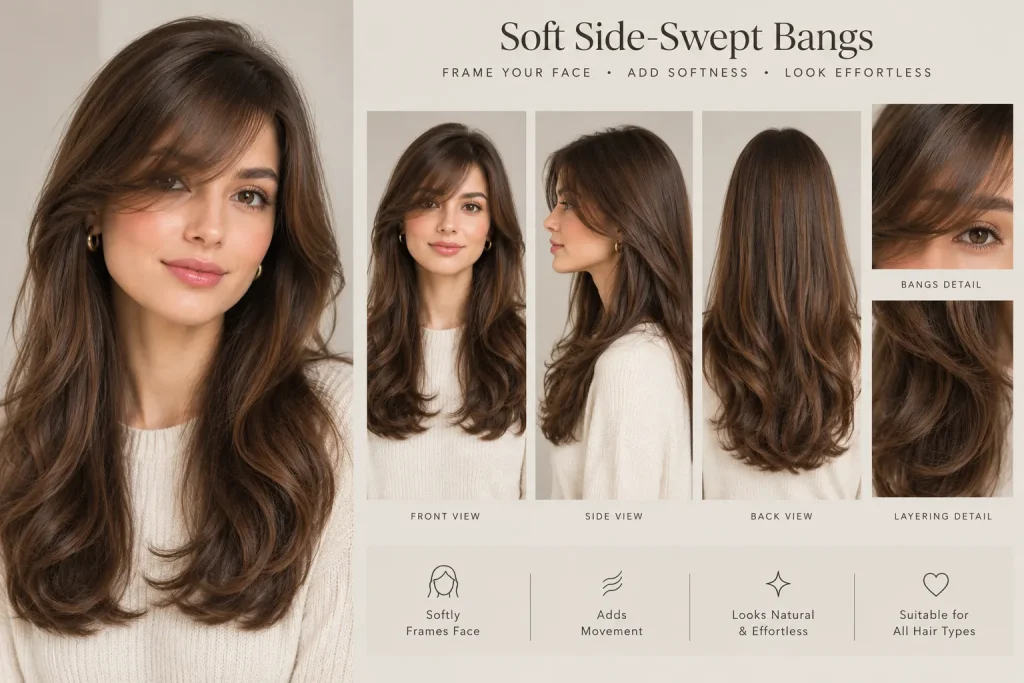
Bangs can be a great friend to thin hair. They bring hair forward toward the face, which makes the front hairline look fuller, and they draw attention to your eyes.
Side-swept bangs are a gentle option. They’re cut longer, usually around the cheekbone, and fall diagonally across the forehead. That length is forgiving and easy to grow out if you change your mind.
A few tips:
- Ask for them to be cut a little longer than you think. Fine hair tends to spring up shorter once dry.
- Style them with a quick blast from a hair dryer, brushing in the direction you want them to fall.
- Keep them light. Very thick bangs can take too much hair from the rest of your head.
Flipped Ends
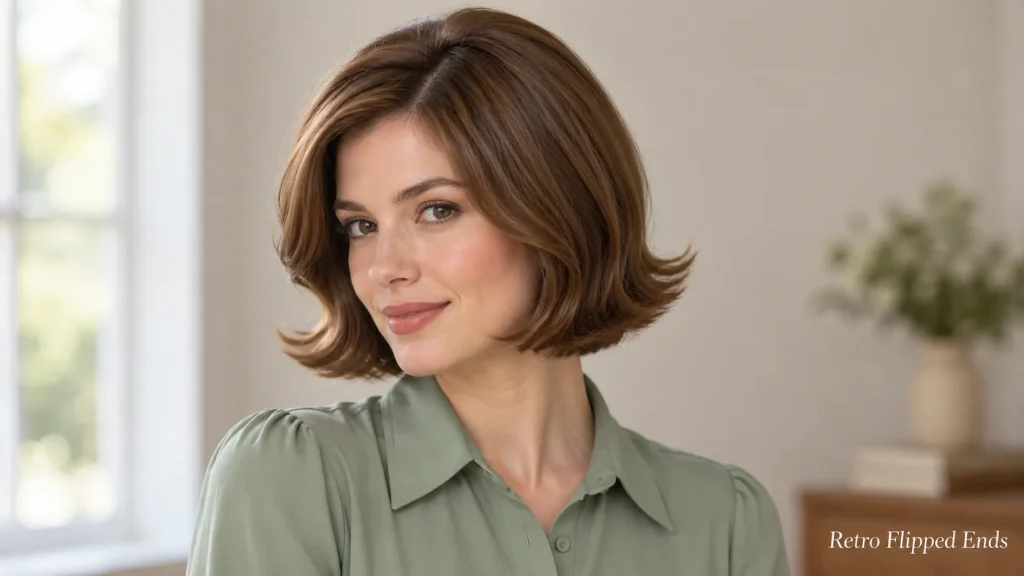
This one is part cut, part styling. A shoulder-length cut with slightly turned-out ends has a fun, retro feel, and the flip adds width at the bottom of the hair, where thin hair often looks sparse.
Ask your stylist for a shoulder-grazing length with minimal layering. At home, use a round brush or a flat iron to turn the last inch or two outward. A touch of light hairspray holds the shape.
It’s playful, easy to wear, and gives your hair an instantly fuller outline.
Part Two: Color Tricks That Add Depth
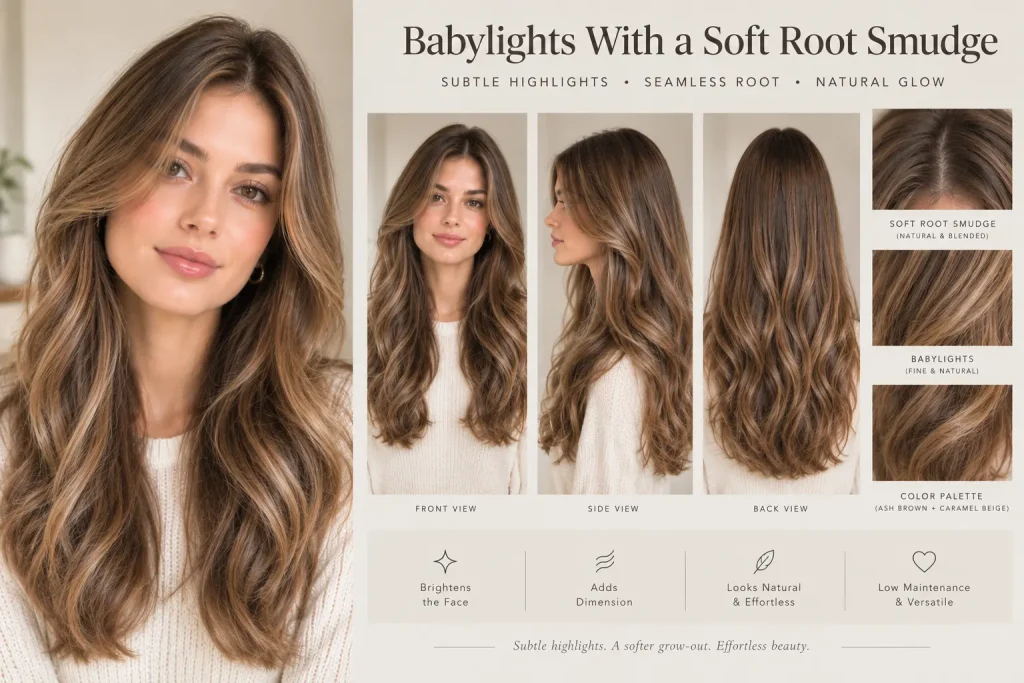
Babylights With a Soft Root Smudge
Color can make a surprising difference to how thick hair looks.
When hair is one flat shade, especially a very light or very dark one, the scalp can show through more clearly. Adding dimension creates the illusion of more hair.
Babylights are very fine, delicate highlights woven through the hair. Because they’re so thin, they blend softly and create depth rather than obvious stripes. On brunettes, think caramel or honey. On blondes, try soft beige or golden tones.
A root smudge is a slightly deeper shade blended at the roots. It softens the contrast between the scalp and the hair, which can make the part look less see-through.
Together, they give hair a lived-in look that feels natural and grows out gently. Ask your colorist which shades suit your skin tone, and do a strand test if your hair is fragile, since chemical processing can affect fine hair.
A Quick Detour: Product Placement Matters
Before moving into styles you can do at home, it’s worth talking about products, because the right ones make every style easier.
For fine hair, lightweight usually wins:
- Volumizing mousse at the roots before blow-drying can give lift without heaviness.
- Dry shampoo isn’t just for second-day hair. A little at the roots on clean, dry hair adds grip and texture.
- Texturizing spray through the mid-lengths gives hair a fuller, piece-y feel.
- Heat protectant is a must before using any hot tools. Fine hair can be more vulnerable to heat damage.
Avoid applying conditioner or oil at the roots. Keep them on the mid-lengths and ends, where hair tends to be drier.
Part Three: Styles You Can Do at Home
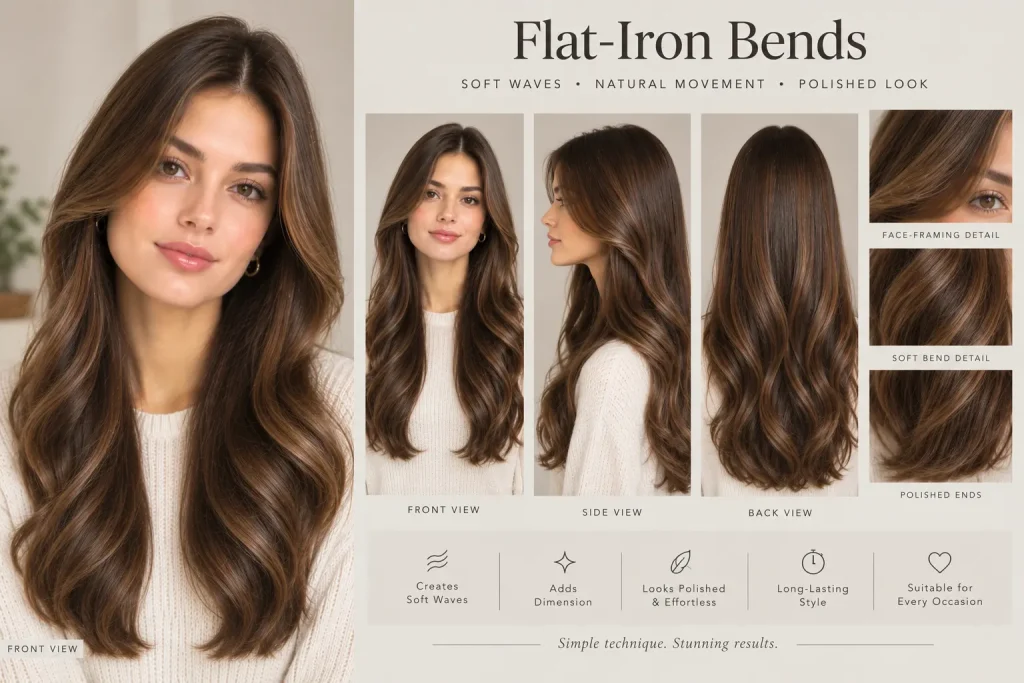
Flat-Iron Bends
Bends are softer than curls and looser than waves. They add movement and width without the bounce of full ringlets, which can sometimes separate fine hair and make it look thinner.
Here’s how to do it:
- Apply heat protectant and let it dry.
- Take a one to two inch section of hair.
- Clamp your flat iron a few inches from the root.
- Twist the iron half a turn away from your face, then slide it down slowly.
- Stop before the ends, leaving the last inch straight.
- Repeat around the head, alternating directions for a more natural look.
- Once cool, gently break up the bends with your fingers.
Leaving the ends straight keeps the look modern. A light mist of texturizing spray finishes it off.
Brushed-Out Barrel Curls
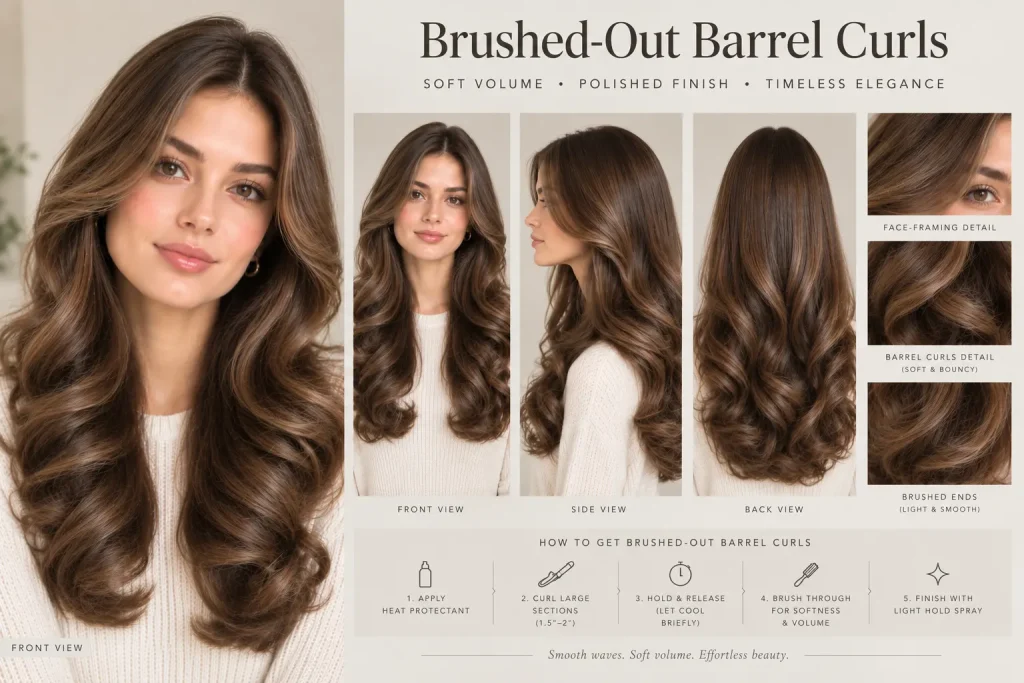
For special occasions, this is a lovely, glamorous option. It’s inspired by vintage Hollywood styling, where curls are brushed out into big, soft waves.
Use a large barrel curling iron, about one and a quarter inches or wider. Curl medium sections away from your face, then pin each curl in a loop while it cools. Once your whole head is done and the hair has cooled, remove the pins and brush through gently with a paddle brush or wide-tooth comb.
The brushing is what makes this style work for fine hair. It blends the curls together into a full, cloud-like shape, so there are no gaps between sections.
Finish with a flexible hairspray. If your hair tends to drop curls quickly, spray each section lightly before curling.
The Pancaked Low Bun
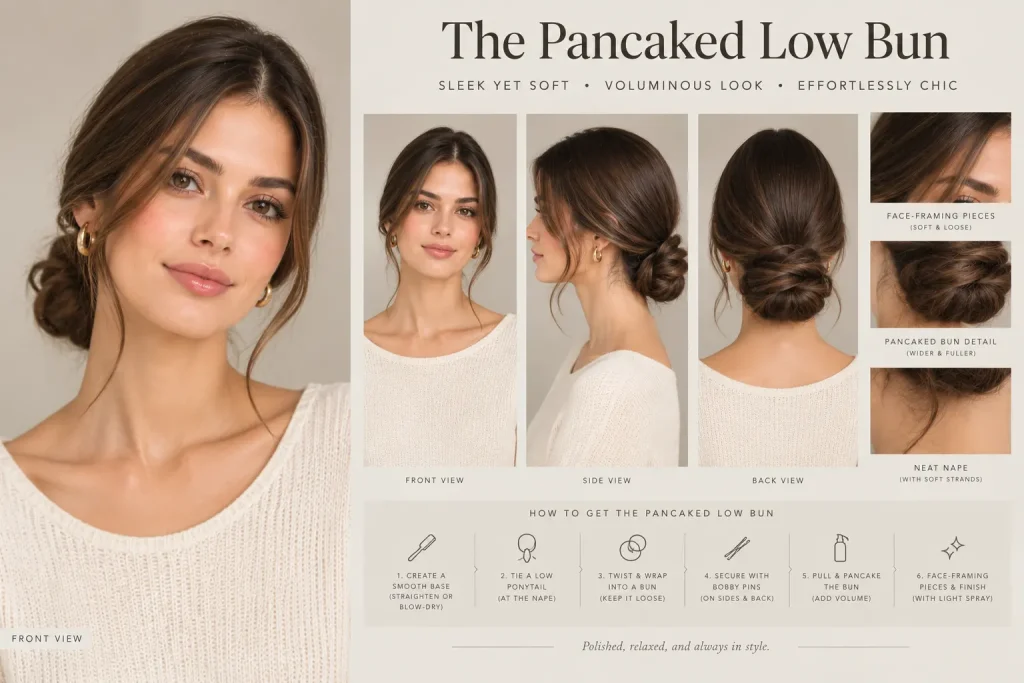
A bun made from thin hair can sometimes look small and tight. Pancaking fixes that.
Pancaking means gently pulling at the edges of a bun or ponytail to spread the hair out, so it looks bigger and fuller.
Start with a low ponytail at the nape of your neck. Twist it loosely, coil it into a bun, and secure it with a few pins. Now hold the base with one hand and use the other to tug gently on the edges of the bun, loosening it outward. Do the same at the crown, lifting small pieces of hair just slightly.
The result is soft, relaxed, and far fuller than a tight bun. It works for work, weddings, and casual days.
Go slowly with the pulling. Too much and the bun can come loose.
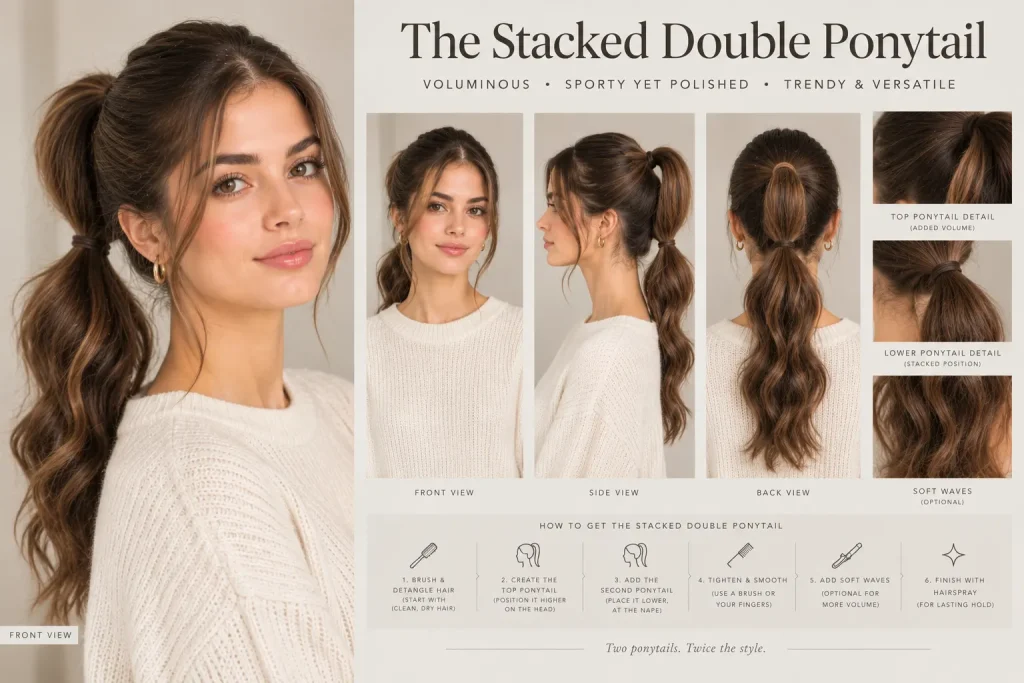
The Stacked Double Ponytail
This is one of the cleverest hairstyles for thin hair, and it takes about two minutes.
Split your hair horizontally into a top section and a bottom section, roughly at ear level. Tie the top section into a ponytail at the crown. Then tie the bottom section into a second ponytail directly underneath, so it’s hidden by the top one.
When you let go, the top ponytail falls over the bottom one, making the ponytail look longer and much thicker than a single one would.
A few tips to make it look seamless:
- Use elastics that match your hair color.
- Wrap a small piece of hair around the top elastic to hide it.
- Spray a little dry shampoo or texturizing spray into both ponytails before tying them, so they blend together.
Common Mistakes With Fine Hair
Even the best cut can be let down by a few habits. Watch out for these:
Over-washing with heavy shampoos. Rich, moisturizing formulas can weigh fine hair down. Lighter, volumizing shampoos are usually a better fit.
Pulling hair back too tightly. Tight ponytails and buns, worn day after day, can put stress on the hairline over time. Vary your styles and keep elastics gentle.
Skipping heat protection. Fine strands may be more prone to breakage from hot tools. Always use a protectant and the lowest heat setting that works for you.
Brushing wet hair roughly. Hair is more fragile when wet. Use a wide-tooth comb or detangling brush and work from the ends up.
Using too much teasing. A little backcombing at the roots can add lift, but heavy teasing can cause tangles and breakage. If you do tease, be gentle and brush it out carefully afterward.
Frequently Asked Questions
What is the best haircut for thin hair?
There isn’t one cut that suits everyone, but blunt cuts at chin to collarbone length are popular because they keep the ends looking thick. Your face shape, hair texture, and daily routine all matter, so talk it through with your stylist.
Can layers work on thin hair?
Yes, when they’re used carefully. Light or hidden layers can add movement without removing too much weight. Heavy, choppy layering is more likely to make fine hair look sparse.
Do bangs make thin hair look thicker?
They can. Bangs bring hair forward and can help the front of your hair look fuller. Longer, softer bangs are usually easier to style and maintain on fine hair.
Which hairstyles for thin hair work for special occasions?
Brushed-out barrel curls and a pancaked low bun both look elegant and full. Flat-iron bends are a simpler option if you want something polished but less formal.
How can I add volume to thin hair without damaging it?
Lightweight volumizing products, gentle blow-drying at the roots, and heat protectant before using hot tools all help. Limiting chemical processing and avoiding tight styles also support healthier-looking hair over time.
Thin Hair, Full Style
Fine hair doesn’t have to feel limiting. With a cut that keeps the ends strong, a bit of dimension from color, and a few easy styling tricks, it can look fuller, healthier, and more polished.
Start with one change. Maybe it’s asking for blunt ends at your next appointment, or trying the stacked ponytail tomorrow morning. Small adjustments often make the biggest difference. Try a few of these hairstyles for thin hair, see what suits your routine, and build your favorite look from there.