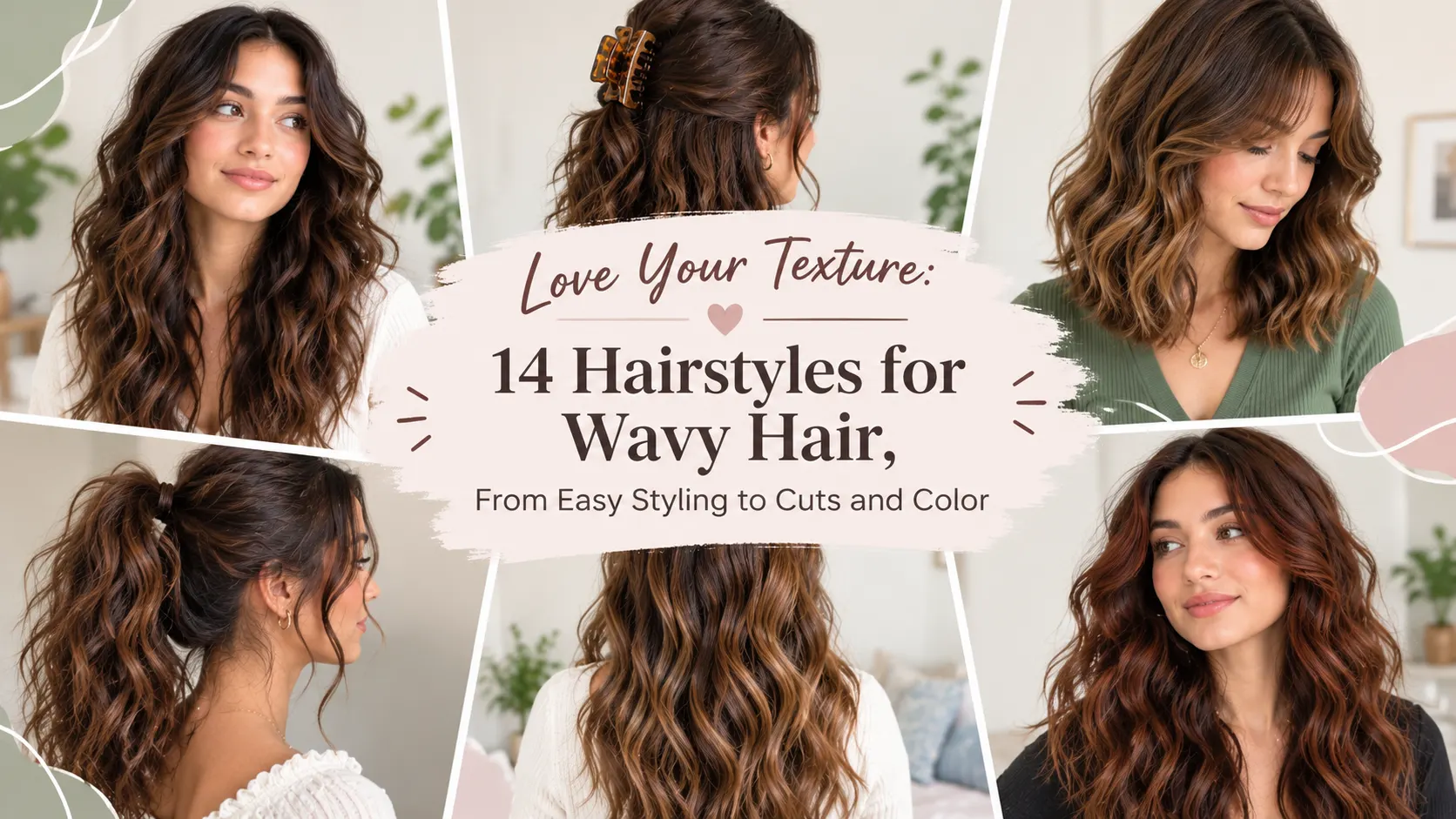
Love Your Texture: 14 Hairstyles for Wavy Hair, From Easy Styling to Cuts and Color
Wavy hair has a funny reputation. People with straight hair often wish they had it, and people who actually have it spend half their mornings wondering why it looks perfect on Tuesday and like a puffy triangle on Wednesday.
Here’s the thing many stylists will tell you: wavy hair isn’t difficult. It’s just misunderstood. It often gets treated like straight hair (brushed dry, cut with heavy blunt layers) or like curly hair (loaded with thick creams it can’t hold up). Neither approach suits most wave patterns very well.
So before we get into the hairstyles for wavy hair below, it helps to spend two minutes figuring out what kind of waves you’re working with.
First, Figure Out Your Wave Pattern
Waves usually fall into three loose groups. You don’t need to obsess over the labels, but knowing roughly where you sit makes product and style choices much easier.
Loose, barely-there waves (often called 2A). Hair has a gentle bend, mostly from the mid-lengths down. It goes flat easily and gets weighed down by heavy products.
Defined S-shaped waves (2B). The pattern is clearer and starts closer to the root. Frizz shows up on humid days, but so does lovely movement.
Deep, almost-curly waves (2C). Thick S-waves with a few spirals mixed in. Volume is rarely a problem. Control sometimes is.
A quick way to check: let your hair air-dry once with no product at all and see where the bend starts and how strong it is. It’s a simple, useful starting point for understanding your natural pattern.
Now, on to the ideas. This list is a deliberate mix of everyday styling, braids, cuts, color, and a few accessory looks, because sometimes the best way to show off waves isn’t a new technique at all. Pick whatever fits your hair and your week.
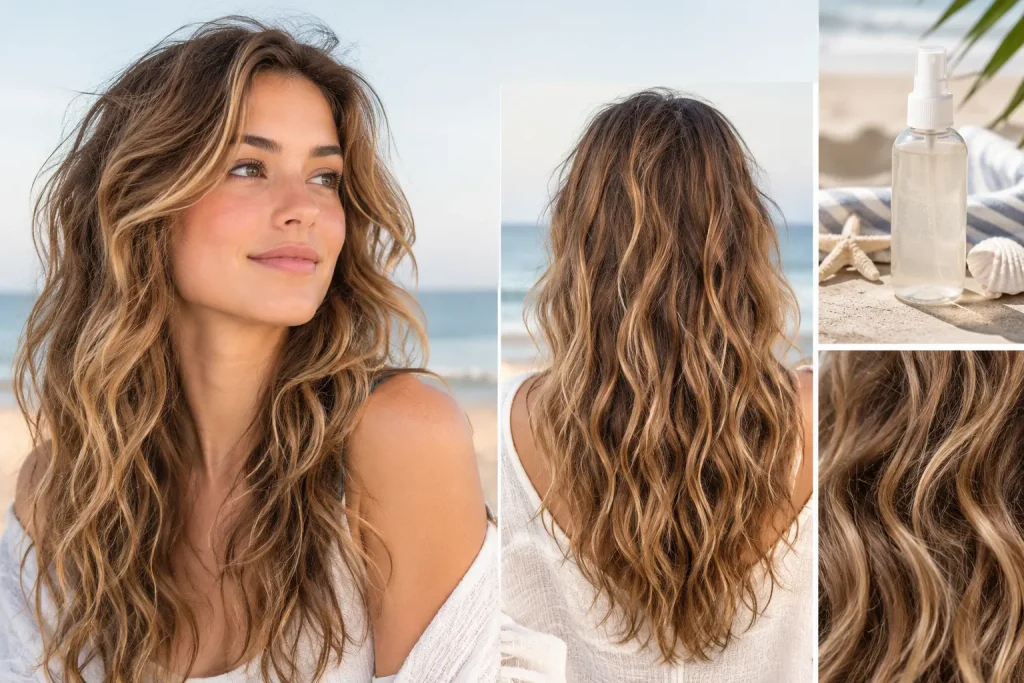
Salt Spray Beach Texture
If your waves tend to fall flat or look a bit too neat, sea salt spray is a cheap and simple fix.
Mist it through damp hair, scrunch upward a few times, and let it air-dry. Once dry, gently scrunch again to break up any stiffness. You get that slightly piecey, “just came back from the coast” look without any heat at all.
It suits loose and medium waves best. Some salt sprays can feel drying, depending on the formula and your hair’s condition, so if your ends are on the dry side, skip them or follow up with a drop of light oil.
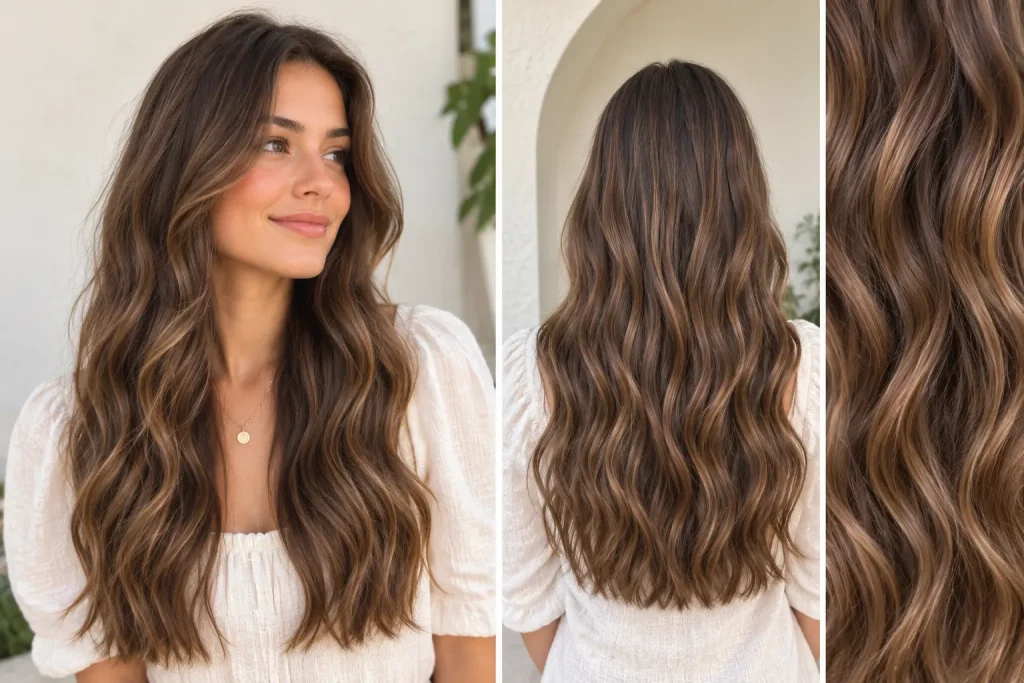
Long One-Length Waves
Not every wavy cut needs layers. Many people with loose waves find that long, one-length hair gives the pattern more weight and shape at the bottom.
A single clean line just below the shoulders or at mid-back lets the waves stack on top of each other. This can make the ends look fuller rather than thin and wispy.
This cut tends to work well for:
- Fine to medium hair that loses volume with too many layers
- Anyone growing their hair out who wants the ends to look healthy
- People who like to switch between down, braided, and pulled-back looks
Waves can shrink as they dry, so ask your stylist how they plan to account for that. Some prefer cutting dry to see the natural pattern, while others get great results on damp hair.
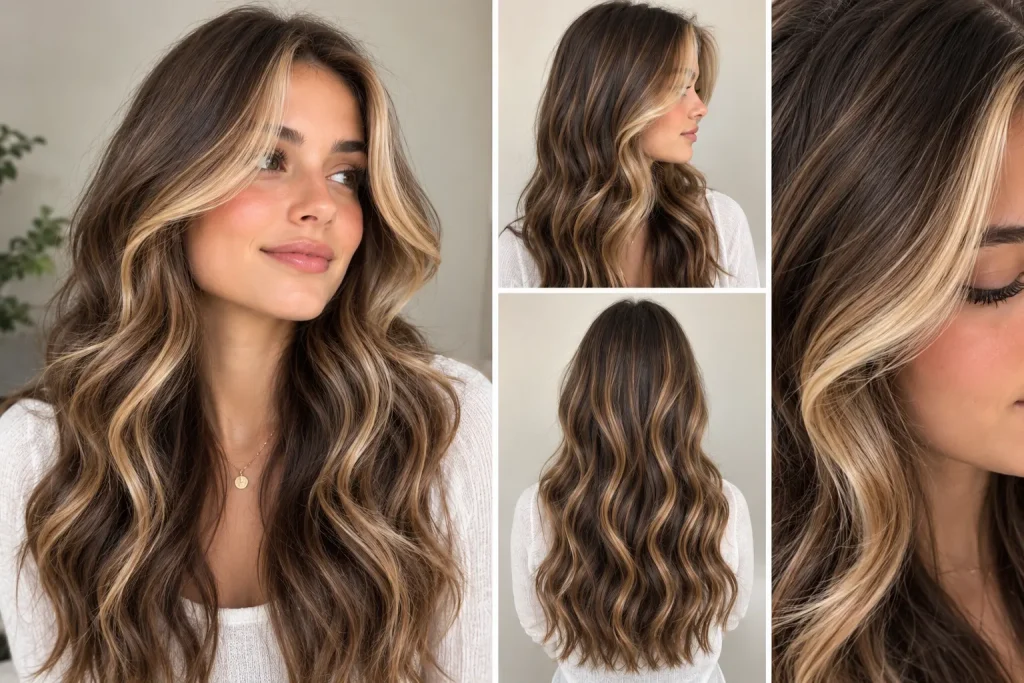
Money Piece Highlights
A money piece is a pair of brighter strands right around the face. It’s one of the most flattering color choices for waves, because the light catches every bend in the front sections.
It’s also lower commitment than full highlights. You only lighten a small area, so grow-out is softer and maintenance is easier. Warm honey and soft caramel shades suit many brunettes, while golden beige often looks beautiful on light brown hair.
If you’ve never colored your hair before, this is a nice first step that still makes a visible difference.
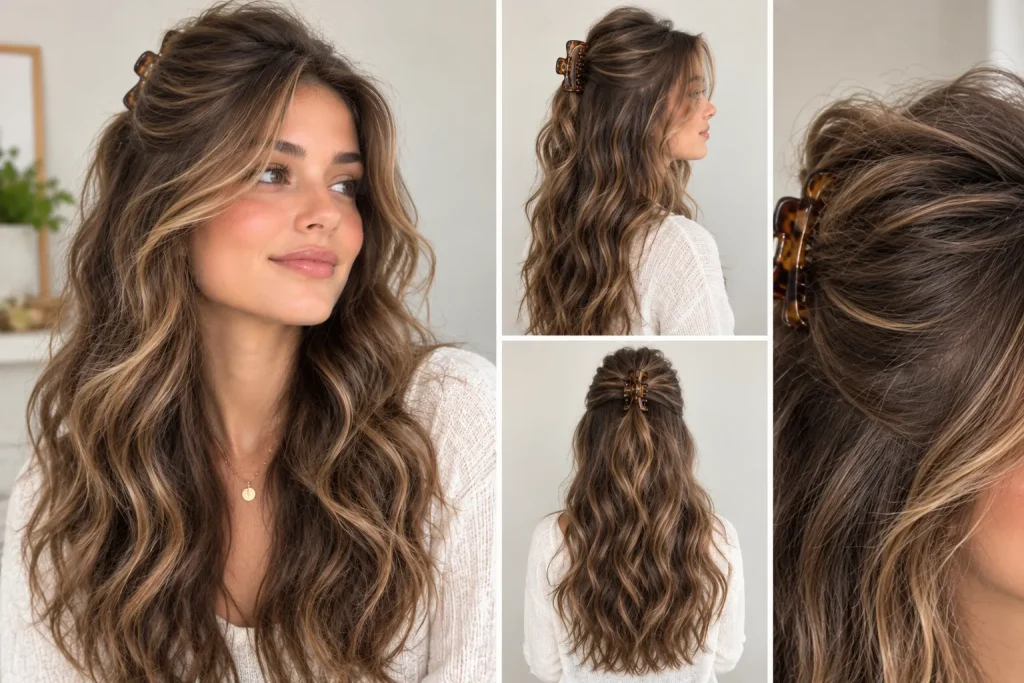
Root-Clipped Crown Volume
Flat roots are a very common complaint with wavy hair. The ends are bouncy, but the top lies flat against the head, which can leave the overall shape looking a bit unbalanced.
Root clipping is an easy fix. After washing, while your hair is still wet, slide a few flat duckbill clips under the hair right at the root around your crown. Lift each section gently before clipping. The clips should hold the hair up without pulling or feeling tight on your scalp. Let it dry, then remove the clips and loosen your roots with your fingers.
Results vary with hair density and length, but it’s a tiny step that can make many wavy styles look more polished.
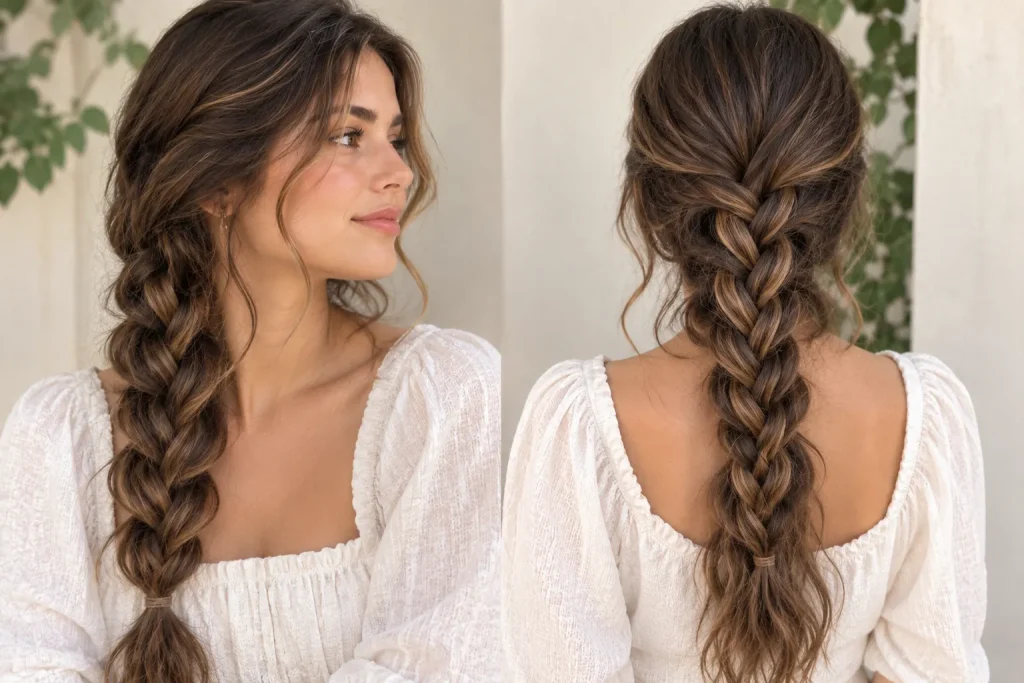
Four-Strand Braid
Once you’re comfortable with a regular braid, a four-strand braid is a fun step up. It looks woven and almost basket-like, and waves fill it out beautifully.
Here’s the full sequence:
- Divide your hair into four equal strands. Think of them as positions one to four, from left to right.
- Take the far-right strand and pass it under the strand next to it.
- Take the far-left strand and pass it over the strand next to it, then under the following one.
- Repeat steps two and three, always working with whichever strands are now on the outside, until you reach the ends.
- Secure with a small elastic.
The pattern is simply “right goes under one, left goes over one and under one.” It takes some practice, so try it on a free evening in front of a mirror first. Gently loosening the edges at the end makes it look fuller.
Brush-Defined Wave Clumps
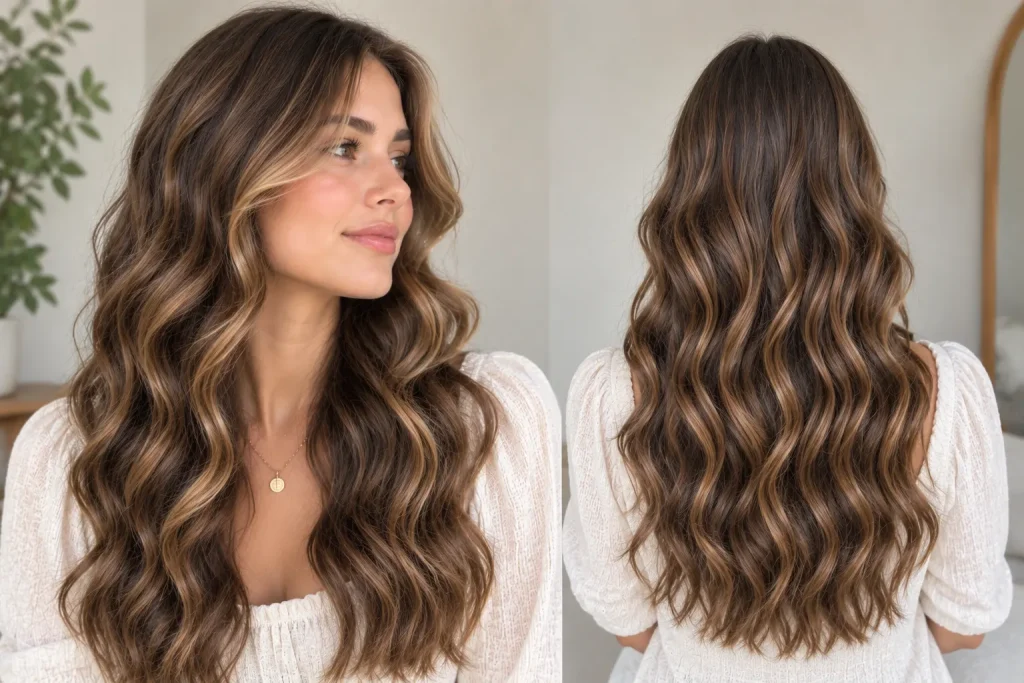
Some days you want your waves to look more defined and less fuzzy. Brush styling helps with that.
On soaking-wet hair, apply a light gel or styling cream in small sections. Then run a styling brush through each section and give the hair a slight twist at the end. The waves will start grouping together into neater clumps.
Let it dry without touching it. When it’s fully dry, scrunch gently to soften the cast left by the gel. You keep the definition but lose the crunch. This technique can be especially helpful for 2B and 2C waves that tend to turn frizzy by midday.
Beret Over Loose Waves
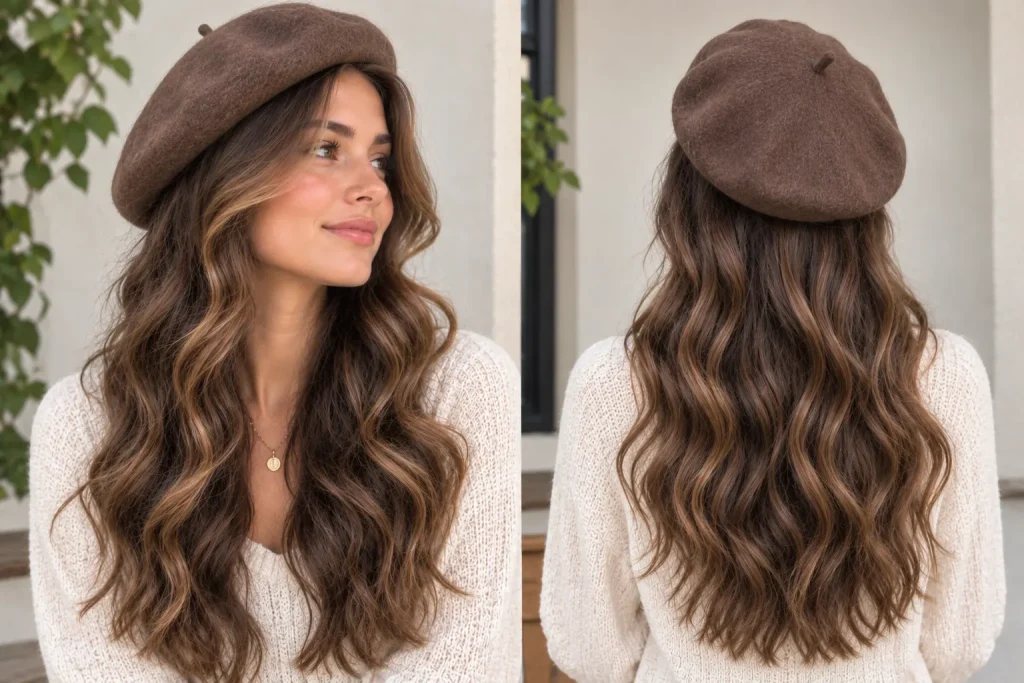
Sometimes the easiest way to style wavy hair is to let an accessory do the work.
A wool or felt beret, worn slightly tilted back on your head, frames loose waves in a way that looks effortless and a little bit Parisian. Pull a few front pieces forward so they spill out under the brim.
It’s perfect for cooler months. Pair it with a long-sleeve knit or a tailored coat and the whole outfit feels put together, even on a day when your hair is being difficult. It also quietly hides a frizzy crown, which makes it one of the more forgiving hairstyles for wavy hair.
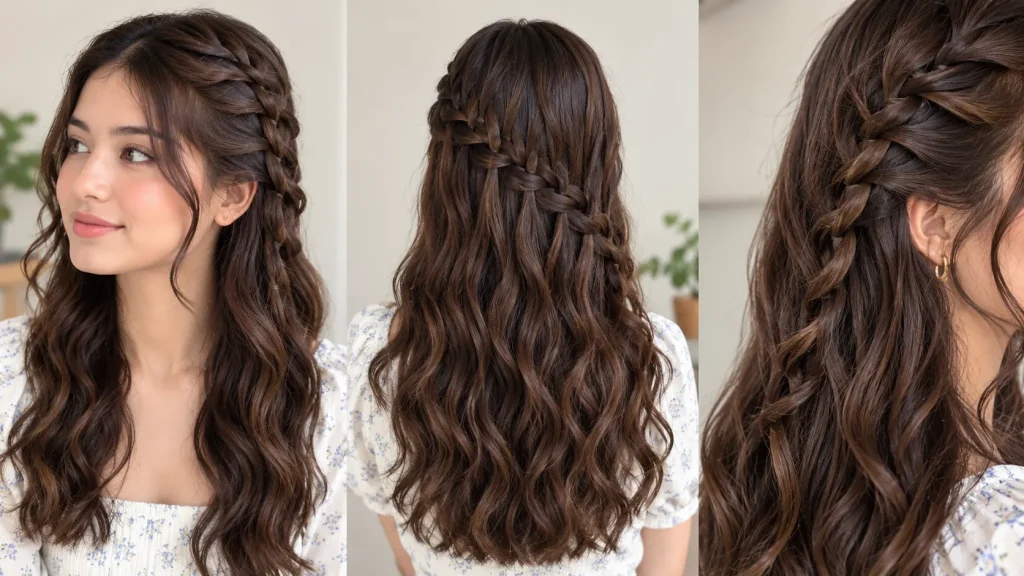
Infinity Braid
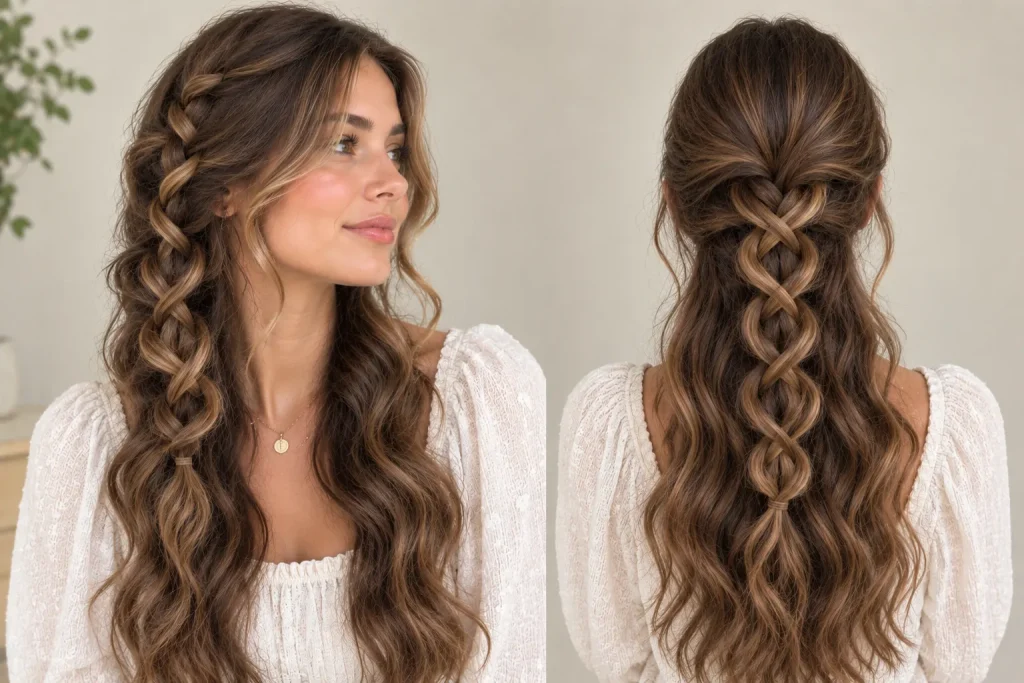
The infinity braid is a two-section braid that looks like a running chain of figure eights. It sounds tricky, but it’s mostly a pattern of weaving a small strand in and out of two larger sections.
It looks especially pretty as a single braid down one side or down the back. Waves give it a soft, bumpy texture that makes the pattern stand out.
Best for: medium to long hair with some thickness.
Tip: Use a little texture spray before you start. It gives your hair grip so the sections don’t slip apart while you work.
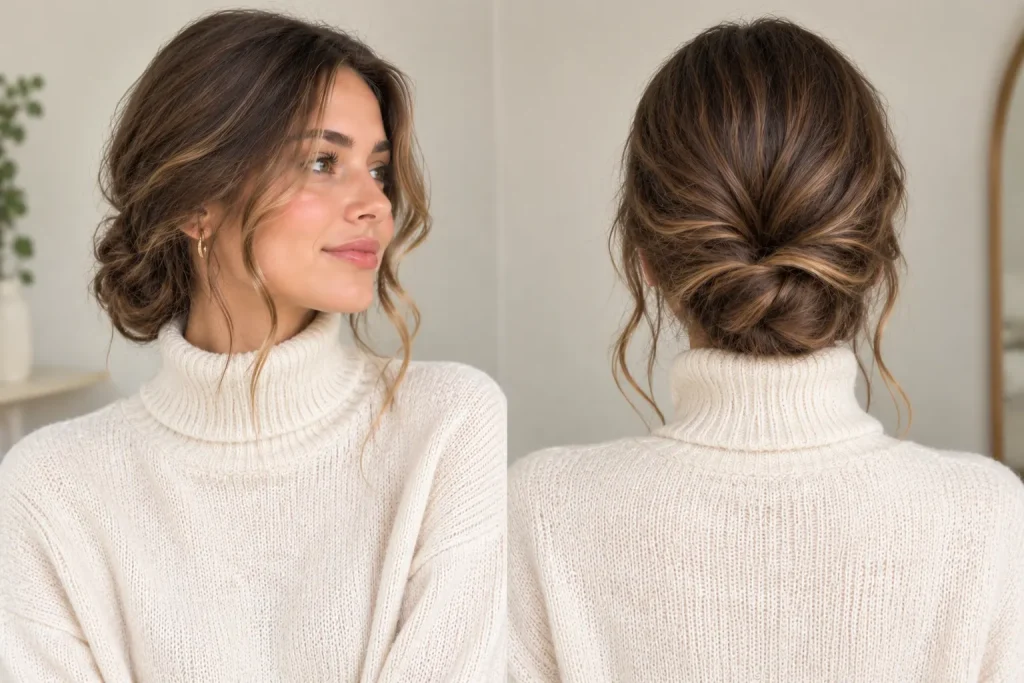
Turtleneck Tuck
This one is more fashion than hairstyling, and that’s exactly why it works.
On a cold day, put on a fine-knit turtleneck or high-neck sweater and simply tuck your lower layers of hair inside the collar. Leave the top and front waves loose. It creates the illusion of a shorter, chin-length wavy cut without a single snip.
People like it for a few reasons:
- It helps protect your ends from scarves, coats, and friction
- It keeps hair off your neck on windy days
- It lets you try the “short hair look” before committing to a haircut
It’s an easy, polished option for office days or winter outings.
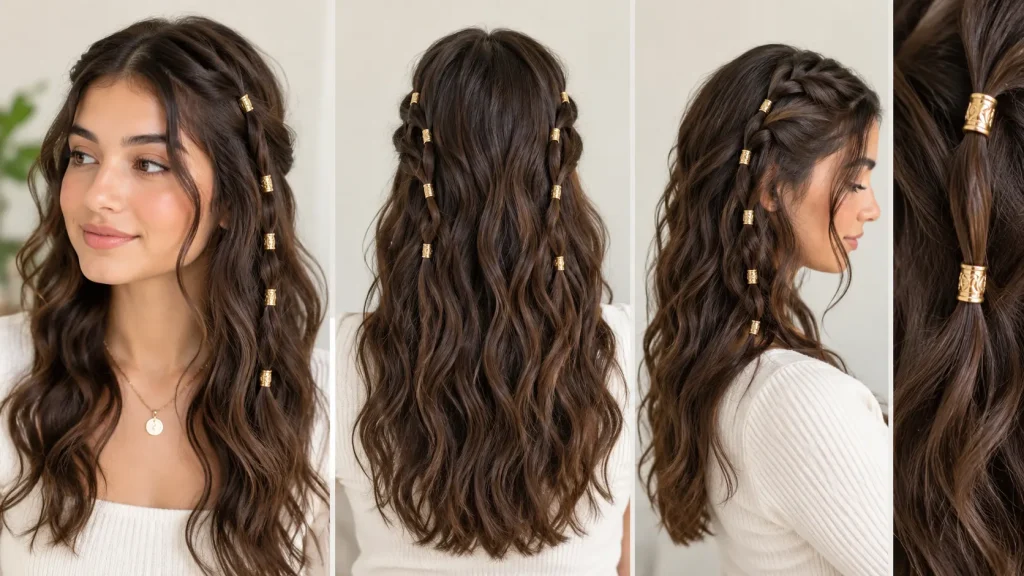
Hair Cuffs Through Small Sections
Hair cuffs are small metal or resin rings that you slide onto thin strands of hair. On waves, they look like little bits of jewelry peeking through the texture.
Pick two or three small sections near the front or behind one ear. Twist the strand lightly, slide the cuff on, and you’re done. Gold cuffs look warm on brown hair, while silver stands out nicely on dark or very light shades.
Keep the cuffs lightweight. Heavy pieces can pull on fine hair and may cause breakage over time.
Chinese Staircase Braid
This braid looks impressive, but it’s really one simple knot repeated down a ponytail. As you go, the knots naturally spiral around, which is where the “staircase” look comes from.
Here’s how it works:
- Pull your hair into a ponytail. Dampening it slightly or adding a little gel makes it easier to control.
- Separate a small piece of hair from the outside of the ponytail. This is your working strand.
- Bring the working strand over the top of the ponytail and around the back, creating a loop.
- Pull the end of the working strand back through that loop and tighten gently.
- Pick up another small piece of hair from the same side of the ponytail and add it to the working strand.
- Repeat steps three to five down the length, then secure the end with a small elastic.
For a slightly different finish, give the whole ponytail a gentle twist at the end so it looks more like a spiral. Here’s an example of when this braid shines: if your waves feel too frizzy to wear down on a humid afternoon, it keeps everything contained while still looking intentional. It works best on medium and long hair.
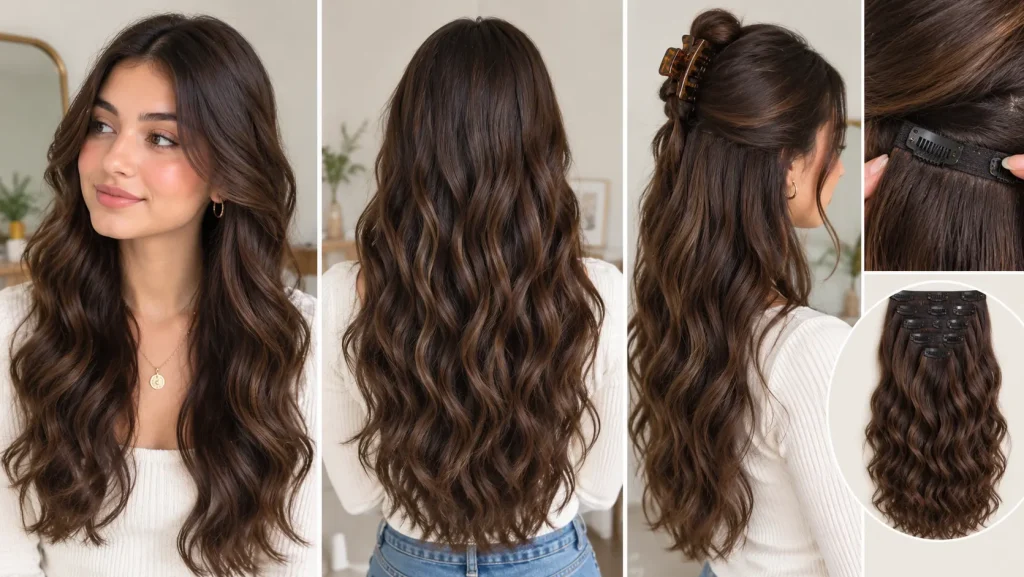
Clip-In Wavy Extensions
Waves sometimes make hair look shorter than it really is, especially with tighter patterns. Clip-in extensions are a temporary way to add length and fullness without a long-term commitment.
For a natural blend, match more than just the wave pattern. Color, thickness, and overall texture all matter too. Straight extensions in wavy hair often look obvious, while extensions with a similar texture tend to blend much more naturally.
Clip them in below the crown, then scrunch in a little of your regular styling product so everything matches. Take them out before sleep to avoid tangles and stress on your roots.
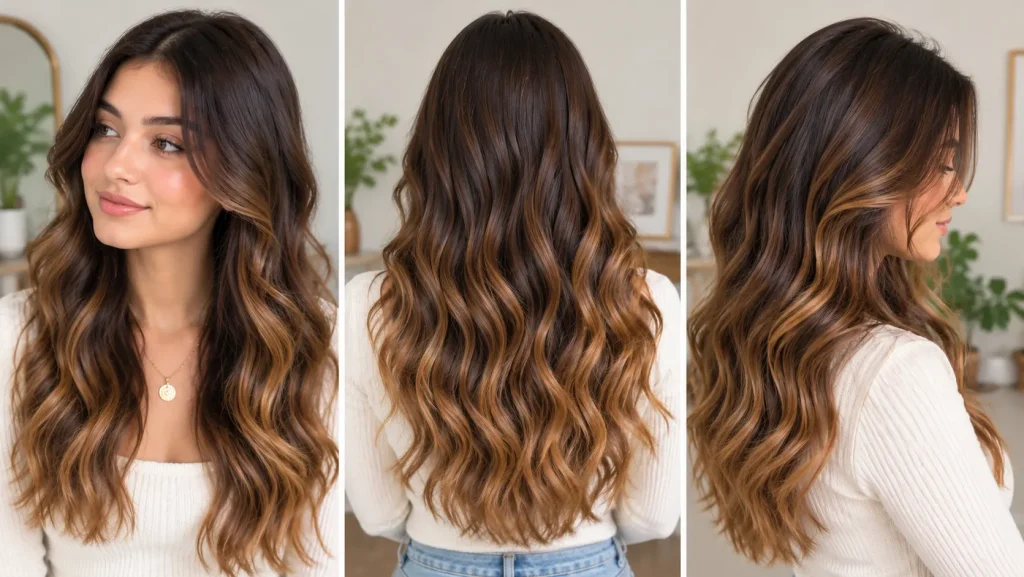
Caramel Ombre
Ombre color moves from a darker shade at the root to a lighter shade at the ends. On wavy hair, the gradient shows off movement, because the lighter ends catch the light as the waves bend.
A soft caramel ombre on brown hair is one of the easier versions to maintain. Your natural root stays in place, so you usually won’t see a harsh regrowth line for months.
Ask for a blended transition, not a sharp horizontal line. A gentle melt tends to look far more natural on textured hair.
Hair Tinsel Strands
Hair tinsel is thin, shiny strands that are tied into small sections of hair. It’s a fun touch for parties, holidays, or weddings where you want a bit of sparkle without a complicated updo.
On waves, the tinsel weaves in and out of your natural pattern, so it glints as you move rather than sitting in straight, obvious lines. Gold and silver are subtle. Pink or blue feel more playful.
It can last a few weeks with gentle care. Avoid brushing aggressively near the tinsel. When it’s time to remove it, follow the product’s removal instructions, or ask a stylist if the knots are hard to undo. Cutting carelessly near the roots can snip your own hair too.
What Can Flatten Waves (And Easy Fixes)
Even with a great haircut, a few habits can quietly work against your waves. A quick checklist:
- Dry brushing can break up wave clumps and create frizz. Try detangling with conditioner in the shower instead.
- Heavy products may weigh loose waves down. Light mousses, gels, and sprays often work better.
- Rough towel drying tends to cause frizz. Squeeze with a microfiber towel or soft cotton t-shirt.
- Touching damp hair can disrupt the pattern while it sets. Wait until it’s dry, then scrunch.
- Very short, choppy layers may make some wave patterns look puffier. Layers that follow your waves usually look smoother.
Small changes here can help your favorite hairstyles for wavy hair look more defined for longer.
A Few Quick Pairing Ideas
Not sure where to start? Here’s a simple way to match a look to your day:
| Situation | Try This |
|---|---|
| Rushed weekday morning | Salt spray texture, worn loose |
| Cold office day | Turtleneck tuck with brush-defined waves |
| Humid or windy afternoon | Chinese staircase braid |
| Weekend outing | Beret over loose, salt-sprayed waves |
| Party or wedding | Infinity braid finished with a few hair cuffs |
| Ready for a bigger change | Money piece highlights or caramel ombre |
Frequently Asked Questions
What are the easiest hairstyles for wavy hair?
Salt spray texture, root clipping, and the turtleneck tuck are among the easiest. They take only a few minutes and don’t need special skills.
Should wavy hair be cut wet or dry?
Both can work. Many stylists like to cut wavy hair dry or partly dry, because waves shrink as they dry and it’s easier to see how the hair will sit. Others get great results cutting damp hair. It’s worth asking your stylist which method they use and why.
How do I stop my waves from getting frizzy?
Detangling only while hair is wet and full of conditioner, using a light gel or mousse, and drying with a microfiber towel can all help. Try not to touch your hair until it’s fully dry. Humidity will still play a role, so braids are a handy backup on very damp days.
Are layers good for wavy hair?
They can be, but the type of layer matters. Soft layers that follow the wave pattern often look best. Very short, choppy layers may make some waves look puffy. If your hair is fine, fewer layers may actually look fuller.
Can I wear braids on wavy hair without them looking messy?
Yes. A little texture spray or light cream helps sections hold together. Some flyaways are natural with waves and often make braids look softer and more relaxed.
How often should I wash wavy hair?
It depends on your scalp and lifestyle. Many people with waves wash two or three times a week and refresh in between with a light mist of water. If your scalp gets oily quickly, more frequent gentle washing is perfectly fine.
Final Thoughts
The best hairstyles for wavy hair are the ones that work with your natural pattern instead of fighting it. Once you know whether your waves are loose, defined, or almost curly, choosing a style, cut, or color gets much easier.
You don’t need to try all 14 ideas at once. Pick one simple everyday look, like salt spray texture or root clipping, and one fun option for special occasions, like an infinity braid or a beret. Small changes add up quickly.
Waves have a mind of their own, and honestly, that’s part of their charm. Give them a little patience and the right routine, and they’ll reward you with movement that’s completely your own.