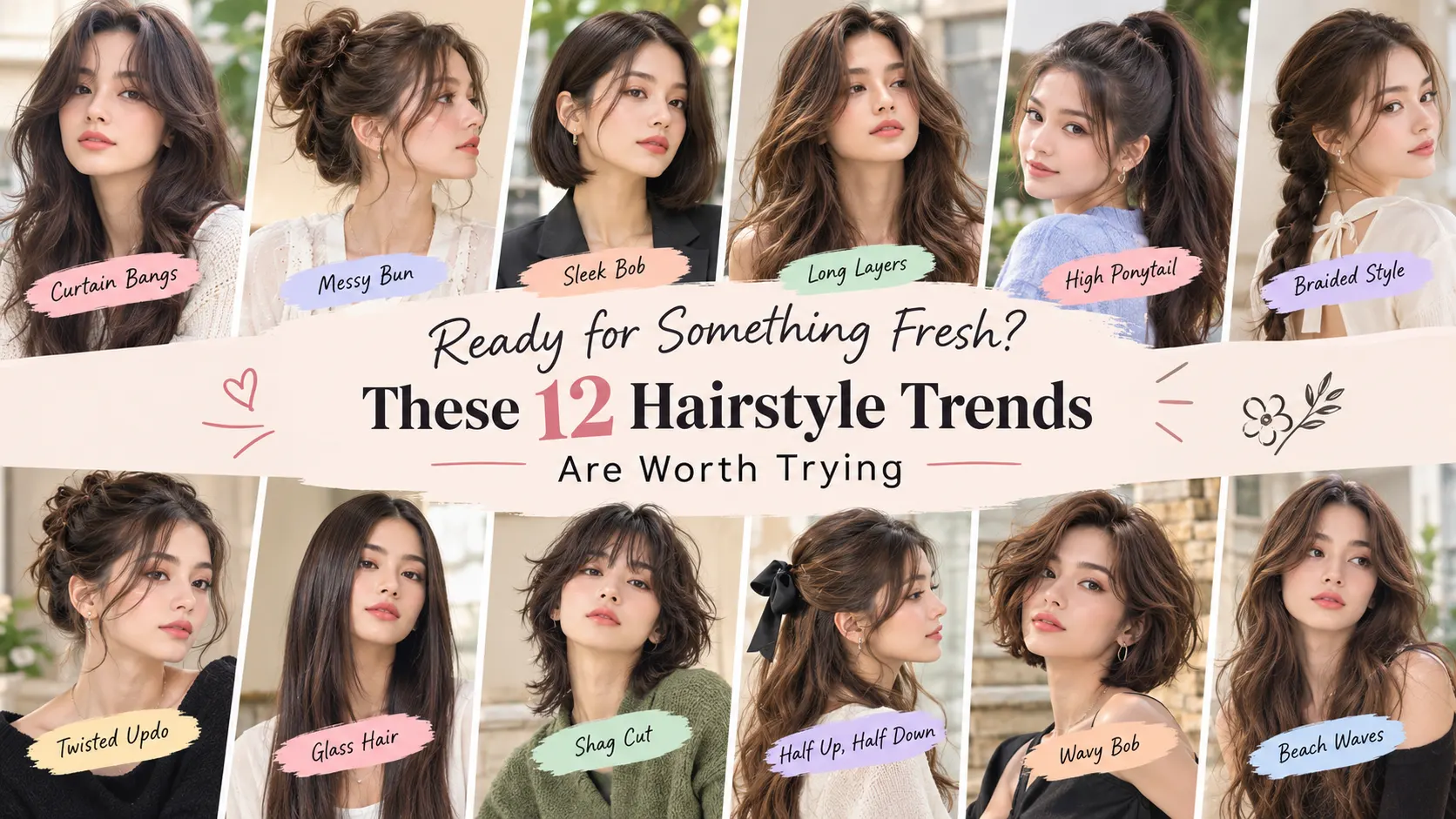
Ready for Something Fresh? These 12 Hairstyle Trends Are Worth Trying
You’re sitting in the salon chair with the cape on. Your stylist smiles and asks what you’d like today, and suddenly every photo saved on your phone feels wrong. One looks too bold. Another looks like what you already have.
That happens a lot. Trend lists usually show you a hundred looks without saying which ones fit your hair, your budget, or your mornings.
This guide works a little differently. Below are 12 hairstyle trends worth your attention, and they cover more than haircuts. You’ll find hair colors, a short cut, protective natural styles, modest options, and a few small accessories. Each one comes with who it suits, how much upkeep it really needs, and what to say at the salon.
You’ll also notice a pattern. Many of the hairstyle trends getting attention lately aren’t about one viral cut everyone copies. They lean toward color that grows out kindly, natural texture, protective options, and small details that make a simple look feel new.
Before You Scroll, Ask Yourself Three Things
Not every trend is meant for every head of hair. Before you fall for any of these hairstyle trends, answer these honestly:
- How many minutes do I actually spend on my hair in the morning?
- How often can I realistically visit a salon? Every six weeks, or twice a year?
- Do I want something I can undo next month, or am I ready to commit?
Keep those answers in mind as you read. A trend that needs a salon visit every month won’t feel fun if you only go twice a year.
Butter Blonde
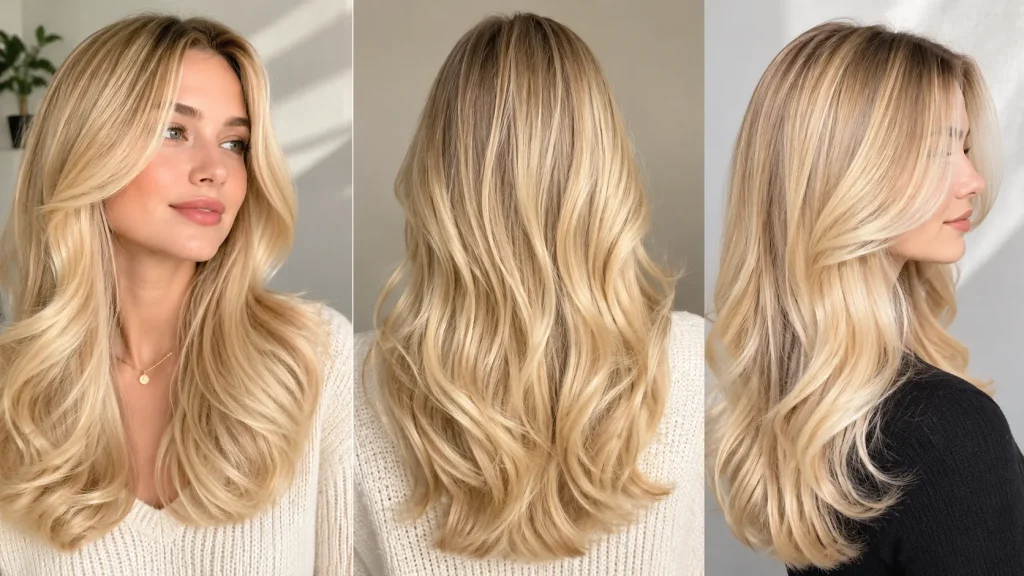
Butter blonde is soft, creamy, and warm without going brassy. Think of real butter sitting on the counter: pale yellow with a gentle golden glow. It falls between icy platinum and warm honey blonde.
It has become a popular hair color trend, and it’s easy to see why. Its creamy, warm finish can complement a range of skin tones, especially when the shade is tailored to your natural coloring. It also stays polished for a few weeks after your appointment.
Best for: anyone who is already blonde or light brown and wants a brighter, warmer finish.
Upkeep: medium. Plan a toner or gloss every six to eight weeks.
What to say at the salon: “I’d like a soft, creamy blonde with warm undertones. Not gold, not ashy.” Bring photos taken in daylight. Salon lighting can make every blonde look the same.
One small tip. Use purple shampoo once a week at most. Too much can push butter blonde toward a flat, greyish tone, and then the whole point is lost.
Mushroom Brown
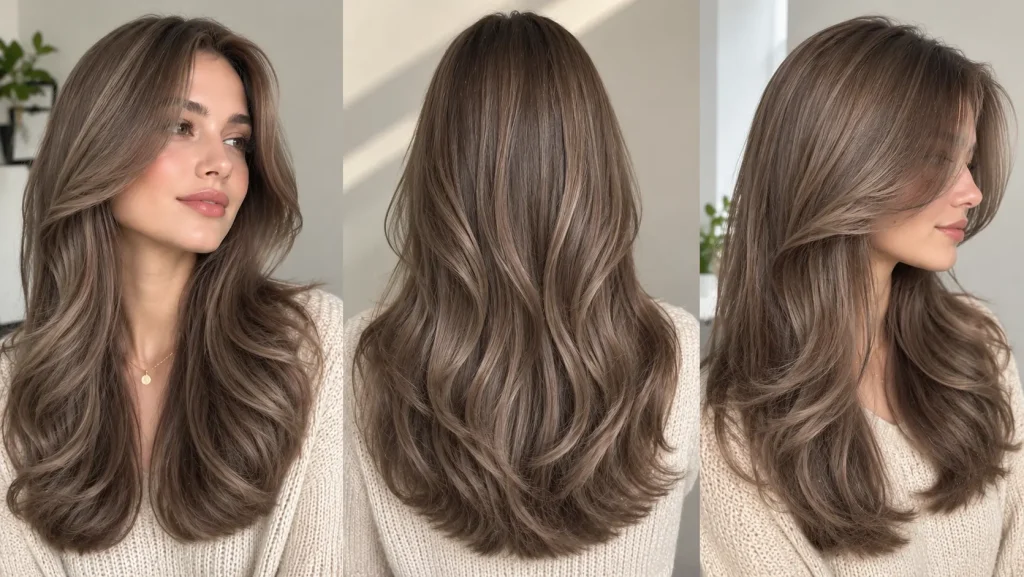
Picture a brunette who loves her color but has started noticing it looks orange in photos. That rusty tint is really common when dark hair fades. Mushroom brown is one way stylists often fix it.
It’s a cool, earthy brown with hints of beige and soft grey. Imagine the top of a portobello mushroom. The result looks smoky and calm instead of flat.
Among the brunette hairstyle trends out there, this one tends to suit fair to medium skin with cool or neutral undertones. If your skin is very warm and golden, ask for a “neutral mushroom” so it doesn’t wash you out.
The catch? Cool browns tend to fade warm over time. A color-safe toning shampoo can help maintain the shade. Ask your stylist whether blue or green pigments suit your particular color, since blue works against orange tones and green works against red.
Oil Slick Color
This one is made for dark hair.
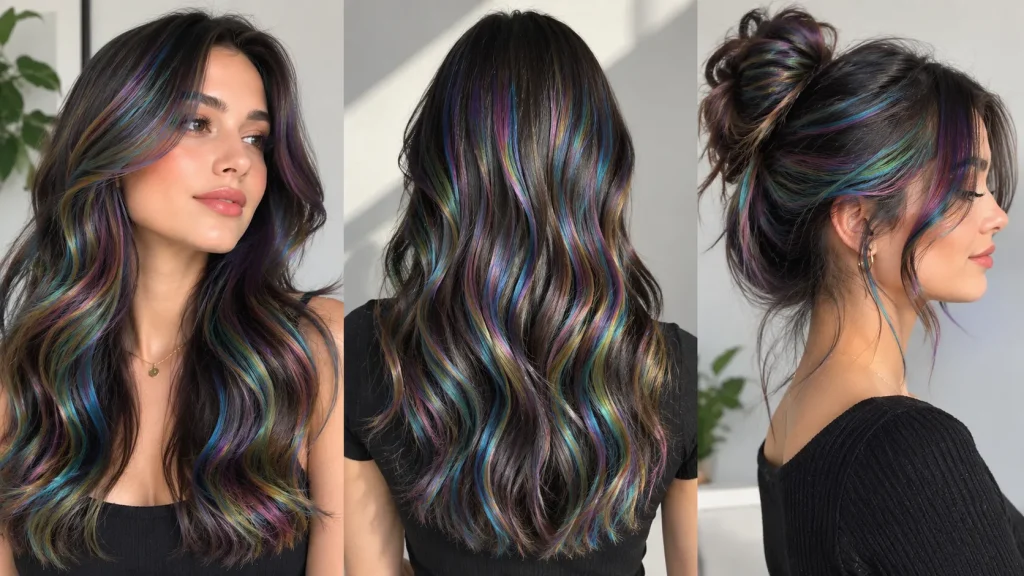
Oil slick color layers deep teal, plum, and emerald over a black or dark brown base, so hair shimmers like a puddle catching light. Indoors, it reads almost black. In the sun, the jewel tones show up.
That’s the charm. It’s bold, but quietly bold.
Here’s how stylists usually create it:
- Your natural dark base stays as it is.
- Thin sections are lifted slightly, just enough for color to show.
- Jewel tones are painted on and blended so no single stripe stands out.
Nervous about it? Ask for semi-permanent shades. They usually fade over four to six weeks, so you can test the look before committing. It’s also a smart pick if your workplace or school prefers natural-looking hair, since most people will only notice it outdoors.
Grown-Up Chunky Highlights
The thick streaks from the early 2000s are back, but they’ve calmed down a lot.
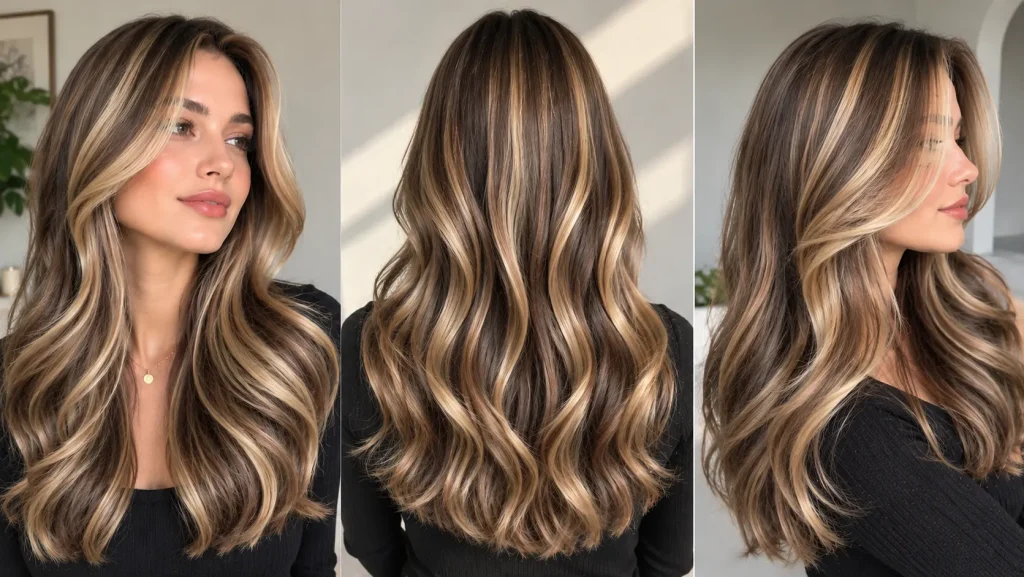
Today’s version uses wider pieces with softer contrast and blended roots. Instead of zebra stripes, think of a light brown base with ribbons of caramel or beige about a finger’s width wide, placed through the top and sides.
They show up best on straight and wavy hair, where each piece stays visible. On tight curls, very chunky sections can look spotty, so ask for slightly finer pieces.
Want to try before you book? Clip-in color streaks cost very little. Wear a few for a week. If you keep reaching for them, you have your answer.
Of all the color-based hairstyle trends here, this one is the most playful, and it grows out fairly gracefully because the roots are already soft.
The Soft Buzz Cut
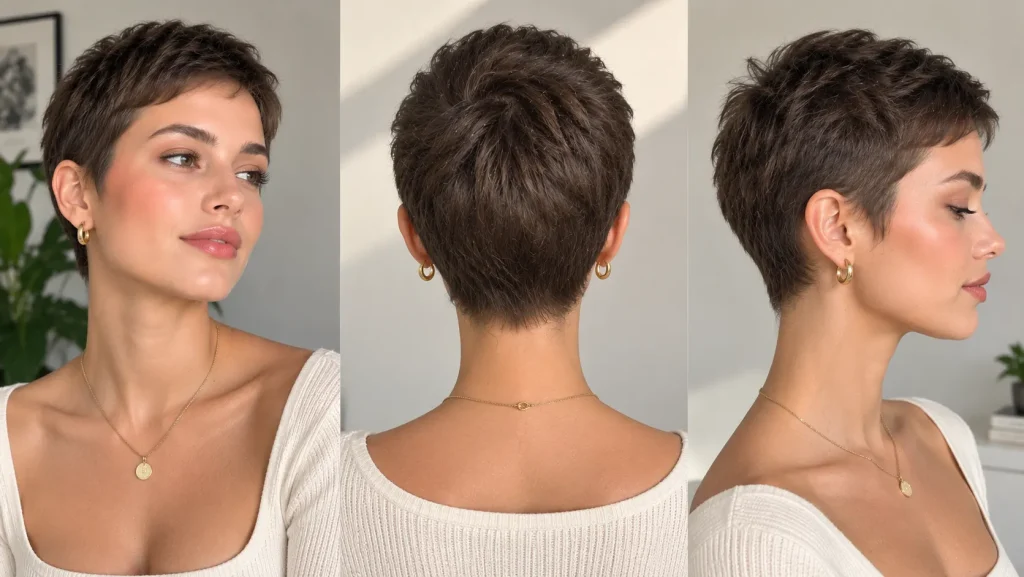
More people are deciding they’re simply done with long hair. The soft buzz cut is the gentlest way to make that leap.
Unlike a harsh military buzz, the soft version keeps a little length on top, usually around a number 4 to 6 clipper guard. Edges are tidied, but the hairline stays natural. It looks clean and modern, and it shows off your eyes, cheekbones, and earrings.
The pros:
- Washing and drying take about a minute.
- It removes damaged lengths and gives you a fresh start.
- It pairs well with almost any outfit.
The drawbacks:
- You’ll need a trim every three to four weeks to keep the shape.
- Your scalp needs sunscreen or a hat outdoors.
- Growing it out takes patience.
If you’re on the fence, go short in steps. Try a chin-length cut first, then a short crop, then the buzz. Each stage gives you time to get used to seeing more of your face.
Microlocs
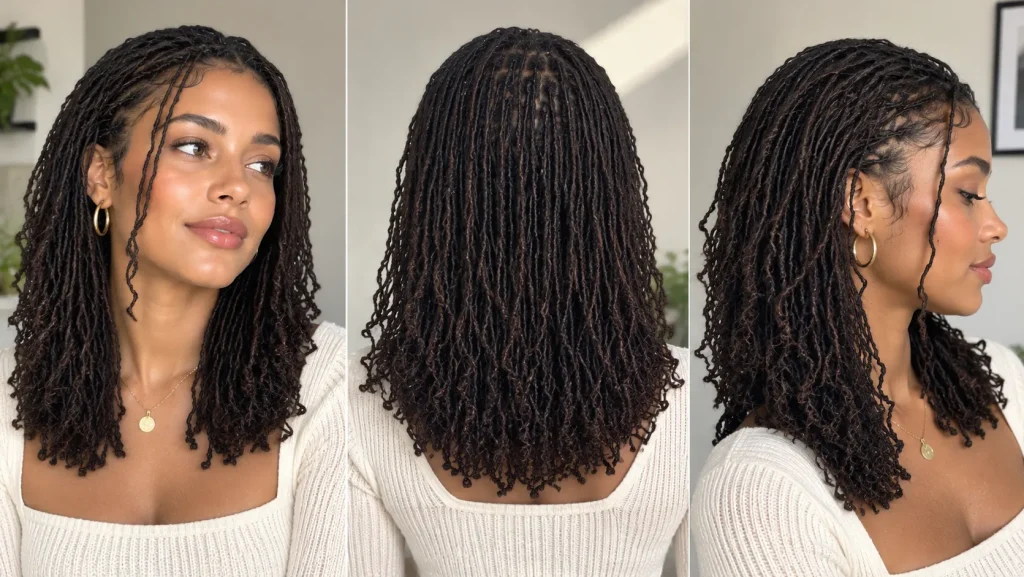
Microlocs are tiny locs, often several hundred across the head. Because they’re so small, they move and style almost like loose hair. You can curl them, pin them up, or simply wear them down.
They’ve become a notable part of natural hairstyle trends, mostly because they offer the freedom of locs without giving up versatility.
What to expect if you start:
- Installation: It can take a full day or longer, depending on hair length and loc size.
- The budding stage: The first few months can look a little frizzy while the locs settle. That’s normal.
- Maintenance: Retightening every four to eight weeks keeps the roots neat.
For example, someone with shoulder-length coily hair might end up with 300 to 400 microlocs. Within a year, that set could be curled with pipe cleaners for an event or gathered at the nape for work.
One caution. Very small locs may put too much strain on fragile strands in some cases. Ask an experienced loctician to assess your hair density and strength before choosing a size.
Glueless Wigs
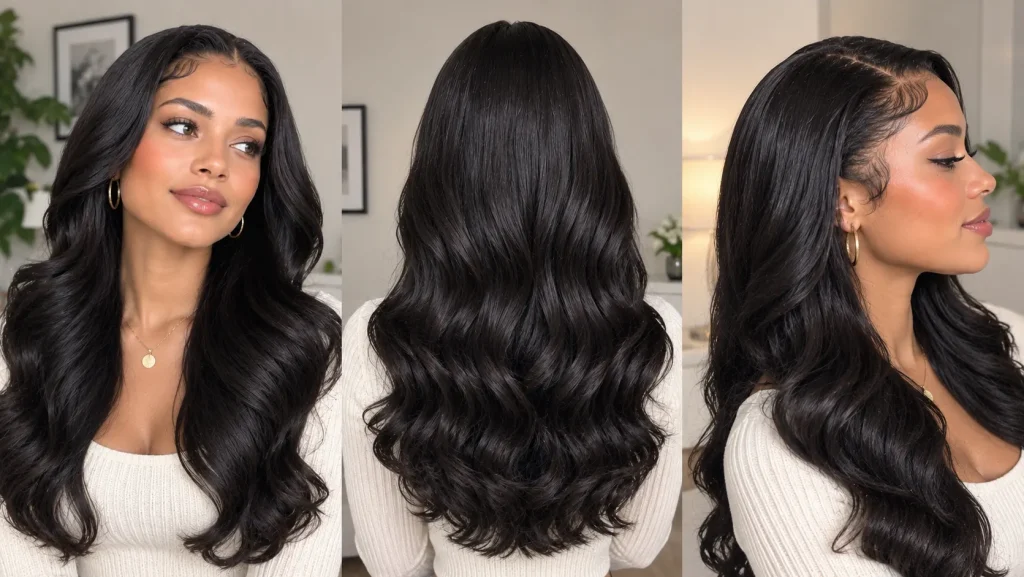
Wigs aren’t just about covering hair loss anymore. Plenty of people now treat them like part of their wardrobe, wearing sleek and straight on Monday and soft curls by Friday.
Glueless units are a big reason this trend took off. They stay in place with an adjustable band, small combs, or clips instead of adhesive, and you can take the wig off at night. That removes the need for glue, but make sure the wig fits comfortably. Tight bands and clips can still put stress on your edges.
If you’re buying your first one:
- Choose a unit close to your natural color and texture. It blends more easily.
- Look for “pre-plucked” and “pre-cut lace” so there’s less work at home.
- Braid your own hair flat or use a wig cap underneath to protect it.
The biggest benefit is giving your natural hair a break from daily styling while you still change your look whenever you like.
Silk Head Wraps
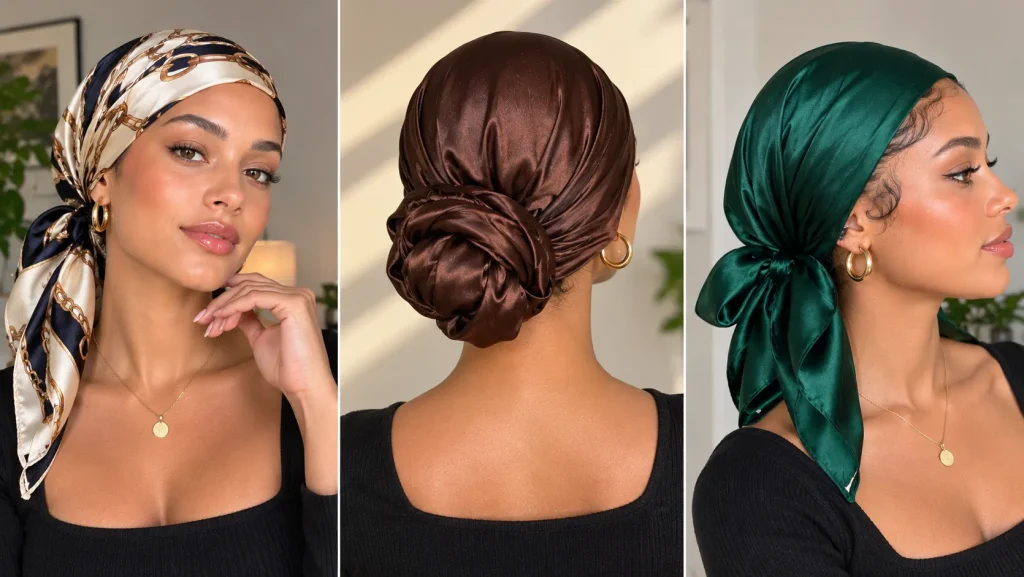
Head wraps have moved from lazy Sundays into everyday outfits. A full silk or satin wrap covers all of your hair and pulls an outfit together in seconds. They also pair beautifully with modest outfits.
Here’s an easy everyday wrap:
- Start with a long rectangular scarf, roughly 70 inches long.
- Place the middle at the nape of your neck and bring both ends up to your forehead.
- Twist the ends together once, then wrap them back around your head.
- Tuck the ends in neatly at the back or side.
A printed wrap in rust or emerald looks lovely with a cream long-sleeve knit and wide-leg trousers. A neutral wrap with a long trench coat feels clean and polished for work.
Silk and satin are popular choices because their smooth surfaces can reduce friction. Cotton may absorb more moisture and create more friction, depending on the fabric and how you wear it.
Boho Thread Wraps
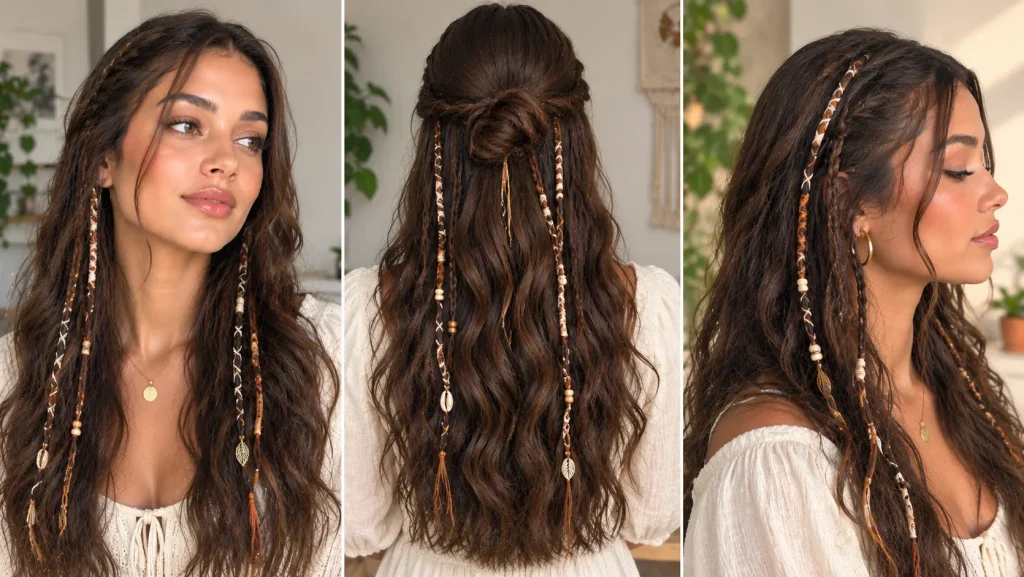
Sometimes the smallest detail makes the biggest difference. A thread wrap is a single thin section of hair wrapped tightly in colorful embroidery thread. It usually sits just behind the ear or near the face, so it peeks out when you move.
It takes about 15 minutes. Pick a pencil-thin section, knot the thread close to the root, and wrap downward, switching colors whenever you like. Knot it at the end and trim.
A wrap can last for weeks. When you’re ready to remove it, carefully loosen or cut the thread without cutting your hair. If it’s tightly secured, ask a stylist for help.
One or two wraps create a subtle accent. Add more and the look becomes bolder and busier, so it depends on the feel you want.
Statement Hair Combs
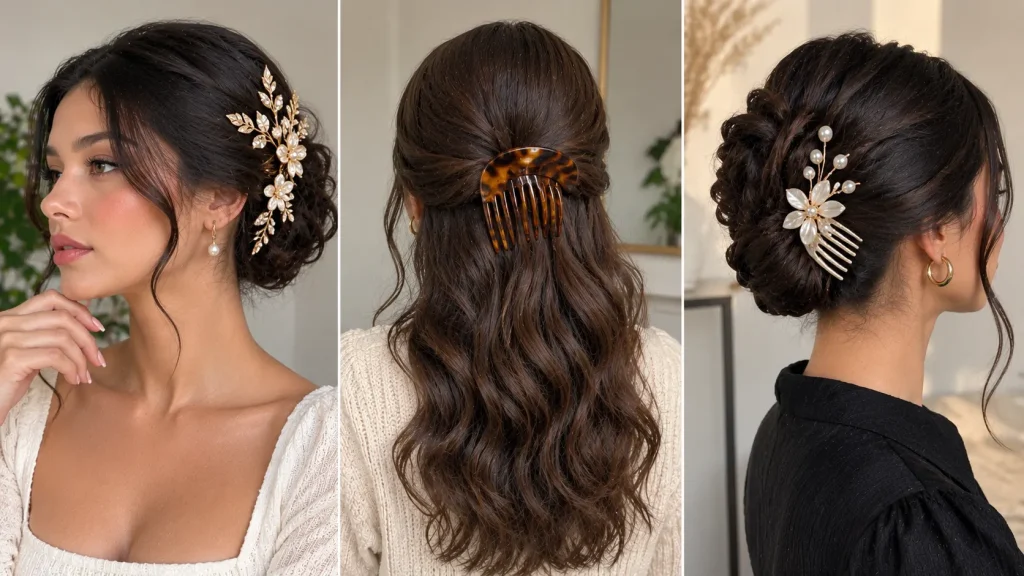
Old-fashioned side combs are back, only bigger and bolder. Tortoiseshell, resin, gold-tone metal, and hand-painted wood are all easy to find right now.
One good comb can turn a plain low twist into something dinner-ready. You can also slide one above your ear to hold back one side of loose hair, which is handy when hair keeps falling in your face.
There’s a trick to making them stay. Insert the comb with the teeth facing up first, then flip it down and push it in. The teeth catch the hair underneath and grip much better.
This is one of those affordable hairstyle trends that works on almost any length, from chin-level hair to long waves.
Natural Silver Grow-Out
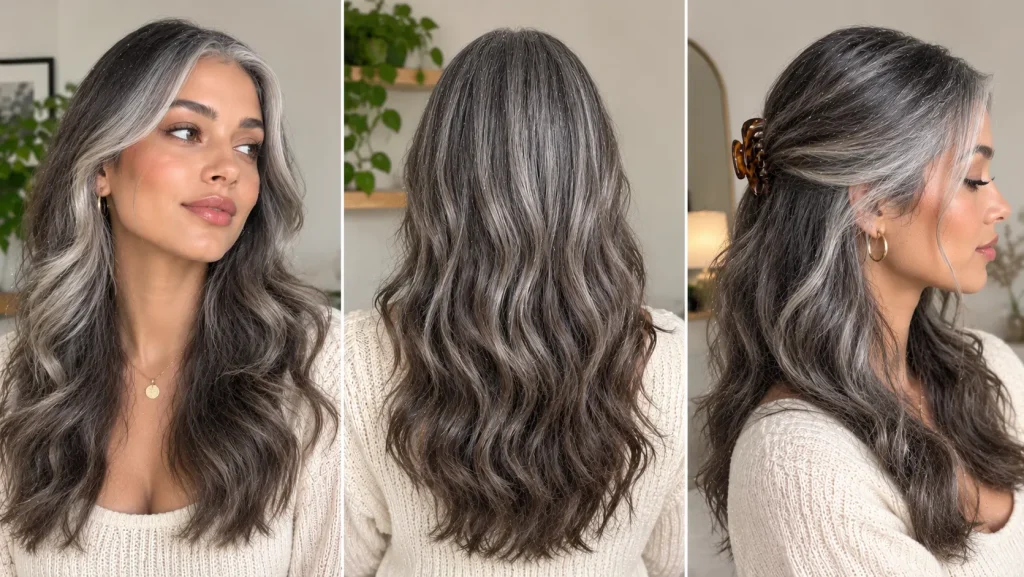
For years, the goal was hiding every grey strand. Now more people are letting their silver grow in fully and building a style around it.
This isn’t about blending grey into dye. It’s about going completely natural and owning it.
A few things make the transition easier:
- A sharp cut makes silver look intentional, not neglected.
- A clear gloss adds shine, since grey hair can look dull.
- A purple shampoo used occasionally can help neutralize yellow tones. A stylist can also recommend products suited to your hair and local water.
- A shorter style speeds things up if the line between dyed and natural hair bothers you.
Patience matters most. Depending on length, a full grow-out can take one to two years. Many people find the halfway point the hardest, so a good stylist and a few cute accessories help a lot.
Soft Lilac Gloss
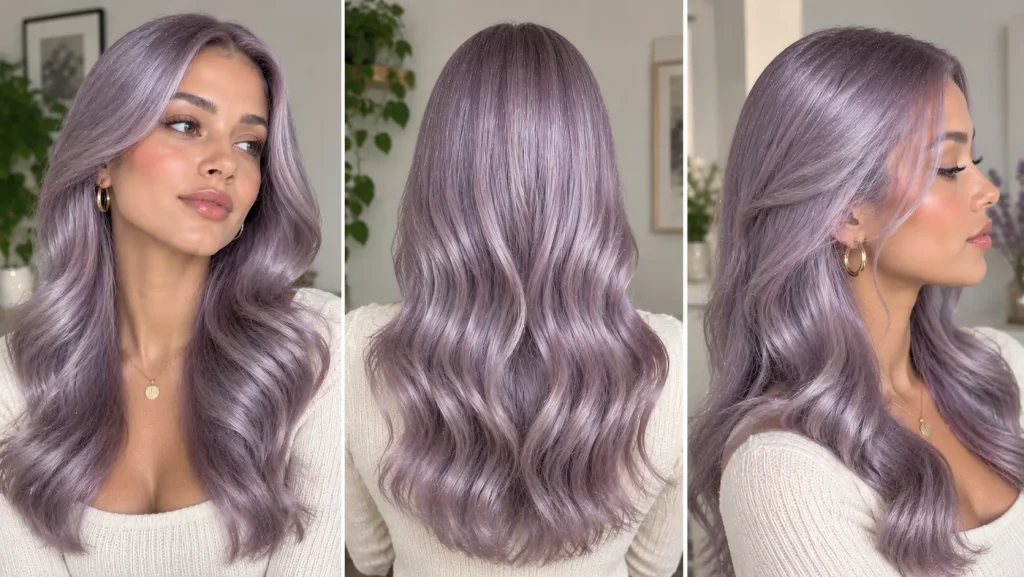
Think of this as pastel purple, but sheer. It’s a gentle wash of color rather than a bright, solid shade.
On blonde hair, it looks like soft lavender. On light brown, you’ll only notice a hint of violet when the sun hits it. That subtlety makes it one of the friendlier pastel hairstyle trends for people who’ve never tried fun colors before.
It’s usually semi-permanent, so it fades over a few weeks. To make it last longer, wash with cool water and a sulfate-free shampoo.
Keep in mind that lilac needs a light base to show. On dark hair, you’d need lightening first, which turns a low-commitment look into a much bigger decision.
Matching a Trend to Your Real Life
A few example scenarios can make choosing easier.
A busy nurse working long shifts might love microlocs or a soft buzz cut. Both look neat under a cap and need very little styling between shifts.
A university student on a tight budget could try thread wraps, statement combs, or a semi-permanent lilac gloss.
Someone who dresses modestly might rotate between silk head wraps and a glueless wig, depending on the day and the outfit.
Where People Usually Go Wrong
Even the best hairstyle trends can disappoint if you skip a few basics:
- Copying the photo, not the hair type. A look on thick, straight hair won’t turn out the same on fine curls. Find a photo of someone with hair like yours.
- Ignoring the upkeep cost. Butter blonde and chunky highlights need regular toning. Budget for it before the first appointment.
- Skipping the consultation. Five minutes of talking prevents a lot of bad results. Ask what your hair can realistically handle.
- Changing everything at once. A new cut, new color, and new texture in one day is a lot. Try one change first.
- Trusting filtered photos. Many trend images are edited. Look for videos or unfiltered pictures to see the real color.
FAQs
What hairstyle trends are popular right now?
Soft, livable colors like butter blonde and mushroom brown are getting a lot of attention. Natural options such as microlocs and glueless wigs are popular too, along with accessories like statement combs and silk wraps.
Which hairstyle trends are the lowest maintenance?
The soft buzz cut, silk head wraps, and statement combs need the least daily effort. Microlocs are easy day to day, though they need retightening every few weeks.
Can I try new trends without damaging my hair?
Yes. Start with semi-permanent color, clip-in streaks, wigs, or accessories. They let you test a look without bleach or heat.
How do I know if a trend suits my face?
Bring two or three photos to your stylist and ask directly. They can tell you how a cut or color will sit with your face shape, skin tone, and hair density.
Are these trends suitable for every age?
Absolutely. Silver grow-outs, statement combs, and soft lilac gloss look just as lovely at sixty as they do at twenty. The key is choosing what feels like you.
Final Thoughts
The hairstyle trends on this list cover a wide range, from soft color and short cuts to protective styles and tiny details you can try this weekend.
Start with the one that made you stop scrolling. Run it through the three-question filter, bring real photos to your appointment, and take it one step at a time. If a trend is easy to live with and makes you smile in the mirror, it’s the right one.