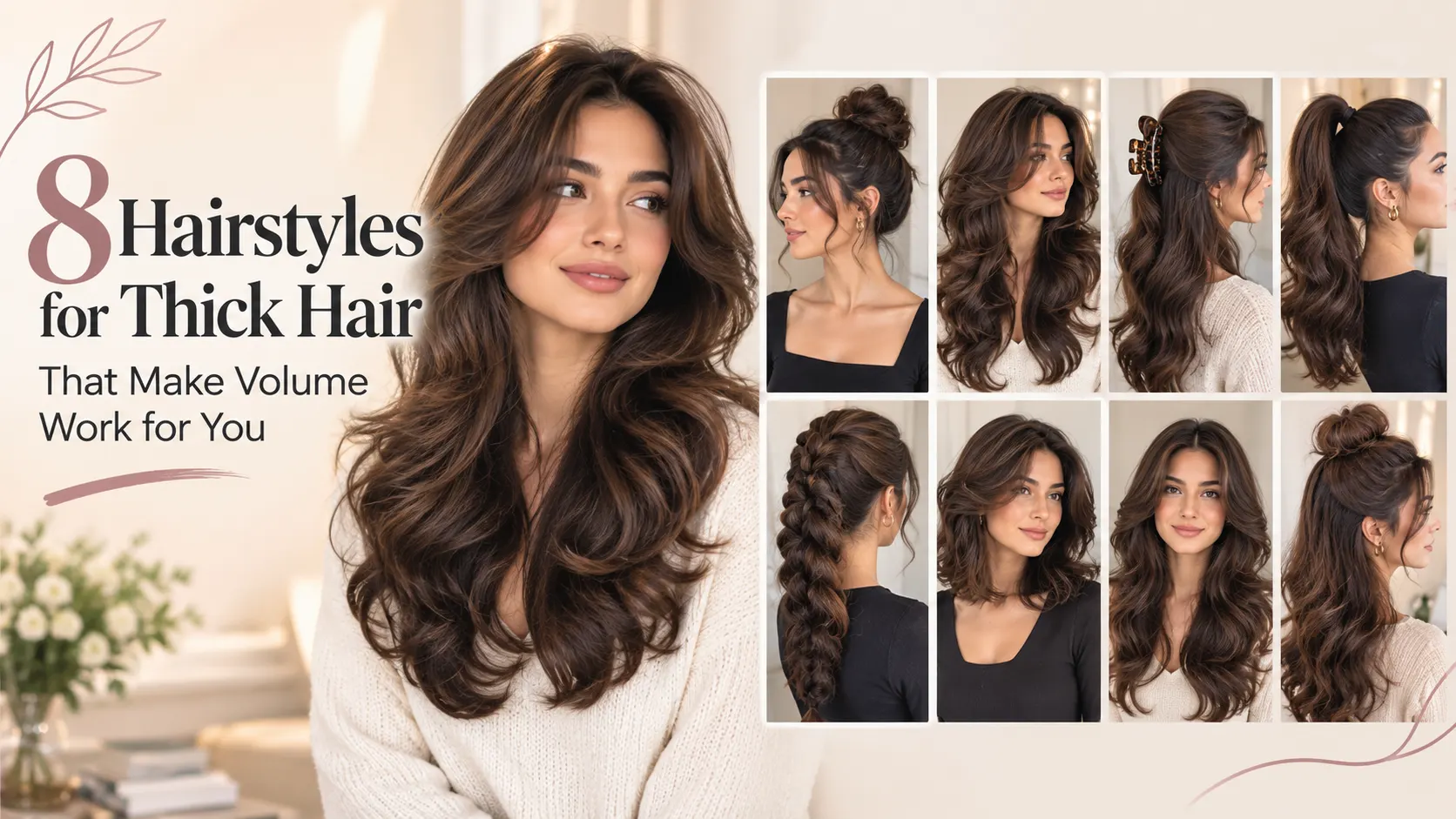
8 Hairstyles for Thick Hair That Make Volume Work for You
Picture someone with thick, heavy hair sitting in a salon chair with a photo of a soft, airy cut. Forty minutes later, the cut is technically correct, but the hair has puffed into a triangle by the time she gets to the car. A week later, it takes over an hour to blow-dry.
That’s a very common story, and it isn’t the stylist’s fault or the hair’s fault. Thick hair simply behaves differently. It holds weight, swells with humidity, and can bury a shape that would look perfect on finer hair.
The good news? Thick hair can look full, glossy, and polished when you choose styles that work with its natural density instead of fighting it. These eight hairstyles for thick hair do just that, whether you prefer a fresh cut, dimensional color, or an easy everyday style, with options for different textures and lengths.
First, Is Your Hair Thick or Just Coarse?
These two words get mixed up a lot, and the difference changes which style will suit you.
- Thick (dense) hair means you have a lot of strands on your head. Your ponytail feels heavy and wide, and you can’t see much scalp when you part it.
- Coarse hair means each individual strand is wide. You can feel it clearly between your fingers.
Plenty of people have both, but not always. Someone with dense, fine strands may need weight removed but also gentle products, while someone with coarse, dense hair often needs more moisture and stronger hold. Keep your own mix in mind as you read through the ideas.
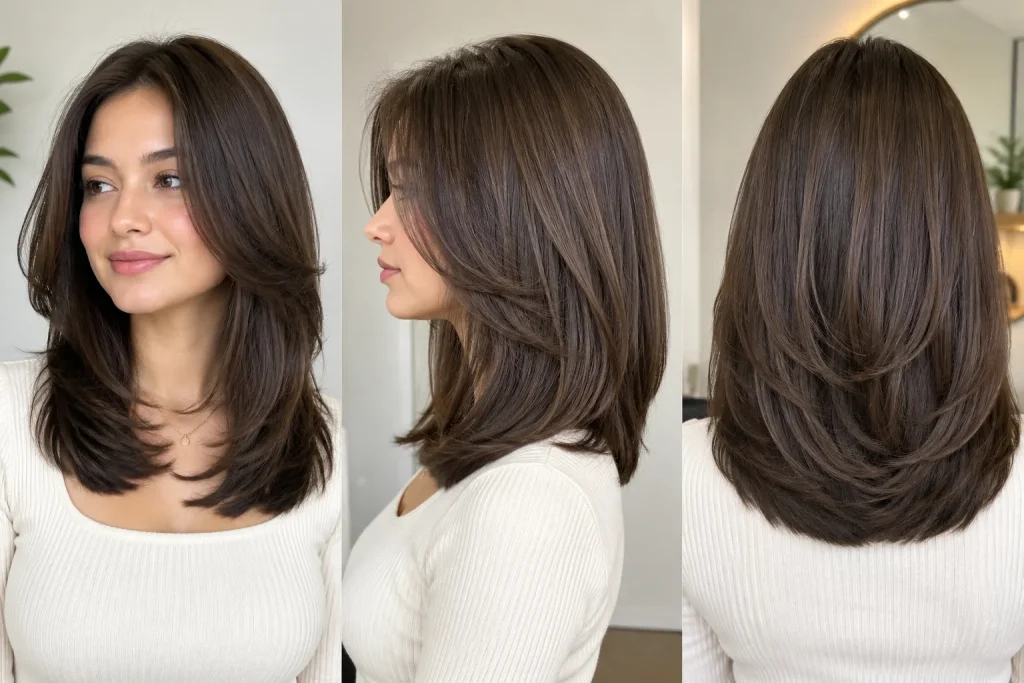
Box Layers
Box layers are cut so the hair falls in a squarer, more structured shape, instead of tapering into a point or stacking into a round dome. The layers are blended through the lengths, which releases weight while keeping a solid, healthy-looking hemline.
Why does this matter for thick hair? Poorly blended layers can create a visible “shelf” or make the ends look thinner than the rest of the hair. Box layers keep the outline strong while letting the hair move.
Ask your stylist for:
- Long box layers starting around the chin or collarbone
- A straight, fairly full hemline
- Weight released through the mid-lengths, not just the ends
This cut tends to suit straight to wavy hair best and looks great air-dried or blown out smooth. It’s a good option if you want movement but don’t want obvious layers.
Box layers also grow out gracefully. Because the outline stays fairly even, the shape still looks intentional a couple of months after the cut, which is handy if salon visits are hard to fit in.
Bixie Cut
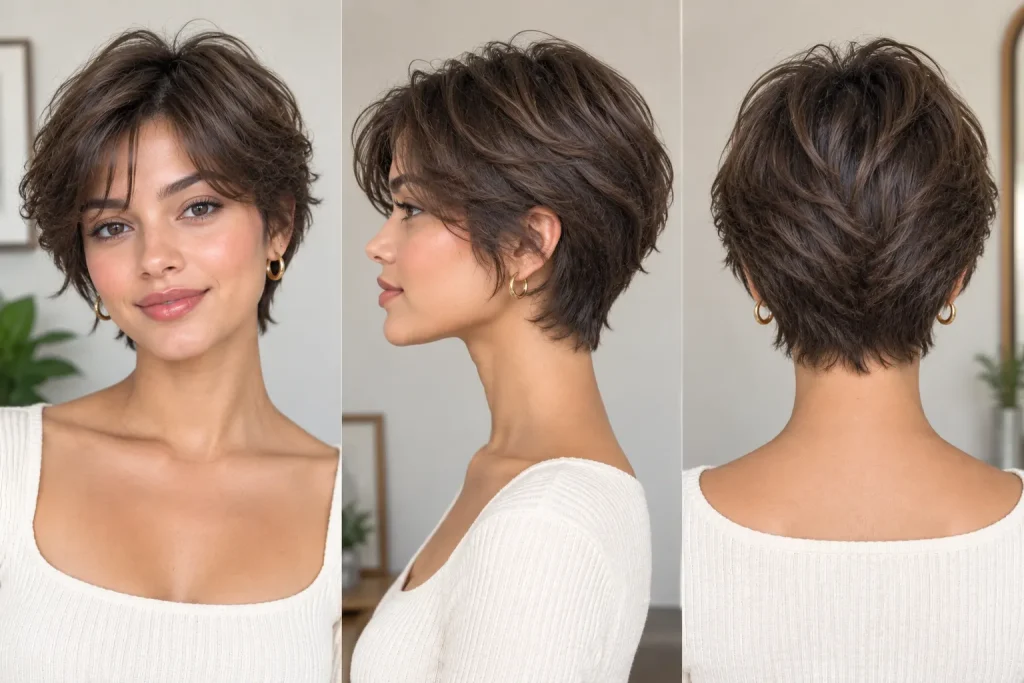
The bixie sits right between a bob and a pixie. It’s longer and softer than a pixie, with more piecey texture than a bob, and it usually ends somewhere between the ear and the jaw.
On thick hair, short cuts can easily turn round and helmet-like. A well-cut bixie can help avoid that, since the stylist usually adds texture through the top and sides so the hair lies closer to the head while still looking full. How it sits will still depend on your hair texture, the cut itself, and how you style it.
It’s a bold choice, but it can also feel refreshingly low-maintenance. Styling usually takes a few minutes with a little texture paste worked through dry hair. If you’re nervous, a longer bixie that covers the ears gives you more room to adjust.
One thing to keep in mind: short cuts on dense hair grow out quickly in volume, so plan for regular trims, often every five to seven weeks depending on the cut and how quickly your hair grows.
Tapered Natural Cut
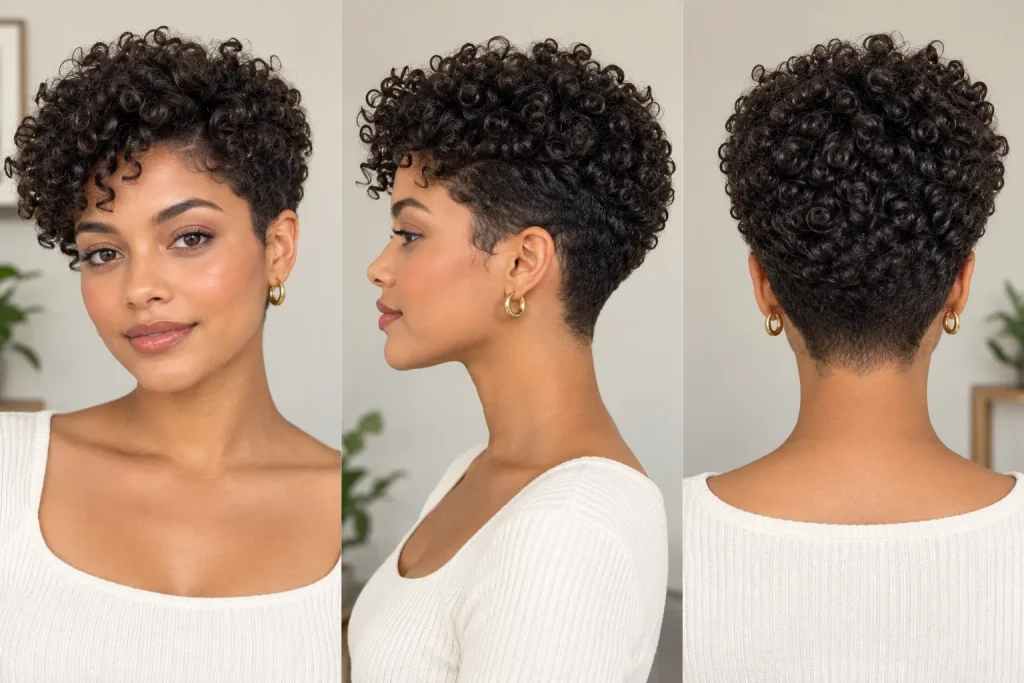
For thick, coily, or kinky hair, a tapered cut is one of the most flattering and practical short styles around.
The hair is kept shorter at the nape and sides and left longer on top, so the shape follows the head while the crown keeps its height and definition. It’s different from a rounded afro, which stays the same length all over. The taper gives a sculpted, polished outline.
Here’s why it works so well:
- Less bulk at the sides makes wash days much faster
- The longer top shows off curl pattern and shine
- It can be shaped into a softer or sharper taper depending on your style
To define the top, many people use a leave-in conditioner and a curl cream or gel on damp hair, then let it air-dry or diffuse on low heat. A regular shape-up every few weeks keeps the taper crisp.
Dimensional Lowlights
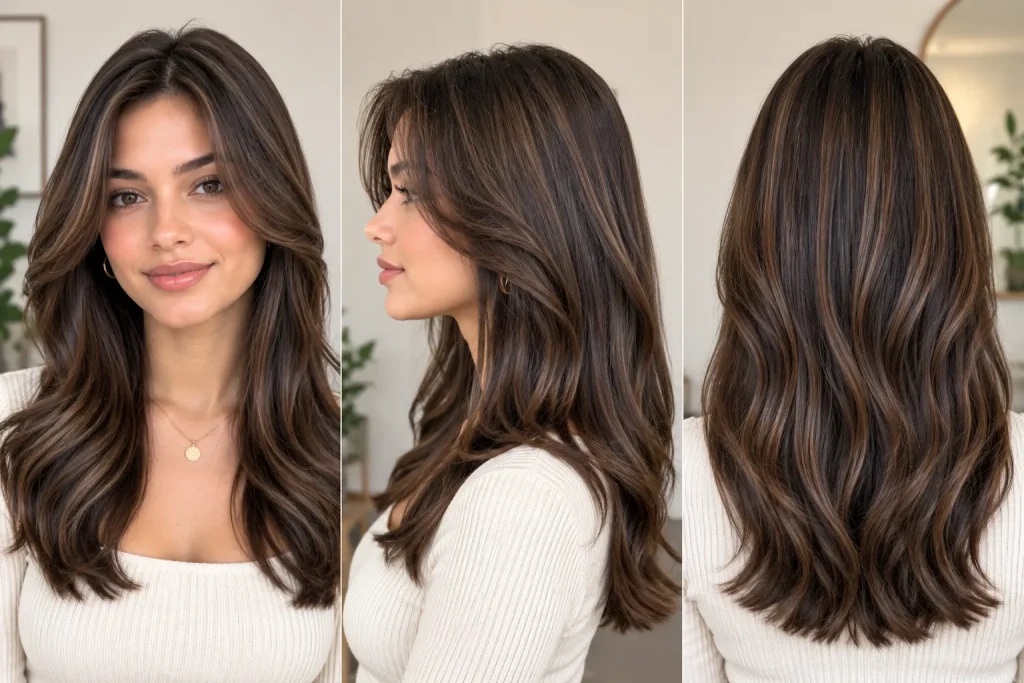
Not every thick hair style has to be a new cut. Sometimes the problem is that a full head of one solid color looks heavy and flat, even when the hair is healthy.
Lowlights are fine strands colored a shade or two darker than your natural color. Woven through the hair, they create depth and shadow, which makes dense hair look like it has more movement and less bulk.
They work especially well on:
- Light brown and dark blonde hair that looks one-note
- Thick hair that was previously highlighted and now looks too bright all over
- Anyone who wants low-maintenance color that grows out softly
Because lowlights deposit darker color, they generally avoid the lightening process that highlights need, although the effect on your hair still depends on the color formula and technique used. Talk to a colorist about the right shade, since going too dark can look stripy instead of blended.
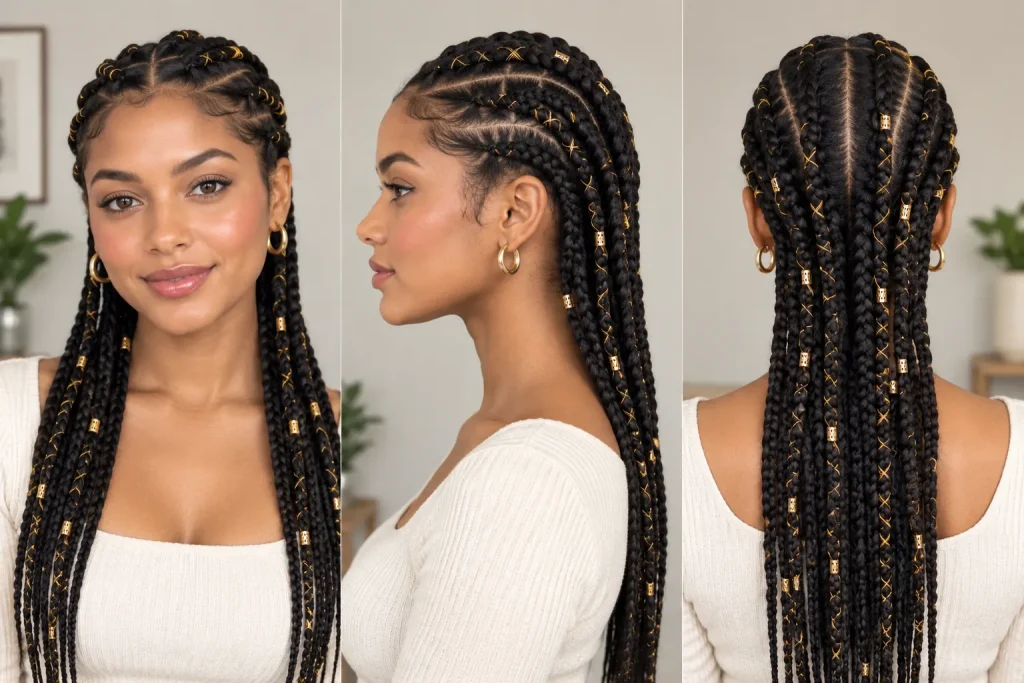
African Threading
African threading is a traditional technique where sections of hair are wrapped tightly with thread, usually nylon or cotton, from root to end. The finished style features thread-wrapped sections that can be worn as they are or arranged into different shapes and updos.
It has two big benefits for thick textured hair. First, it works as a protective style that keeps the ends tucked away. Second, removing the thread can leave the hair temporarily stretched, depending on the technique and hair texture, which may make it easier to detangle and style afterward.
Good to know: Threading works best when sections aren’t wrapped too tightly at the root. Tension at the hairline can cause stress and breakage over time, so speak up if anything feels painful.
It does take time to install, especially on very dense hair. Many people plan it for a weekend afternoon or ask a friend or family member who knows the technique to help.
Lazy Loop Bun
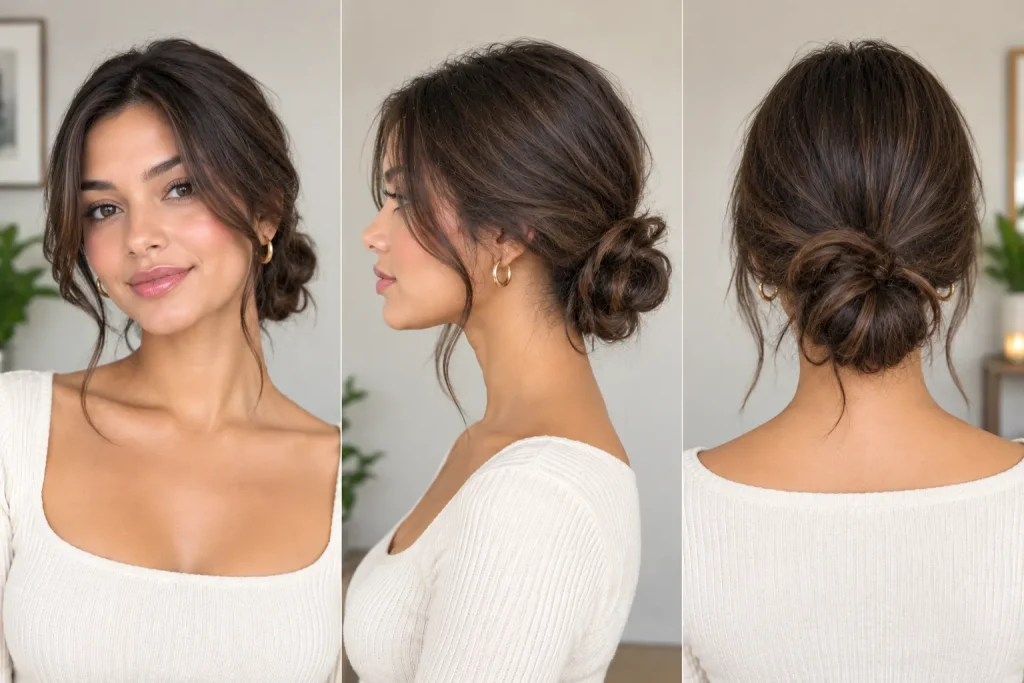
When you have a lot of hair, a full wrapped bun can feel heavy and give you a headache. The lazy loop bun is lighter, faster, and holds well because it uses less hair wrapped around itself.
Here’s how it’s done:
- Gather your hair into a ponytail at the height you like.
- On the final pass of the elastic, pull the hair only halfway through, creating a loop.
- Leave the ends sticking out below or above the loop.
- Spread the loop gently to widen it, then pin any loose sections.
Thick hair is actually ideal here, because the loop looks full without any padding. Use a strong spiral or fabric-covered elastic, since thin elastics can snap or slip under the weight.
It’s a great everyday style for workdays, school runs, and gym sessions. You can even sleep in a loose version to keep hair off your face.
Padded Headband Push-Back
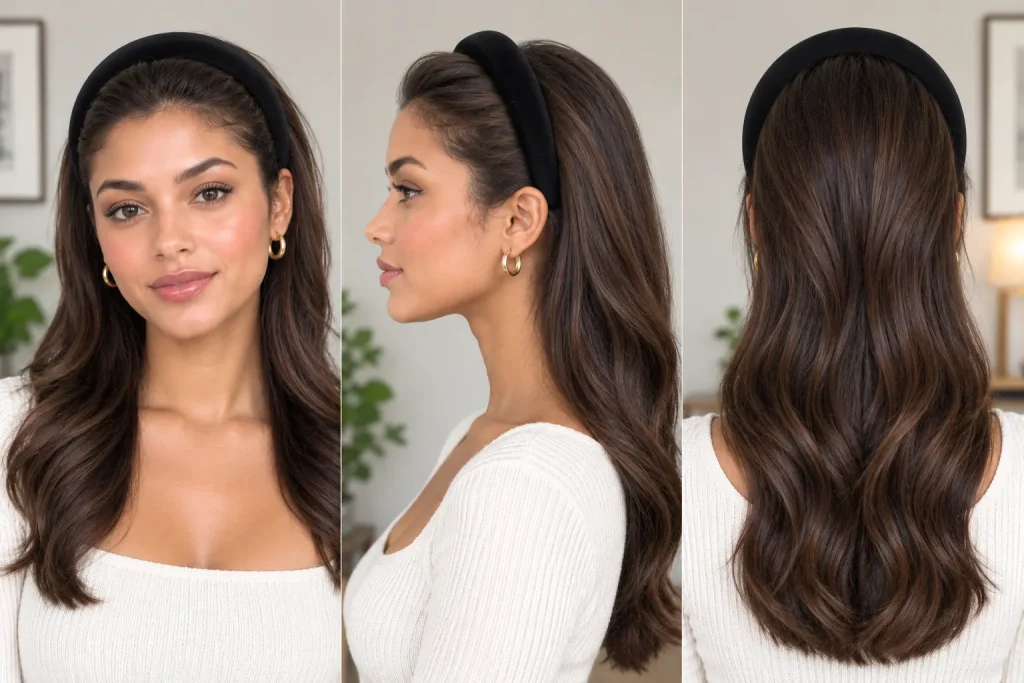
Sometimes the easiest way to style thick hair is to let it be big and simply push it off your face.
A wide padded headband, in velvet, satin, or knit, slides back over the crown and holds a lot of hair in place without pins. It gives the hair lift at the root and frames the face neatly, while the lengths stay loose and full.
This style is especially useful on second- or third-day hair, when the roots need refreshing but the lengths still look good. It also works well for curly and wavy textures, since you don’t have to brush through the curls to get a polished result.
Choose a headband with some grip on the underside. Smooth plastic bands tend to slide back on thick hair, while fabric or padded ones stay put much better.
If headbands tend to press behind your ears, try wearing it slightly further back on the head. A wider band also spreads the pressure, which feels more comfortable when you have a lot of hair underneath.
Volumized Half Pony
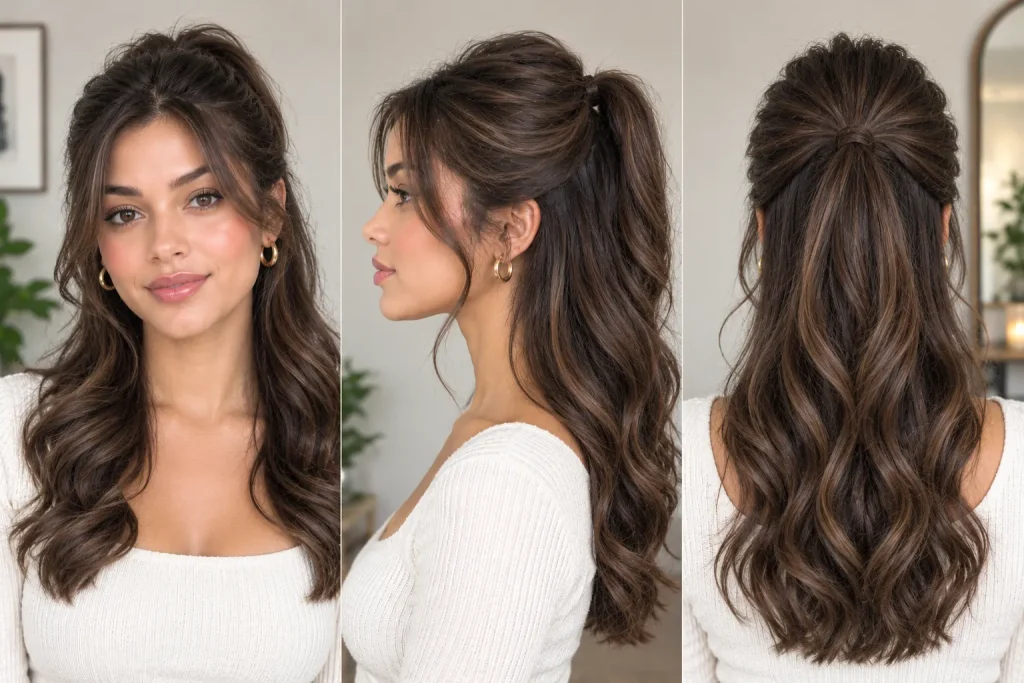
A half ponytail is simple, but on thick hair, it can look surprisingly polished.
Take the top section of your hair, roughly from temple to temple, and tie it back at the crown with a secure elastic. Leave the rest of your hair loose. For extra lift, gently tease the roots at the crown before tying, then smooth the top layer over.
What makes this style useful for dense hair is that it removes weight from around the face without putting all the hair into one heavy ponytail. It’s comfortable for long days and looks good whether your hair is straight, wavy, or curly.
To change the look, try placing the half pony slightly lower for a softer feel, or wrap a small section of hair around the elastic to hide it.
Mistakes That Make Thick Hair Harder to Manage
Even with a great style, a few habits can make thick hair feel heavier and harder to handle.
Asking for “thinning” without a plan. Removing bulk can help, but heavy thinning with shears can leave short, frizzy pieces inside the hair. It’s better to ask how your stylist plans to release weight, such as through layering or texturizing techniques suited to your hair type.
Skipping sectioning. Trying to blow-dry, straighten, or detangle thick hair in one go rarely works. Working in four or more sections usually takes less time overall and gives a smoother finish.
Using products that are too light. Very lightweight mousses and sprays may not do much on dense hair. Creams, balms, and leave-in conditioners often give more control, though the best choice depends on whether your strands are fine or coarse.
Going too long between trims. Thick hair can lose its shape fast, especially with shorter cuts. Regular trims keep the weight where you want it.
Tying hair too tight. Heavy ponytails and buns pull on the scalp. Over time, constant tension can stress the hairline, so vary your styles and positions.
Everyday Tips for Thick Hair
Drying time is one of the biggest frustrations with dense hair. Blotting excess water with a microfiber towel or soft cotton T-shirt before blow-drying can shorten drying time and help reduce frizz.
Detangle with care. Use a wide-tooth comb or a detangling brush and work from the ends upward, which tends to cause less breakage than dragging a brush from the root. Detangling with conditioner, when appropriate for your hair texture and routine, can make the process smoother, especially for curly and coily hair.
Invest in strong accessories. Large claw clips, spiral elastics, and sturdy bobby pins are made for heavier hair. Thin elastics and tiny pins may simply not hold.
Finally, think about humidity. Thick hair often swells in damp weather. An anti-humidity cream or serum applied before styling can help keep frizz down on those days, although results vary by hair type.
Frequently Asked Questions
What are the best hairstyles for thick hair that’s also frizzy?
Styles that keep hair contained or defined often work best, such as the lazy loop bun, the half pony, or the padded headband push-back. On the cutting side, box layers can release weight without creating short, frizz-prone pieces.
Is short hair a good idea if my hair is very thick?
It can be, as long as the cut is designed for density. Short hairstyles for thick hair, like the bixie or a tapered natural cut, rely on removing bulk at the sides and back. Without that, short thick hair can look round or heavy.
How often should I trim thick hair?
It depends on your cut and length. As a general guide, short styles often need a trim every five to seven weeks, while longer styles can usually go eight to twelve weeks, depending on the cut and how quickly your hair grows. If your hair starts feeling heavy or losing its shape, that’s usually a good sign it’s time.
Can thick hair be damaged by heat styling?
Any hair can be damaged by too much heat. Because thick hair takes longer to dry and straighten, it often gets more exposure. Using a heat protectant, lower temperatures, and fewer passes with hot tools can help reduce damage.
Do layers make thick hair look thinner?
Layers can make thick hair look lighter and more balanced, but they don’t change how many strands you have. The aim is usually to reduce bulk in the right places, so the hair moves well and doesn’t look wider at the bottom.
Making It Work for You
The best hairstyles for thick hair are the ones that respect how much hair you actually have. That might mean a cut like box layers or a bixie, a color change like lowlights, or simply a few go-to styles like the lazy loop bun and the padded headband push-back.
If you’re unsure where to start, book a consultation and describe how your hair behaves day to day, not just how you’d like it to look. That one conversation can help your stylist suggest a shape that works with your thickness, so you spend less time fighting your hair and more time enjoying it.