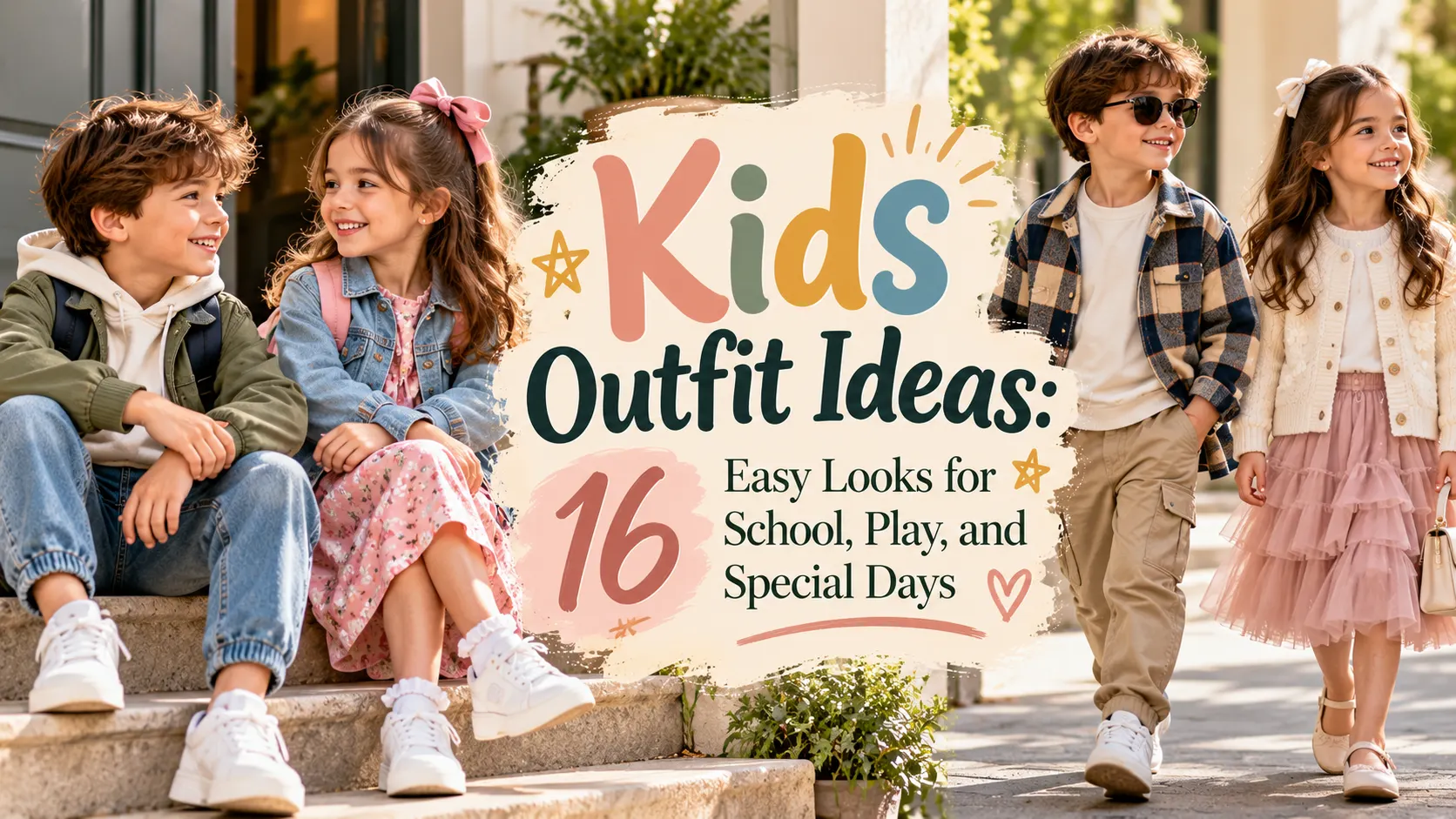
Kids Outfit Ideas: 16 Easy Looks for School, Play, and Special Days
Ask any parent which part of the morning causes the most hold-ups, and getting dressed comes up a lot. A shirt feels “itchy,” a waistband is “too tight,” or the favorite hoodie is still in the wash. Small problems like these can slow down an already rushed start to the day.
A short list of reliable outfits helps. When clothes are comfortable, easy to pull on, and work well together, choosing what to wear stops being a daily negotiation. The kids outfit ideas below are grouped by occasion, so you can skip straight to school days, playtime, unpredictable weather, or celebrations.
First, three quick checks worth doing whenever you’re shopping for children’s clothes.
Three Checks Before Anything Goes in the Basket
Can your child put it on alone? Elastic waists, roomy neck openings, and large buttons make it easier for kids to dress themselves, which saves time and encourages independence.
Does it pass the squat test? Have them crouch, reach up high, and sit cross-legged. A waistband that digs in or a top that rides up will bother them all day.
How does the inside feel? Scratchy seams and stiff labels are a frequent reason clothes get refused. Run your hand along the inside before buying.
School Day Outfits
School clothes get the hardest wear of the week, so washability and comfort come before trends.
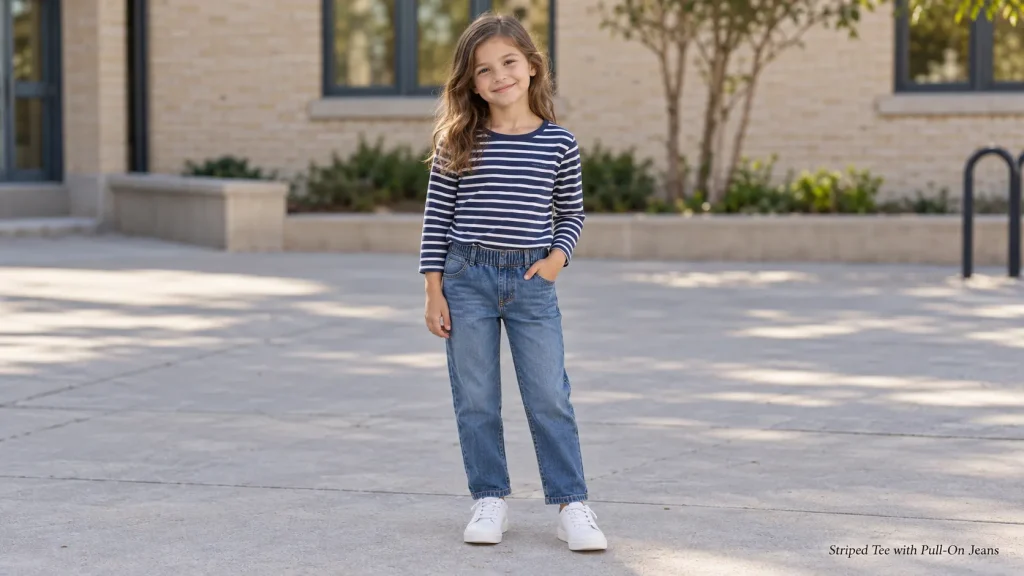
Striped Tee with Pull-On Jeans
Navy and white stripes with mid-wash pull-on jeans is about as easy as a school outfit gets. An elastic waistband with a little stretch in the denim means no fiddly buttons before the bell.
Prefer something brighter? Red or mustard stripes bring more personality and still go with blue jeans. Having a couple of different colors in the drawer makes weekday mixing simpler.
Polo Shirt and Chinos
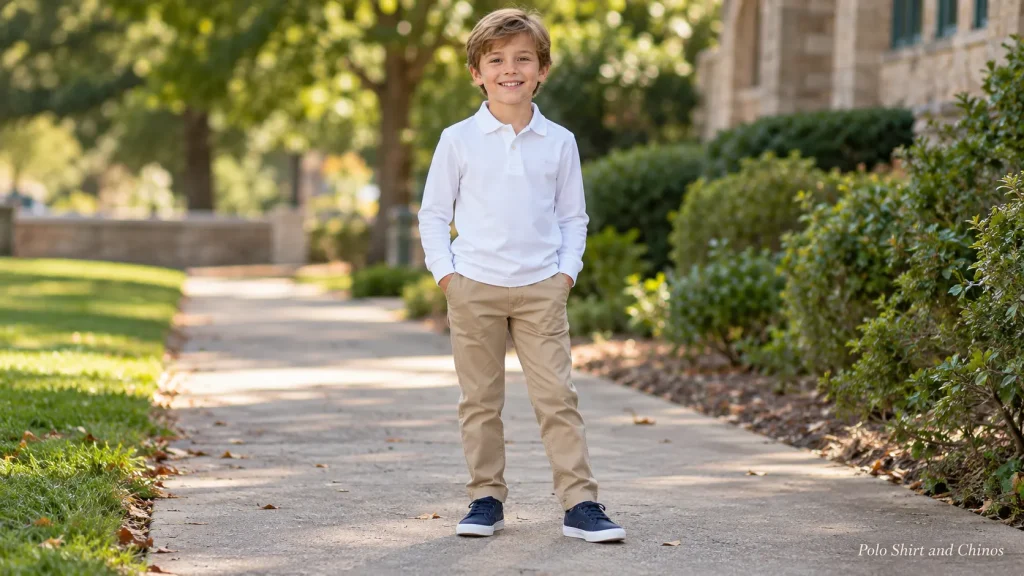
Some schools ask for smart casual, and a white polo with khaki chinos fits the brief without feeling stiff. An adjustable inner waistband is worth checking for. It lets a pair fit well for longer as your child grows.
Sticking to white, navy, and khaki means everything goes with everything, so there’s less to decide on busy mornings.
Corduroy Pinafore over a Turtleneck
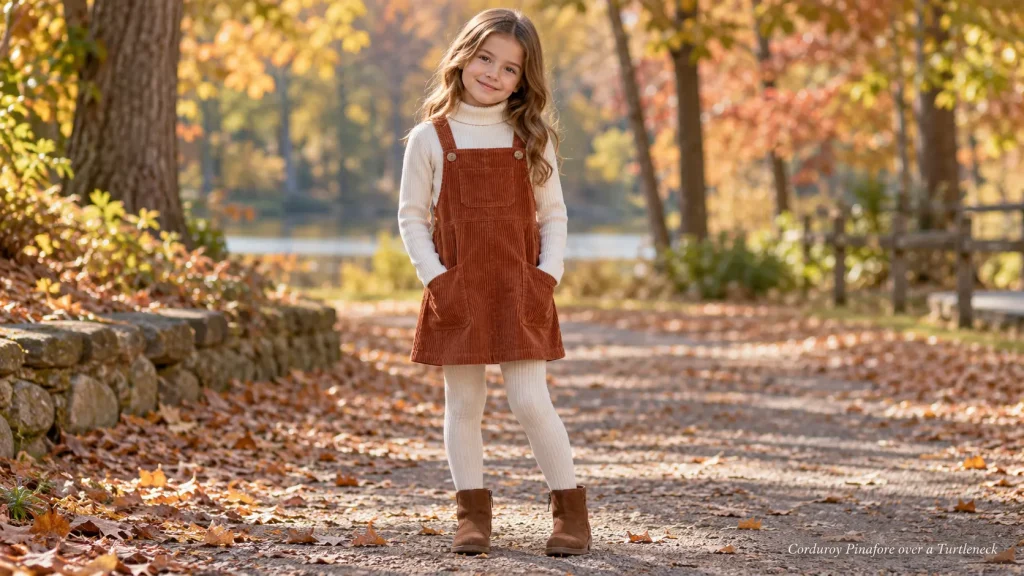
Rust corduroy over a cream turtleneck has a warm, autumnal feel. Add thick tights or leggings once the weather turns cold.
Corduroy stands up well to playground time, and swapping the top underneath changes the whole outfit. The same pinafore could work with a striped top one day and a plain one the next.
Graphic Sweatshirt with Cargo Joggers
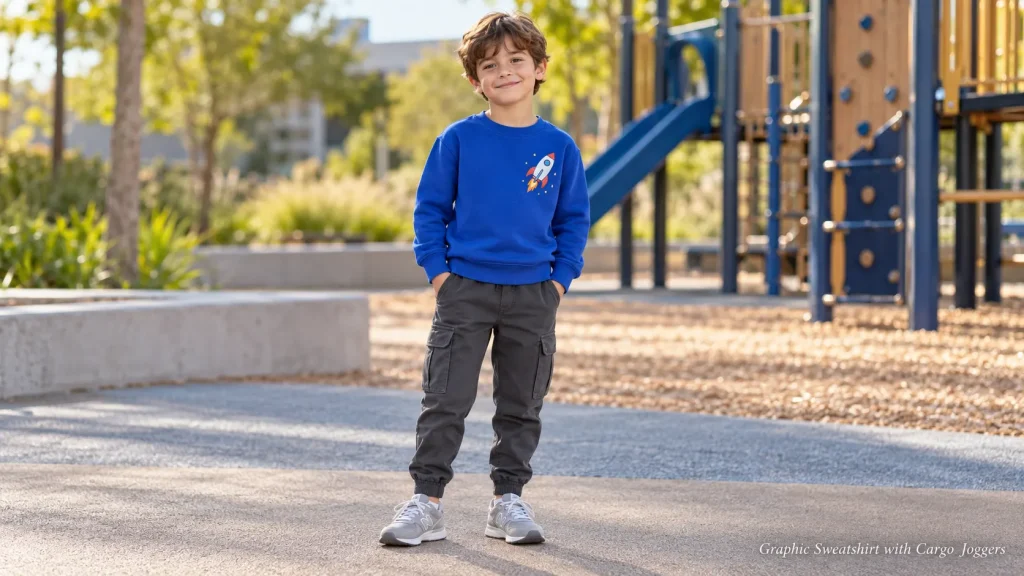
Kids tend to enjoy picking a sweatshirt with a favorite animal, rocket, or bold print on the front. Letting them choose the top while you choose the bottoms is a simple way to share the decision.
Charcoal cargo joggers go with almost any printed sweatshirt. The pockets will also fill up with pebbles and pinecones, so empty them before laundry day.
Weekend and Playtime Outfits
Play clothes need to cope with grass, sand, paint, and puddles. Nothing in this section has to stay spotless.
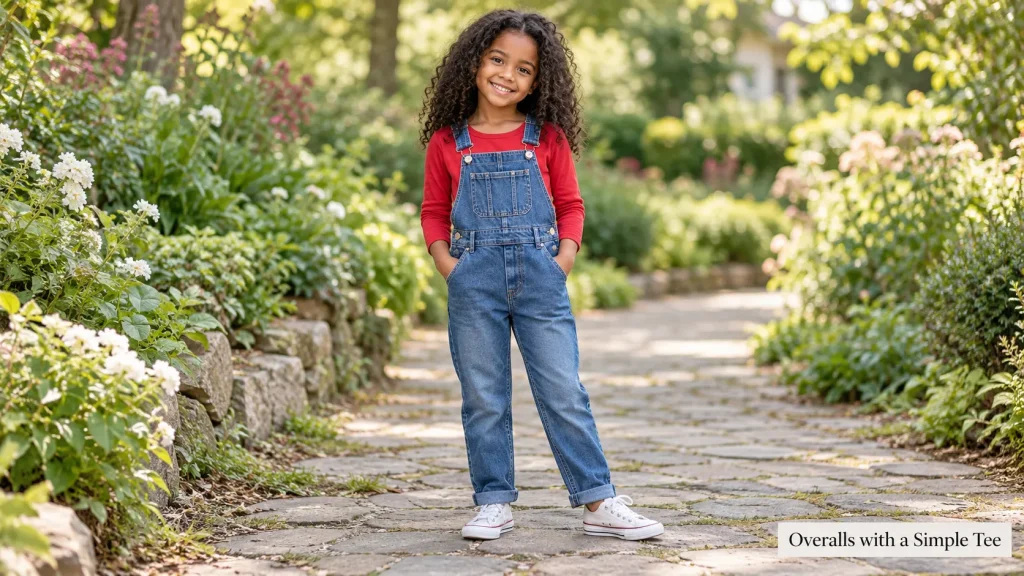
Overalls with a Simple Tee
Overalls stay put during climbing, protect the top underneath from spills, and come with that much-loved front pocket. Classic blue denim over a red tee is a cheerful combination.
For very young children who are toilet training, shoulder buckles can be tricky. Styles with easy snaps are much simpler for small hands.
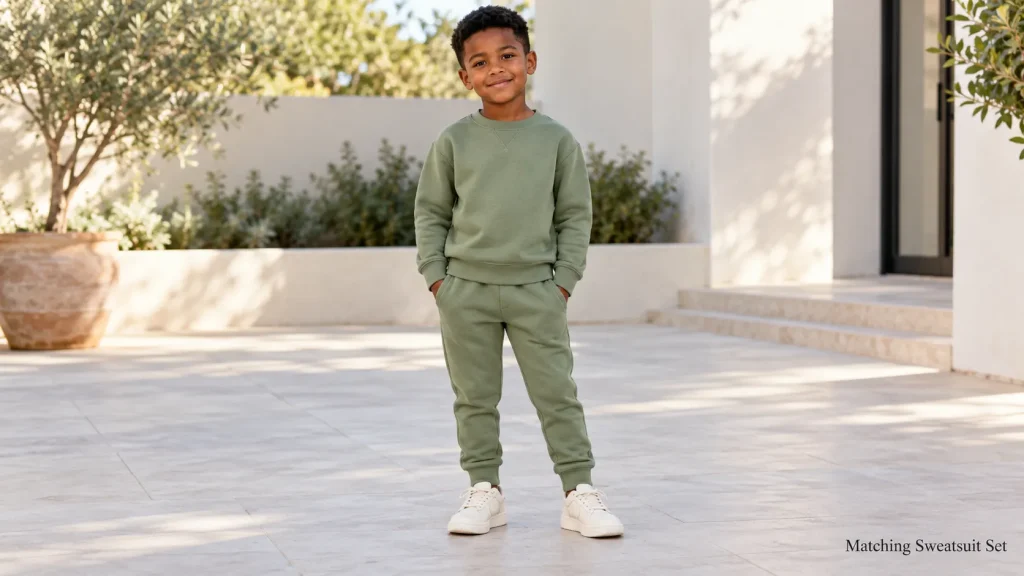
Matching Sweatsuit Set
A coordinated sweatshirt and jogger set in sage green looks put together with almost no effort. Lazy Saturdays, long car journeys, and visits to grandparents are all good moments for it.
Once you have a set, the pieces don’t have to stay together. The sweatshirt can go with jeans and the joggers with a different top, so it earns its place in the drawer.
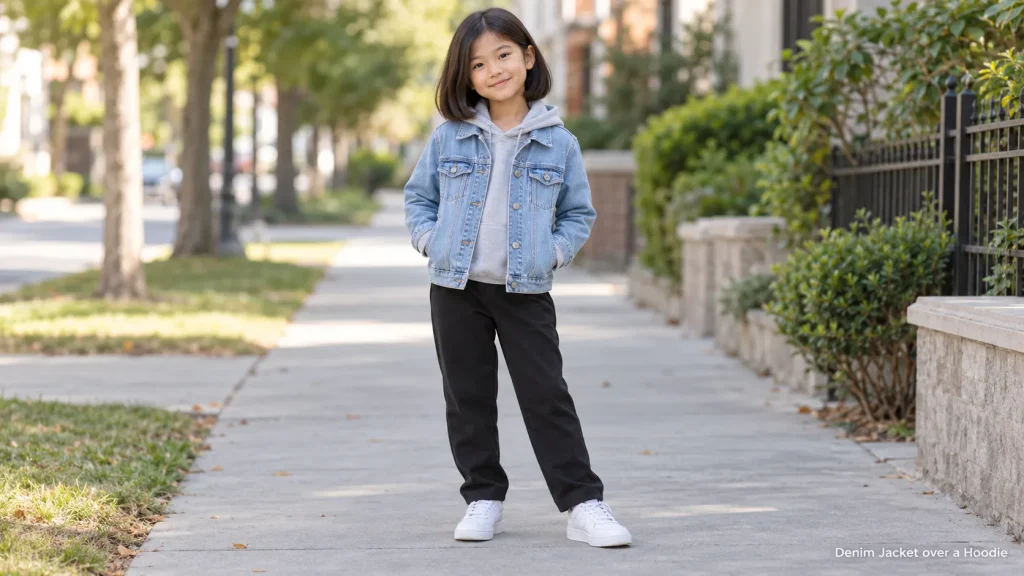
Denim Jacket over a Hoodie
A grey hoodie under a light denim jacket handles cool mornings and warmer afternoons, since the jacket comes off easily when the sun comes out.
When trying jackets on, have your child wear a hoodie underneath. You want enough room to layer comfortably and still move their arms freely.
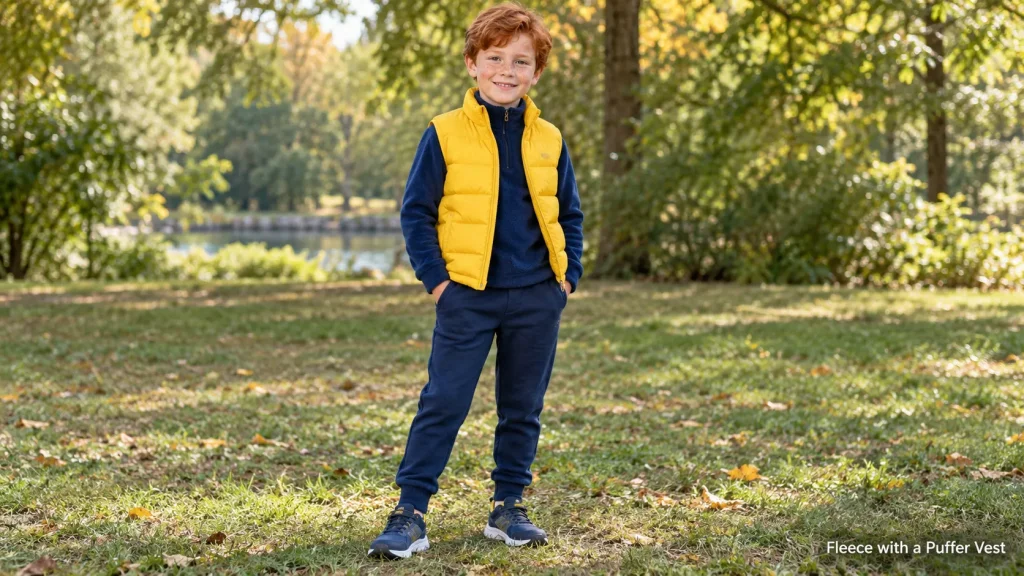
Fleece with a Puffer Vest
On mildly chilly days, a navy fleece under a bright yellow puffer vest keeps the body warm while leaving arms free for swinging and climbing. Many kids find it less bulky than a full coat.
For genuinely cold, windy, or wet weather, a proper coat is still the better choice. Bright vest colors do have one handy perk, though: they’re easy to spot across a busy park.
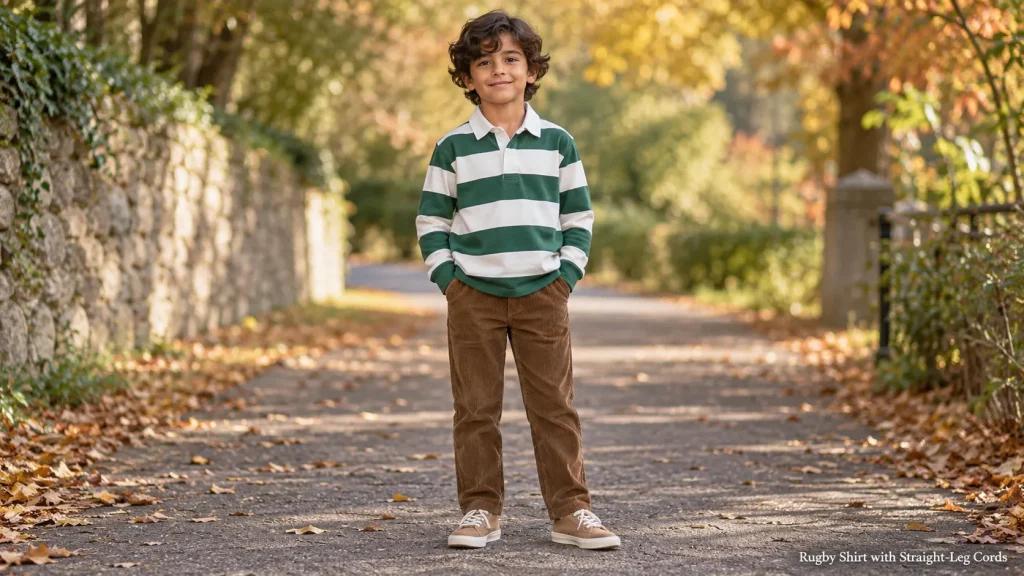
Rugby Shirt with Straight-Leg Cords
A green and white rugby shirt with brown straight-leg cords feels sporty and a little bit retro. Rugby shirts are made from thick cotton, so they hold their shape well through regular washing.
It works just as well for a weekend walk as for a casual family lunch, which makes it a handy in-between outfit.
When the Weather Changes Plans
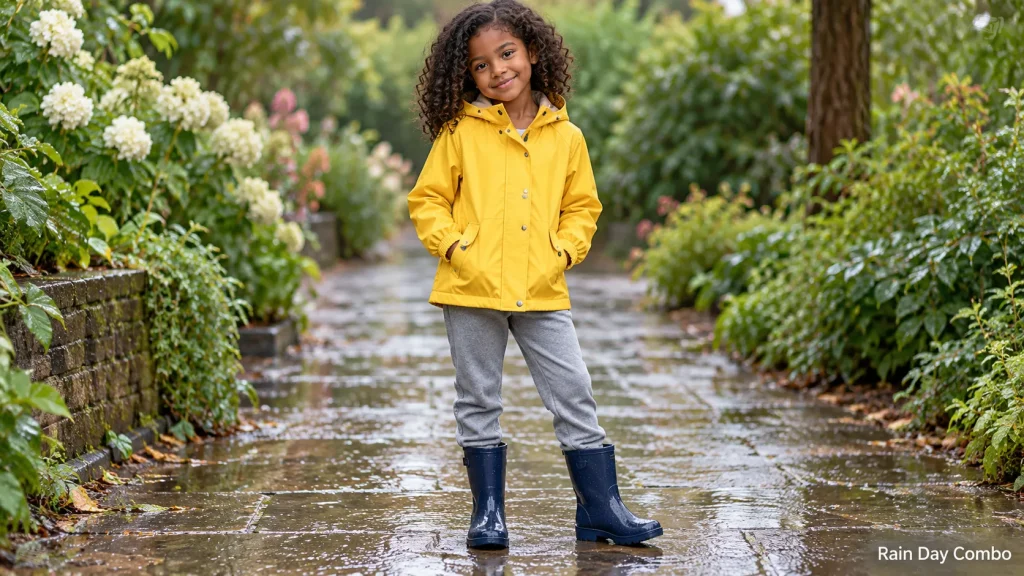
Rain Day Combo
Grab a hooded waterproof jacket, rubber boots, and quick-drying joggers. A sunny yellow raincoat with navy boots is a classic pairing. Leave jeans in the drawer on wet days, since soaked denim stays heavy and cold.
Reflective strips on the jacket are useful on darker mornings, and boots with pull-on handles are easier for kids to manage themselves.
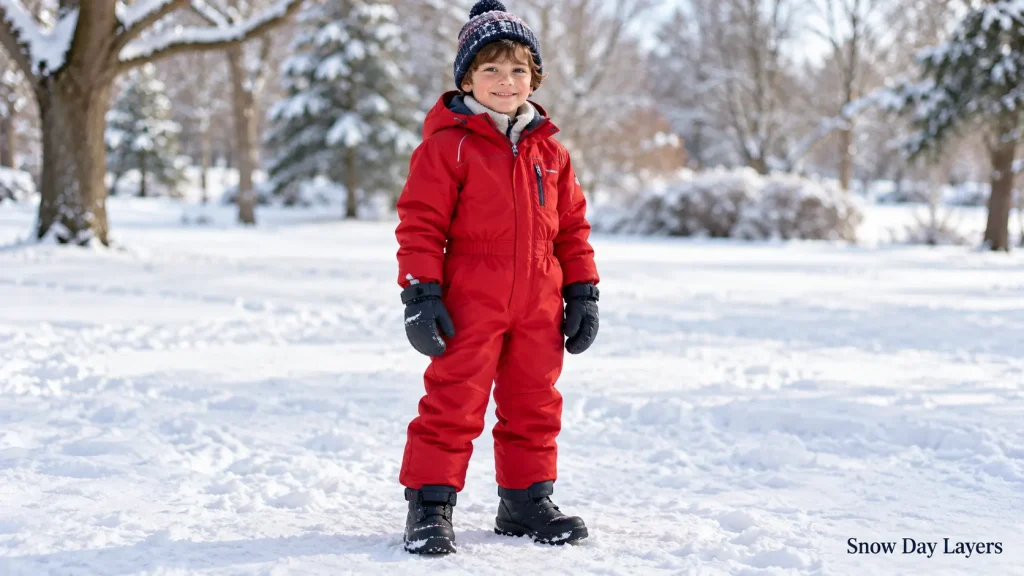
Snow Day Layers
Snow dressing works best in layers. Start with a thermal base, add a fleece middle layer, and finish with waterproof snow pants and a jacket. A red snowsuit stands out nicely against white snow in photos.
Mittens usually feel warmer than gloves for small hands and go on more easily. Mitten clips attached to the coat solve the eternal lost mitten problem.
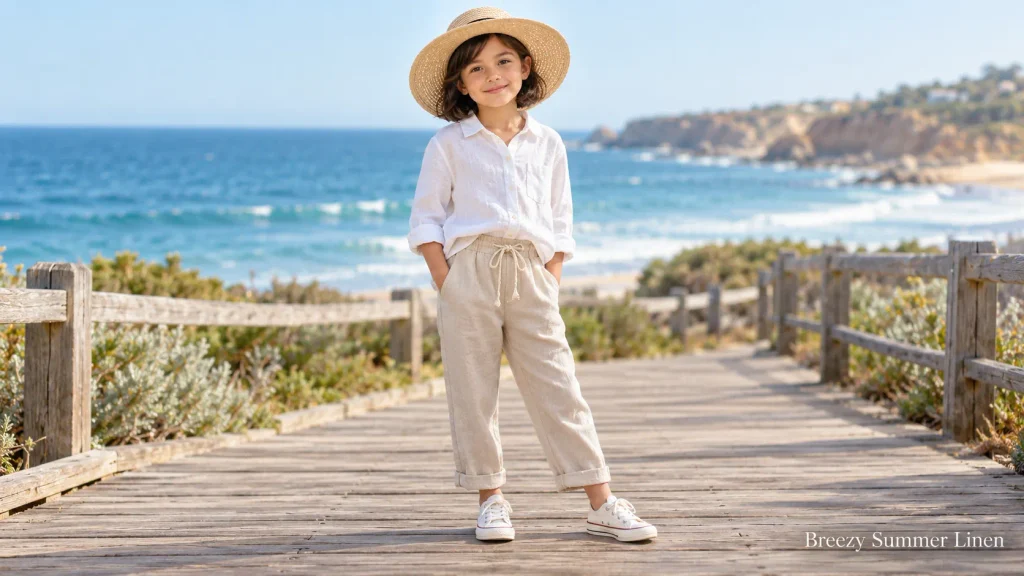
Breezy Summer Linen
Hot days call for loose, lightweight fabrics. A white linen or cotton shirt with sand-colored drawstring trousers keeps things airy, while the coverage offers some protection from the sun.
Pair it with a wide-brimmed hat and lightweight sandals or canvas sneakers for park trips and beach days. Sunscreen on exposed skin is still important.
Dressing Up for Special Occasions
Party clothes only succeed if your child is comfortable enough to enjoy the party.
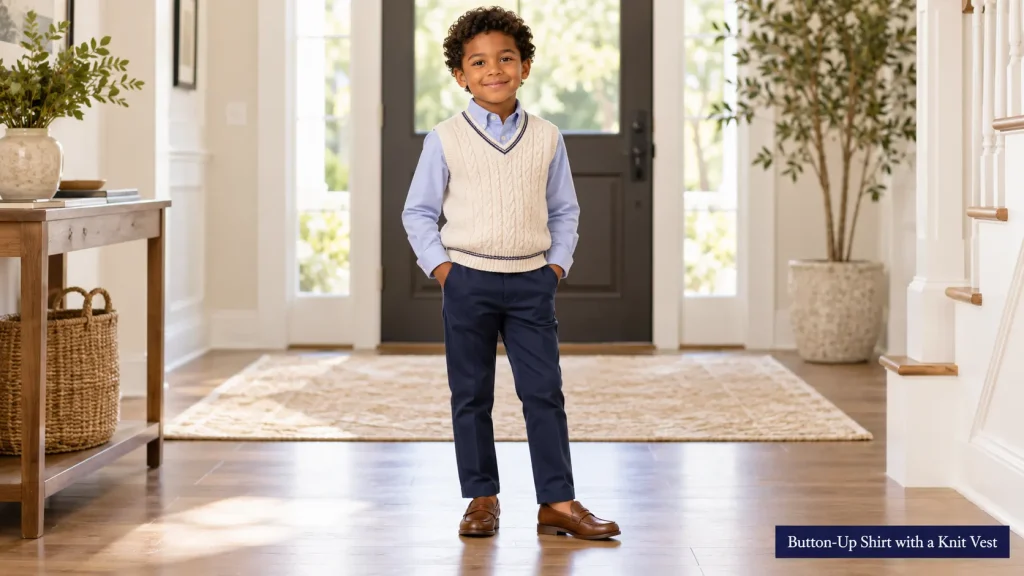
Button-Up Shirt with a Knit Vest
A pale blue button-up under a cream knit vest looks smart with a slightly vintage charm. School concerts, family dinners, and holiday gatherings all suit it.
Kids who dislike anything snug around the neck often prefer snap buttons or a relaxed collar. Small details like that can decide whether an outfit lasts the whole evening.
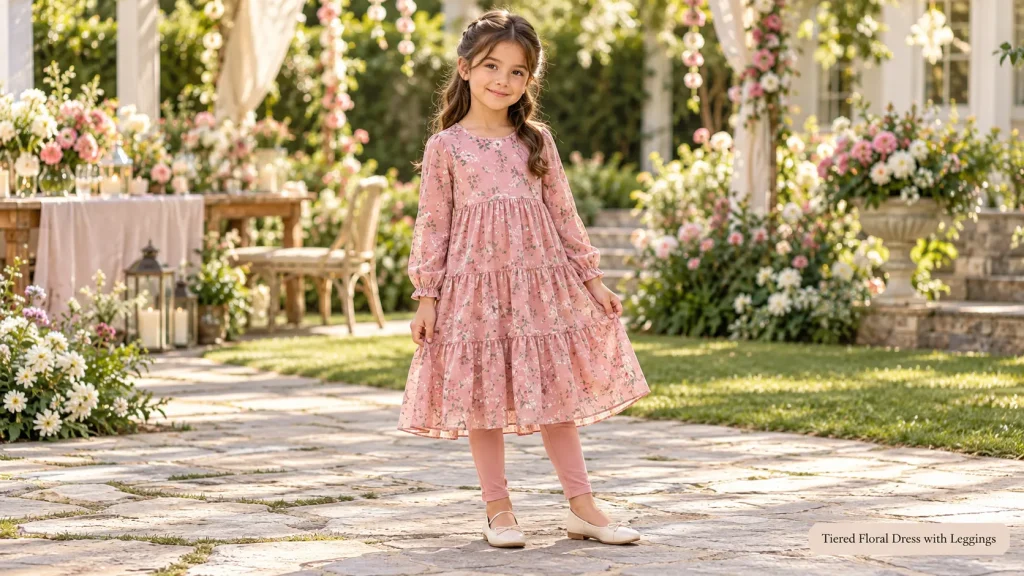
Tiered Floral Dress with Leggings
A soft tiered midi dress with full sleeves in a dusty pink floral print twirls nicely and still allows running, sitting on the floor, and playing. Matching leggings underneath add warmth and freedom of movement.
Cotton or jersey versions stay comfortable through a long event far better than stiff, structured fabrics.
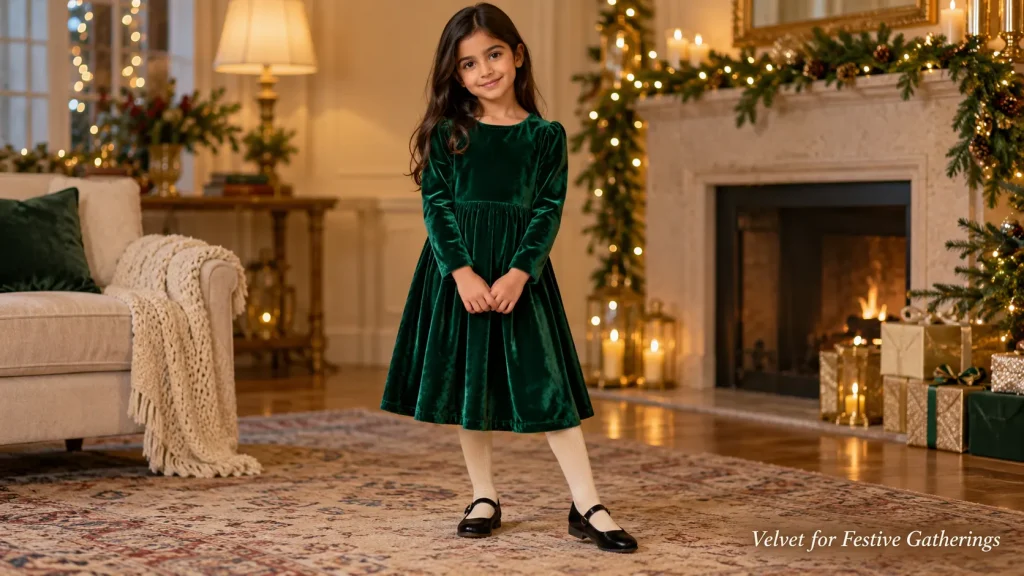
Velvet for Festive Gatherings
Velvet feels special without being fussy. An emerald velvet dress, or a burgundy velvet blazer over a white shirt and dark trousers, suits winter celebrations and evening events.
Stretch velvet moves with kids and resists creasing, so it still looks neat after hours of photos and play.
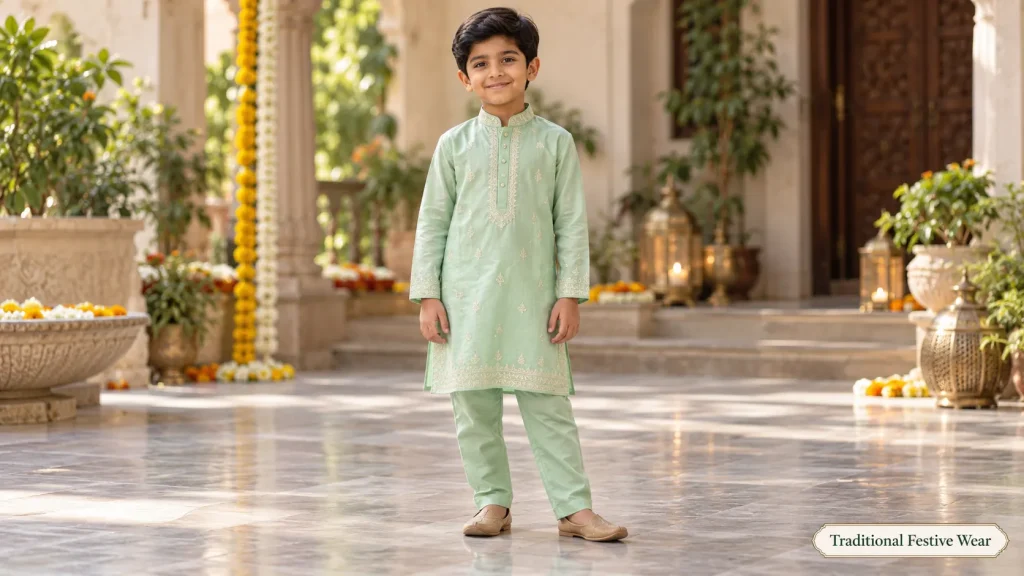
Traditional Festive Wear
For celebrations like Eid, Diwali, weddings, or other cultural festivities, traditional outfits help kids feel part of the occasion. Think a mint embroidered kurta with matching trousers, a long peach frock with churidar, or a simple embroidered tunic set.
Heavy embellishment can scratch, so check that the inside has a smooth cotton lining. Light, comfortable footwear matters too, since festivals often mean hours of visiting and running around.
A quick note for families with more than one child: siblings don’t need identical outfits to look good together in photos. Choosing one shared palette, such as cream, sage, and rust, and letting each child wear something different within it keeps everyone’s style while photos still look coordinated.
A Small Wardrobe That Works Hard
Plenty of families find that fewer, better-matched pieces are easier to manage than a stuffed closet. When most tops and bottoms share two or three base colors, nearly any combination works, and kids can pick their own outfits without clashing.
As a rough starting point for one season, you might aim for:
- four or five everyday tops in plain colors and stripes
- three pairs of bottoms, such as jeans, joggers, and one smarter pair
- two sweatshirts or cardigans
- one jacket suited to your climate
- one outfit for special occasions
Adjust the numbers to your laundry routine. A family that washes every two days needs less than one that does a big wash once a week.
Where Things Commonly Go Wrong
Sizing up too far. Some growing room is sensible, but very oversized clothes can slip off shoulders and cause trips. Focus on whether your child can move comfortably and layer underneath, rather than on the number on the label.
Putting looks before comfort. Stiff collars, scratchy lace, and tight waistbands tend to end in outfit changes. Clothes that feel uncomfortable rarely get worn.
Going by age alone. Children’s sizes vary widely between brands. Trying items on, or checking the brand’s measurement chart, gives a much better result.
Ignoring the activity. A delicate dress at a muddy farm visit, or white trainers at a paint party, creates stress for everyone. Matching the outfit to the plans keeps the day relaxed.
Leaving kids out of the choice. Offering two outfits to pick from gives children some control without opening up the entire wardrobe for debate.
Frequently Asked Questions
How many outfits does a child really need?
That depends mostly on how often you do laundry. Many families find seven to ten everyday outfits per season is enough, plus one or two for special occasions.
What should kids wear for school photo day?
Solid colors or simple patterns usually photograph better than busy prints or large logos. Choose something your child feels comfortable in, since a relaxed child tends to give a more natural smile. Packing a comb and a spare top can help if breakfast ends up on the first one.
What fabrics are best for sensitive skin?
Soft, breathable fabrics with smooth, flat seams and no scratchy tags are a good place to start. Washing new clothes before the first wear can also help. If irritation continues, it’s worth speaking with a doctor.
Is it worth spending more on kids’ clothes?
Price alone doesn’t guarantee durability. For items that get heavy use, like outerwear, school shoes, and everyday jeans, well-made pieces with strong stitching and sturdy fabric can last longer and sometimes be passed down. For party wear or sizes that change quickly, budget-friendly options often make more sense.
How do I keep kids’ clothes looking good for longer?
Turn printed tops inside out before washing, treat stains promptly, and use cool water where possible. Air drying is gentler on colors and elastic than frequent hot tumble drying.
Final Thoughts
Remember the itchy shirt and the hoodie stuck in the wash? Most morning outfit struggles come back to comfort and choice. Clothes that feel soft, fit well, and match each other easily take a lot of the friction out of getting ready.
Pick a few of these kids outfit ideas that suit your child’s week, let them have a say in what goes on, and the drawer itself starts doing half the work.